





 Portuguese
  English
  Spanish
  4 min of reading
  0 comments


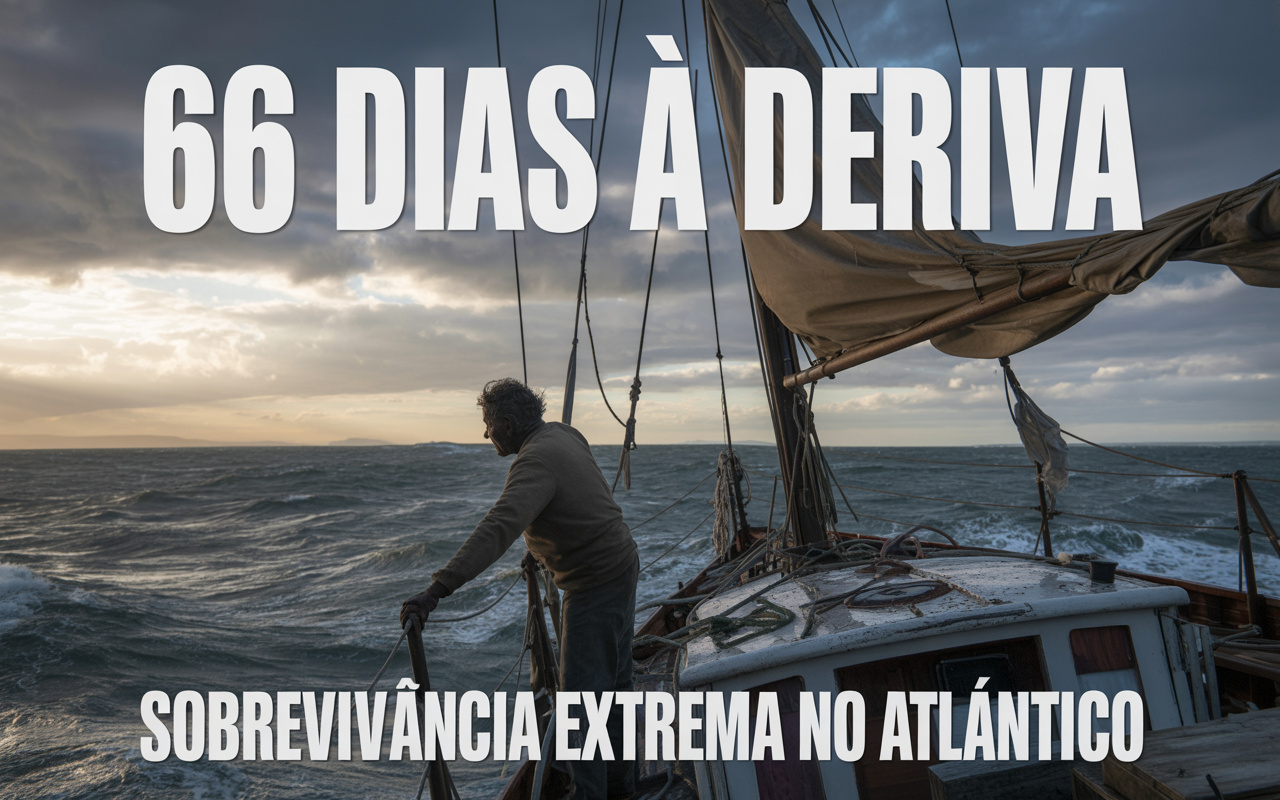
An American Fisherman Disappears In The Atlantic And Survives 66 Days Adrift On A Damaged Sailboat, Facing Storms, Cold, Thirst, And Isolation.
When the world learned that American fisherman Louis Jordan had been found alive in the North Atlantic after 66 days without contact, the story spread through international agencies like BBC, CNN, The Guardian, USA Today, and others. This was not a movie script, nor a labor or sports expedition; it was an unexpected event that unfolded in open water and ended with an improbable rescue.
Jordan, who was 37 years old at the time, went fishing in late January 2015 aboard his sailboat Angel, departing from the state of South Carolina. Days later, it was unclear how the boat was damaged and ended up adrift, initiating a sequence of weeks in absolute isolation.
There were no smartphones with signal, satellite radios, search drones, or personal GPS tracking — technologies that are now commonplace in maritime activities. In 2015, an incident in open water could still easily become a silent disappearance.
-
A war machine of over 10,000 tons, capable of destroying entire cities, cannot simply become scrap, and dismantling a retired nuclear submarine has become one of the most dangerous industrial operations on the planet, with radioactive reactors that need to be buried for centuries.

-
Labor shortage concerns return to Canada: retirements are already removing 25,500 workers per month from the market, and the country may face a lack of workers again even with unemployment still high.

-
In Brazil, fishermen become “cleaners” of the mangroves and remove 46 tons of trash in an attempt to revive natural nurseries suffocated by plastic, tires, sofas, and more than 1 million discarded items in the bays of Guanabara and Sepetiba.

-
A Canadian who has lived in Sri Lanka, India, and Portugal chose the small town of Timbó, in the interior of Santa Catarina, to raise his three children, attracted by the safety and climate, in a sincere account of the advantages and also the limitations of life as a foreigner in southern Brazil.


Currents, Storms, And The Geography Of Drift
The North Atlantic is one of the most dynamic ocean environments on the planet, with cold fronts, storms, strong currents, and high waves that can occur even far from known cyclones or hurricanes.
Without control over its course, Jordan’s sailboat was carried by ocean currents up to the vicinity of the Carolinas, always away from the busier coastal traffic routes.
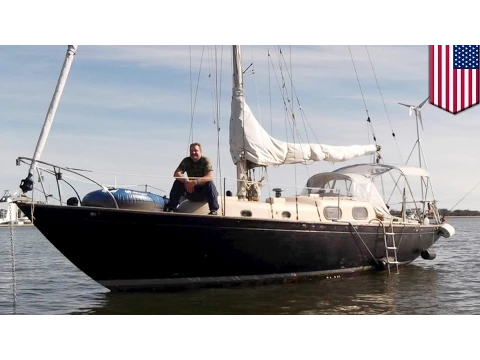

During the drift, the boat likely suffered additional damage, which drastically limited its maneuverability. At the same time, the thermal oscillation between clear days and cold nights, typical of this region, added to physical and psychological wear.
The drift only ended when a German-flagged cargo ship, the Houston Express, spotted the sailboat about 200 nautical miles (approx. 320 km) off the coast of North Carolina in April 2015. The ship alerted the U.S. Coast Guard, which confirmed the identity of the fisherman and conducted the rescue.
A Daily Life Imposed By The Sea: Rain, Nights, And Silence
Subsequent reports given by Jordan to the press showed that during those 66 days, the fisherman was exposed to a series of environmental conditions that, even for experienced sailors, are considered severe.
Without offering instructions or suggestions and only describing what was reported, the press noted that Jordan:
• faced storms and rough seas,
• endured long, cold nights,
• felt a lack of drinking water,
• and had to deal with loneliness and fear,
something ever-present in accounts of maritime disappearances.
The psychological dimension, often invisible, is one of the points that makes the case so studied. In open water, without a constant visual reference, time dilates and silence becomes almost absolute — a combination that amplifies the sense of vulnerability.
The Discovery And The Rescue
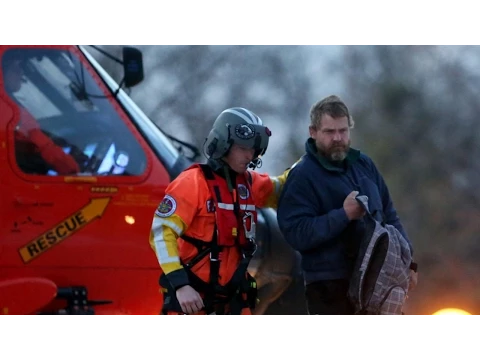
The rescue scene was documented on video by the U.S. Coast Guard, which made the episode even more striking for the public. In the footage, Jordan appears thin, dehydrated, and visibly shaken, but able to talk and recognize his surroundings.
He reported to doctors and the press that he had survived for weeks, relying primarily on rain for hydration and on fish he managed to catch — information that appeared in reports from BBC and CNN shortly after the rescue.
The case gained attention not because it was “heroic” in a Hollywood sense, but because it should not have happened: it is the type of event that experts classify as an isolation accident, not as a planned adventure.

From News To Public Debate
Cases like Jordan’s spark debates in various areas:
• In International Press
Newspapers discussed the logistics of the rescue, the functioning of search and rescue systems, and the conditions that allowed the sailboat to remain invisible for so long.
• In The Maritime Community
The episode was cited in discussions about:
– navigation routes,
– electronic communication,
– personal trackers,
– and contact protocols on solitary trips.
Without turning this into a manual, the case helped to highlight how communication and tracking have evolved in recent years, with systems that are now much more accessible and widely adopted.
• In Psychology
Studies on resilience, sensory isolation, and extreme uncertainty management also revisited the case, comparing it with historical accounts of shipwreck survivors from the 20th century.
A Reminder About The Sea And Human Limits
Stories like this continue to emerge not because they encourage risky behavior but because they reveal how the ocean remains a real frontier, where small mistakes can turn into long disappearances.
The sea, especially at temperate latitudes, is not a movie setting: it is a dYNAMIC, unpredictable, and physically exhausting system, where currents, weather, and visibility change rapidly.
The name Louis Jordan is remembered not as an adventurer who sought the extreme, but as someone who survived a prolonged accident in an environment that allows no errors.





-

-

3 people reacted to this.