






 Portuguese
  Spanish
  3 min of reading
  1 comment


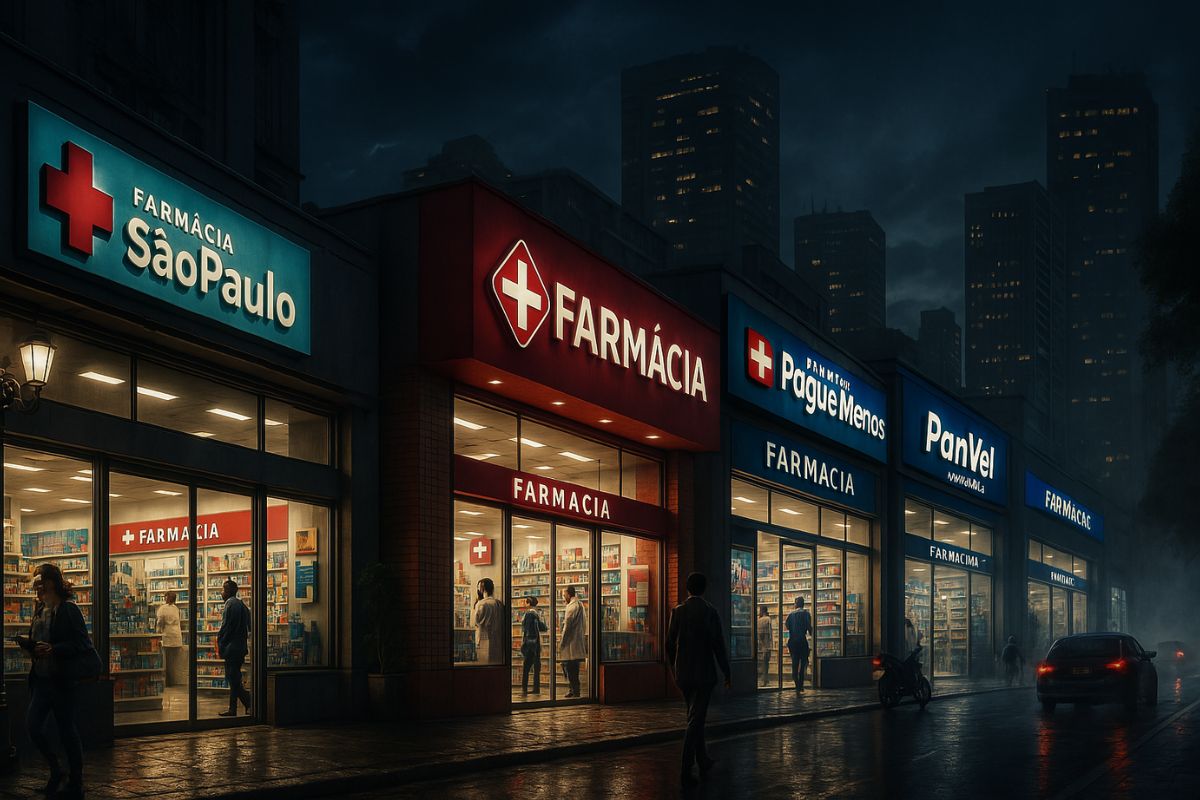


With More Than 90 Thousand Pharmacies Open and R$ 220 Billion in Revenue, the Pharmaceutical Sector in Brazil Has Become a Battleground Between Giants, Independent Networks, and Even Supermarkets
You’ve probably wondered why there are so many pharmacies side by side in virtually every Brazilian city. The feeling of being surrounded by Drogazil, Droga Raia, Pague Menos, and Drogaria São Paulo is not an illusion: in 2024, 22 new pharmacies opened every day in Brazil. That’s right. In the midst of the digital era, pharmaceutical retail is more physical than ever and more competitive too.
The pharmacy sector generated an impressive R$ 220.9 billion last year, achieving a growth of 12.7% compared to 2023. But not everyone is winning. Large networks like Drogazil and Raia alone account for nearly 50% of the market, while independent pharmacies struggle to survive with only 17% market share. The detail? Of the 7,938 pharmacies that recently closed their doors, 87% were small and lacked the structure to compete with the giants.
Why This Unprecedented Growth of Pharmacies?
It starts with the demographic factor: Brazil currently has more than 32 million elderly people, and by 2050, this number is expected to double. As a result, the consumption of medications is also increasing — even among younger individuals, due to the explosion of mental health diagnoses and the self-medication facilitated by telemedicine.
-
Land Rover to Halt Production in July, Putting 371 Jobs at Risk, as Chinese Automaker Negotiates to Convert Factory to 100,000 Vehicles Annually by 2027

-
Mexican Pest Threatens U.S. Cattle Herds at Historic Lows, Potentially Boosting Brazilian Beef Exports as Burger Prices Soar

-
Brazilian Freight Bill Progresses in Congress with $5,000 Minimum Wage, 70% Advance Payment, and Fines Up to $1 Million, as Agriculture and Industry Warn of Rising Costs and Legal Uncertainty

-
High Interest Rates and Record Defaults Lead to Surge in Vehicle Repossessions and Crowded Car Auctions in Brazil by 2026


Pharmacies have stopped selling only medications. They have evolved into true convenience centers: cosmetics, vitamins, juices, water, snacks, and even toys occupy the shelves. An industry survey shows that today more than half of the revenue of many chains comes from products that don’t even require a prescription.
Favorable Legislation, Aggressive Strategy


Law 13.021/2014 was a turning point: pharmacies were officially recognized as health units, allowing them to offer vaccinations, rapid tests, and other assistance services. This helped boost profits but intensified competition even further.
Large chains began to open stores strategically close to competitors to absorb their customers, a market practice known as “predatory cannibalization.”
And the Future? It Can Change A Lot
While in the U.S. large chains like CVS are closing physical stores due to the rise of apps and e-commerce, in Brazil the movement is still the opposite. Here, the chains are betting on digitalization, but also doubling down on physical presence. RD Saúde, owner of Drogasil and Raia, for example, even created its own digital media company to profit from ads inside pharmacies.
There is a new threat looming over the sector: supermarkets. The government is considering allowing the return of the sale of over-the-counter medications (the so-called MIPs or OTCs) in supermarkets, something that was already allowed in the past but banned for regulatory reasons. If this deregulation occurs, the game may change again. And not necessarily in favor of pharmacies.






this image is clearly AI generated, why not using a real image of a brazilian pharmacies street. There are many real examples