






 Portuguese
  Spanish
  6 min of reading
  0 comments


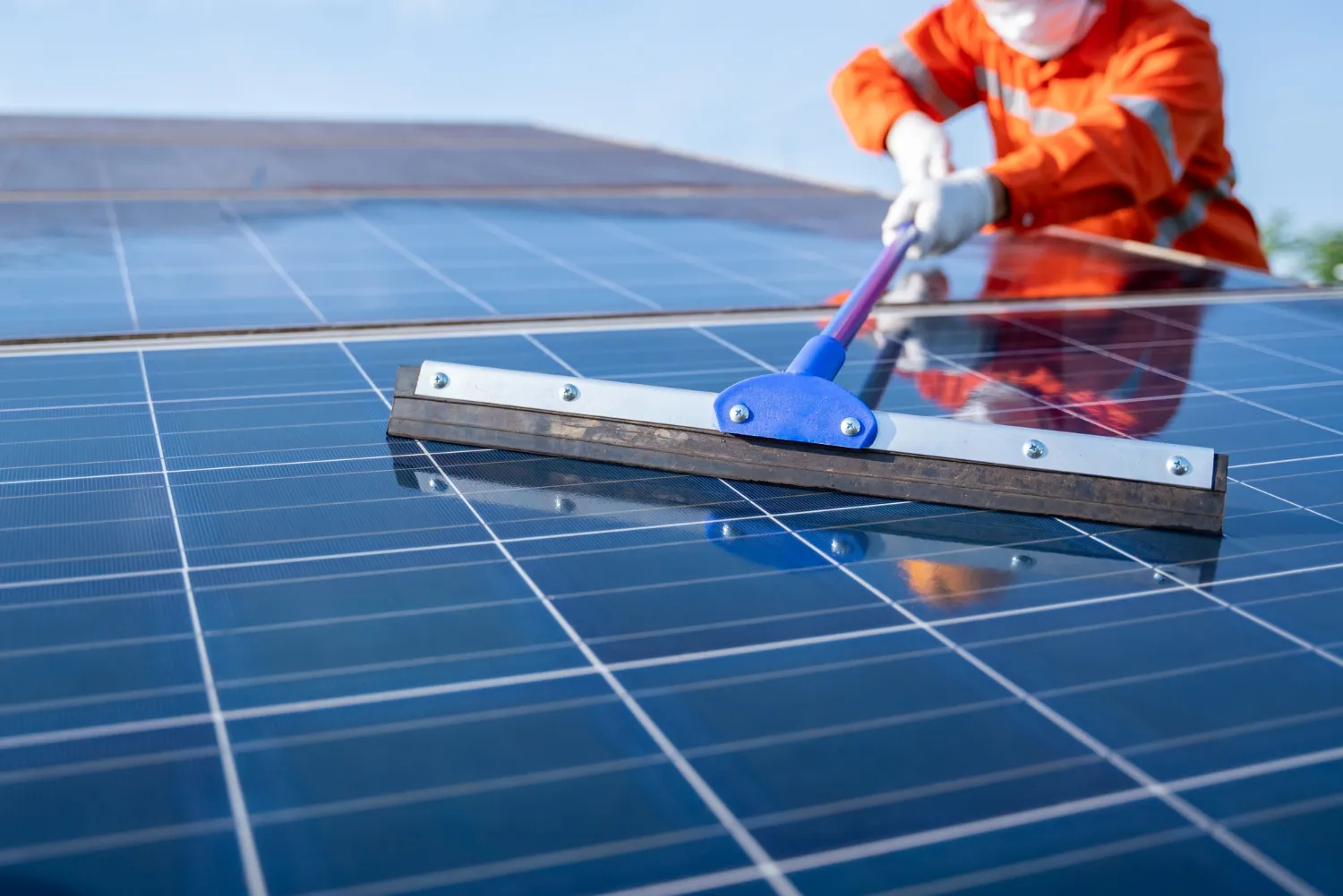
The City Hall of Curitiba intensifies the cleaning of photovoltaic panels at the Solar Pyramid and at the Botanical Garden to optimize the performance of the system and ensure the maximum supply of clean energy for the city.
The capital of Paraná has initiated a preventive maintenance task force focused on cleaning photovoltaic panels to maximize solar capture in its main energy parks.
The service covers the panels of the Solar Pyramid of Caximba and the Gallery of the Four Seasons, located in the Botanical Garden. The technical team therefore removes layers of dust, debris, and urban waste that accumulate on the glass surface, blocking the passage of light to the silicon cells.
This simple yet strategic intervention increases the efficiency of electricity generation by up to 25% immediately after the process is completed. By keeping the assets clean, the municipality ensures that public investment in sustainable infrastructure delivers the expected return in kilowatt-hours (kWh).
-
Solar energy can increase property value by up to 10% and become a selling point.

-
Solar and wind energy surpass natural gas for the first time in the world and accelerate energy revolution

-
Africa has about 500,000 cell towers and most still burn diesel to operate, while companies rush to cover antennas with solar energy and avoid signal blackouts.
-
Farmers swapped diesel for solar panels in Pakistan, powered irrigation pumps almost cost-free, expanded rice fields, and now groundwater has become a red alert in the countryside.




The action demonstrates how periodic maintenance directly influences the energy autonomy of public buildings and reduces costs with the traditional electrical grid. The work uses specialized equipment and reused water to preserve the sustainability concept that guides the Curitiba More Energy project.
The technical importance of cleaning photovoltaic panels
Many owners of solar energy systems overlook the impact of dirt on daily electricity production. Cleaning photovoltaic panels acts as a determining factor for the system’s performance. The accumulation of particles, technically known as soiling, creates a physical barrier that prevents photons from reaching the photovoltaic cells.
In cities with high vehicle traffic or constant construction, this layer of dirt forms quickly, creating internal shadows that hinder the operation of the entire arrangement of panels.
The Solar Pyramid of Curitiba, installed over an old landfill, has thousands of modules that require constant monitoring. When dust covers the glass, the system needs more radiation to generate the same amount of energy.
The cleaning removes pollution stains and bird droppings, which can cause hotspots (hotspots) and permanently damage the equipment. Proper maintenance prolongs the lifespan of the modules, which generally exceeds 25 years under good conservation conditions.
How the weather influences the need for maintenance
The rainfall regime in Curitiba aids in superficial cleaning but does not replace professional technical washing. Light rain often merely “settles” the dust, creating a crust that is harder to remove.

Therefore, the city hall establishes a fixed schedule for the cleaning of photovoltaic panels, regardless of the season. During prolonged dry periods, the frequency of washings increases to avoid sharp drops in generation.
Remote monitoring through software allows engineers to identify the exact moment for intervention. When the system shows a drop in performance not justified by cloudiness, the maintenance team springs into action.
This data-driven management optimizes public resources and ensures that the Solar Pyramid and the Botanical Gallery always operate at their nominal capacity.
The use of reused water and sustainable technology
The city hall employs methods that respect the environment during the cleaning of photovoltaic panels. The teams use reused water from treatment processes, avoiding the waste of drinking water.
Additionally, the technicians use soft-bristled brushes specifically designed not to scratch the tempered glass of the panels. Scratches on the surface can cause light refraction, permanently reducing efficiency.


Another interesting detail involves the timing of the cleaning. The technicians preferably carry out the work in the early morning or late afternoon.
Washing the panels under the strong midday sun can cause thermal shock to the glass, which is at a high temperature, leading to micro-cracks in the silicon cells. This technical care preserves public assets and ensures the safety of the operators.
Real impact on the municipality’s economy
The energy generation at the Solar Pyramid and the Botanical Garden directly offsets the electricity costs of the city hall’s public buildings. By investing in the cleaning of photovoltaic panels, Curitiba saves millions of reais annually.
Each extra percentage of efficiency gained through cleaning represents thousands of reais that do not leave the public coffers to the energy companies.
This saved resource returns to the population in the form of investments in health, education, and paving. The Solar Pyramid, for example, generates enough energy to power about 8,000 homes or offset the consumption of various administrative buildings.
Keeping this “urban power plant” operating at peak performance is a matter of fiscal and administrative responsibility.
Safety and Work at Height Protocols
The cleaning of photovoltaic panels at the Gallery of the Four Seasons and the Solar Pyramid requires strict safety protocols. Technicians use personal protective equipment (PPE) for work at height and secure anchoring systems. Since the panels are installed on sloped structures, the risk of falling is real and must be mitigated.
In addition to physical safety, there is electrical safety. Even during cleaning, the system continues to generate electricity if there is sunlight. Operators receive training to avoid contact with energized parts and to ensure that water does not infiltrate connectors or junction boxes.
Professional maintenance ensures that the system continues to operate without risks of short circuits or unexpected interruptions.
The Educational Role of the Botanical Garden and the Solar Pyramid
The Gallery of the Four Seasons, in the Botanical Garden, serves as a technological showcase for the millions of tourists who visit the site. By watching the teams perform the cleaning of photovoltaic panels, visitors understand that solar energy requires care and maintenance, just like any other engineering system. This demystifies the idea that solar panels “need nothing” after installation.
The Solar Pyramid also plays an educational role by transforming an environmental liability (the old waste) into an energy asset (sun). Constant cleaning keeps the visual aspect of the work impeccable, reinforcing the image of Curitiba as an innovative and clean city.
This example encourages local residents and businesses to adopt photovoltaic systems on their roofs, boosting the green economy in the region.

Comparison: Clean Panels vs. Dirty Panels
Technical studies indicate that the lack of cleaning of photovoltaic panels can lead to accumulated losses of up to 30% in a year. In large-scale systems, such as those in Curitiba, this loss is equivalent to shutting down hundreds of panels. Below, see the direct benefits of maintenance:
Increased current: Light reaches the cell without obstacles, generating more electrons.
Temperature reduction: Dirt can retain heat, and excessive heat decreases silicon efficiency.
Corrosion prevention: Acidic pollution residues or bird droppings can corrode the aluminum frame.
Aesthetics: Clean panels reflect the management’s commitment to the heritage.
The future of solar energy in Curitiba
The success of the Solar Pyramid and the Botanical Garden gallery motivates the expansion of the Curitiba More Energy program to other areas of the city. The city hall is studying the installation of new panels at bus terminals and municipal schools.
All these new projects will follow the same maintenance standard, prioritizing cleaning photovoltaic panels as a strategy for maximizing energy profits.
The city is on its way to becoming a hub for urban renewable energy. The integration of different sources, combined with excellent maintenance, places the capital of Paraná at the top of the ranking of smart cities in the world.
Continuous investment in technology and conservation ensures that Curitiba is prepared for the challenges of a future with low carbon emissions and high electrical demand.
Efficiency is the result of good management
The task force for cleaning photovoltaic panels at the Solar Pyramid and the Botanical Garden proves that sustainability goes beyond the installation of new equipment. Managing energy requires attention to detail and rigorous maintenance.
By removing dirt from the panels, the city hall of Curitiba not only cleans glass but unlocks the true potential of the sun to illuminate and move the city.
This initiative serves as a model for other city halls and the private sector. The real impact appears on the electricity bill and in air quality, consolidating solar energy as the foundation of the modern energy matrix.
With clean panels and systems operating at maximum capacity, Curitiba reaffirms its commitment to the environment and to the taxpayer’s wallet, consistently and efficiently transforming light into progress.







Be the first to react!