





 English
  4 min of reading
  0 comments


Bowerbirds of Australia decorate bowers with colorful human objects to attract mates during the mating ritual
A curious change in the behavior of urban birds was recently revealed by researchers from the University of Exeter, England.
The study was published on Wednesday (3), in the journal Royal Society Open Science, and compared birds from an Australian city with birds from a rural area of the country.
-
Forget the common asphalt in Brazil: highway is paved with recycled plastic for the first time, incorporating more than 87,000 PET bottles in a technology that could transform roads across the country and potentially retire petroleum from pavement composition for good.

-
FedEx transforms Memphis into an air parcel city: a superhub of 940 acres, 171 airplane gates, 84 miles of conveyor belts, and up to 484,000 packages per hour drive the most frenetic logistics heart in the U.S.
-
As the world opens its eyes to PIX invented in Brazil, Eduardo Bolsonaro joins the USA and suggests replacing the system used by more than 170 million Brazilians; Trump accuses PIX of harming giants like Visa and Mastercard.
-
Company surprises families with a giant attraction of over 900 m², electric go-kart track, and unprecedented experiences for children and adults in Campinas.





Males build tunnels of dry branches, called bowers, and then select colorful objects to attract attention during the mating ritual.
According to the research, urban birds chose larger, more striking items, and mainly materials of human origin.
Research reveals unusual use of human objects
The investigation analyzed how males use materials available in the environment to increase the visual impact of the bowers.
According to Caitlin Evans, from the Center for Ecology and Conservation at the Penryn Campus of the University of Exeter, the ritual occurs when the female arrives at the structure.
At that moment, the male throws an object, displays the plumage on the back of his head, and then presents another item.
This behavior creates a visual sequence marked by color, contrast, and movement, important elements to attract the partner’s attention.
Researchers also found varied materials in urban bowers, including medicine bottles near hospitals and fluorescent mouthguards near sports fields.
Bowers show direct influence of cities
Researchers examined the bowers built by 61 males, considering the visual perspective of the females.
The team used existing evidence about the vision of bowerbirds, which perceive colors with more sensitivity than humans.
The study evaluated how the objects contrasted with the males’ plumage and with the “hut” made of dry branches.
Although the research did not confirm whether females prefer the more striking items, the males’ effort to collect them suggests this possibility.
Human objects seem to have become a relevant part of the environment used by birds during mating.
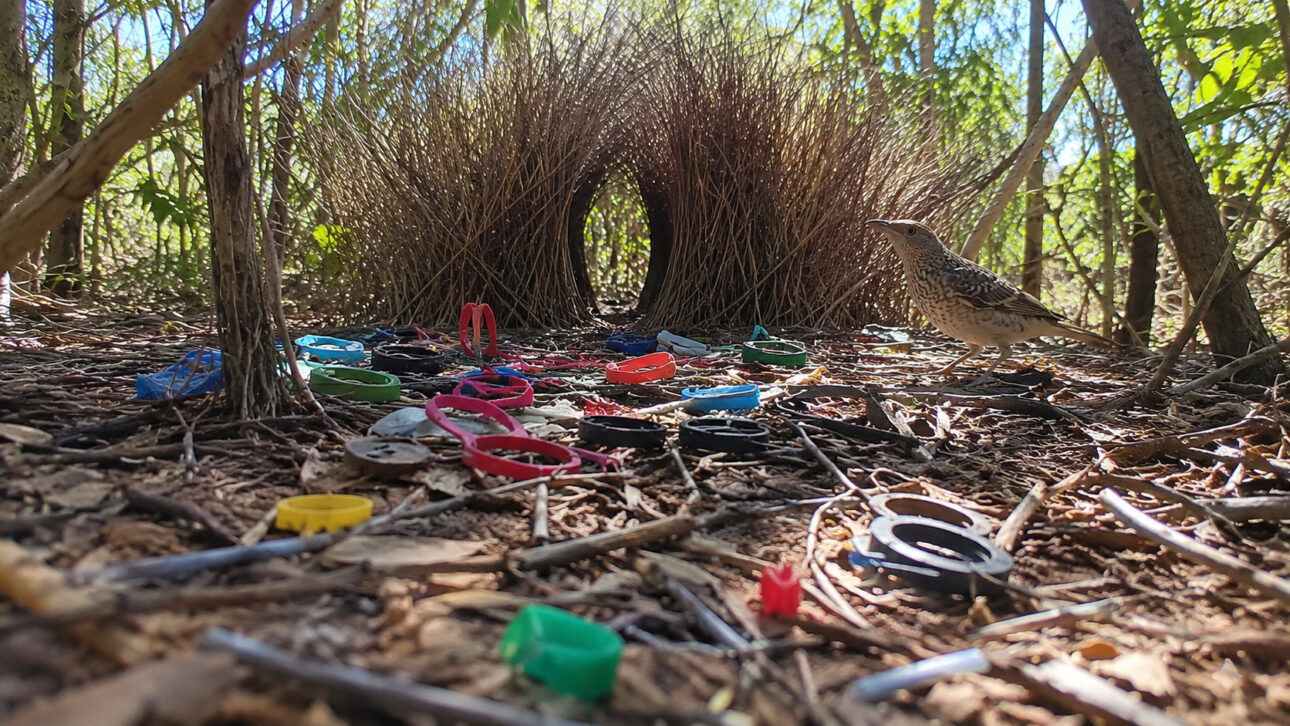
Glass, plastic, and wire stand out in rituals
The second stage of the study reinforced the importance of these materials in the behavior of bowerbirds.
Researchers collected 20 objects, with 10 taken from an urban arbor and 10 from a rural arbor.
Then, the items were presented to males from both environments to observe reactions to each type of decoration.
In both groups, there was a strong preference for human-made objects, indicating a clear change in selection patterns.
Thus, glass, plastic, and wire have ceased to be merely urban waste and have begun to influence the display of these animals.
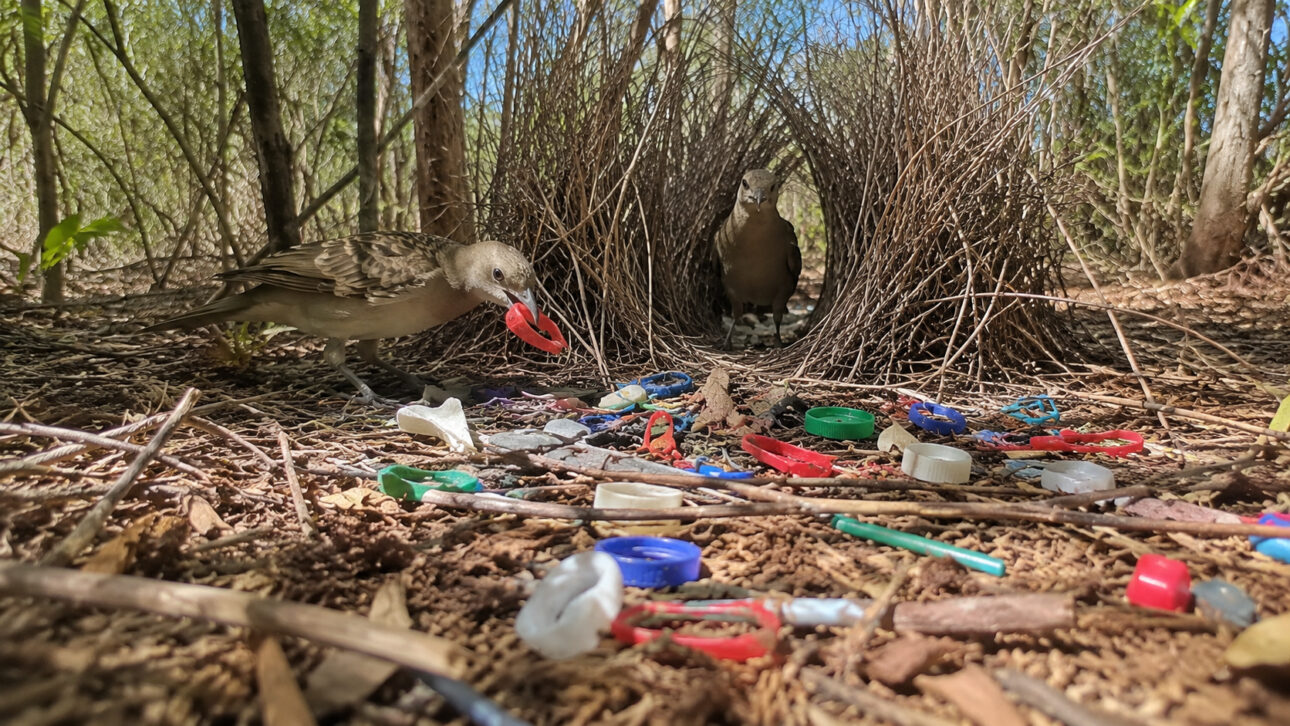
Human activity changes the natural world
For Dr. Laura Kelley, also from the University of Exeter, the study demonstrates how human objects affect the behavior of bowerbirds.
According to her, materials like glass and plastic frequently appear in arbors and show the influence of cities on nature.
It is still unknown whether this change has positive or negative effects on these birds.
Even so, the research shows that human activity transforms the natural world in unexpected and difficult-to-predict ways.
The case of the bowerbirds reveals how discarded objects can alter rituals of reproduction, choice, and survival.

What this discovery reveals about urban birds
Experts from the University of Exeter assess that the availability of human materials is modifying choices made by males.
This behavior shows an adaptation to the urban environment, especially because the birds use what they find around them.
The study reinforces how small changes in urban space can directly interfere with the habits of wild species.
Meanwhile, the arbors decorated with human objects continue to reveal an unexpected relationship between trash, city, and animal behavior.
After all, to what extent is what humans discard in cities changing the oldest rituals of nature?






Be the first to react!