Portuguese
  Spanish


The secret of the model lies in solving the greatest anxiety of the small farmer: being sure of who will buy their produce. Trucks go to the fields, payment is made before the harvest leaves, and plastic crates replace wooden ones. However, the impact numbers are provided by the company itself.
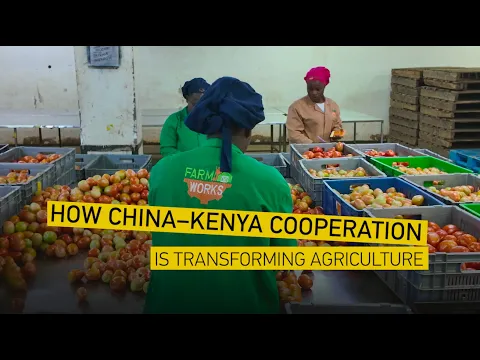
A Kenyan company co-founded by a Chinese entrepreneur is transforming agriculture in Kenya by connecting small producers directly to reliable markets. Called FarmWorks, the company pays the farmer on the spot for the harvest and claims to reduce post-harvest losses by up to 70%, in a model that combines technology, efficient logistics, and practices inspired by China’s experience, although these impact indicators are disclosed by the company itself.
FarmWorks was co-founded in 2020 by Yi Li, an executive of Chinese origin with a background at McKinsey consultancy, alongside Kenyan entrepreneur Peter Muthee. The topic gained prominence in the context of the Year of China-Africa Interpersonal Exchanges, set for 2026. Before proceeding, an important clarification: this report describes the business model and the results reported by the company, without making advertisement for the company nor propaganda of cooperation between the countries, treating the impact data as information disclosed by FarmWorks itself, and not as independently audited numbers.
The problem the Kenyan company is trying to solve
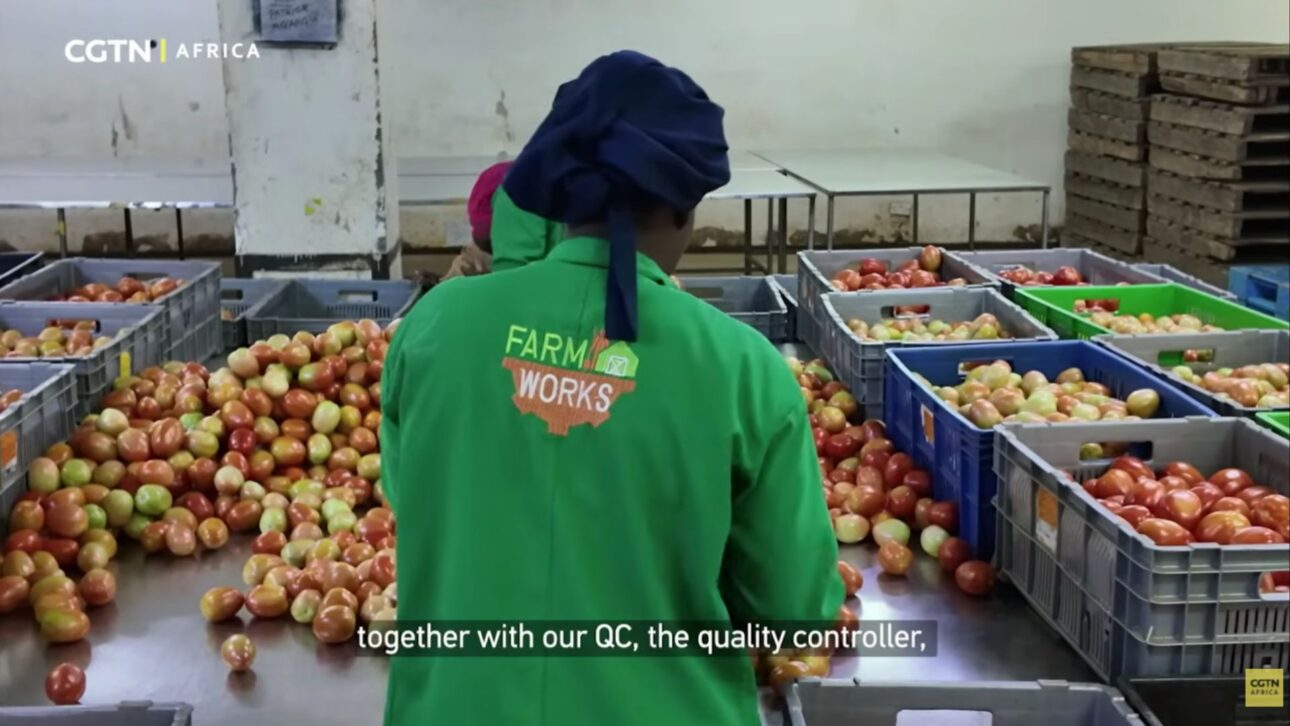
In Kenya, as in many countries, there is a large number of small farmers who cultivate small plots of land, suffer from low productivity, and, above all, do not have consistent access to markets, meaning they do not always have someone to sell their produce to, which generates insecurity and loss of income.
-
California’s Almond Industry Consumes Over 4 Trillion Liters of Water Annually Amid Drought, Relies on Trucked-In Bees for Pollination

-
India’s Sugar Export Cuts and Ethanol Shift Amid El Niño Threat Could Impact Global Prices and Stocks

-
Quarantine Pest Threatening Palm Trees Puts Brazilian Authorities on Alert, Prompts Monitoring at University of Taubaté and Potential Control Measures Across São Paulo
-
Global Alert: Report Finds 159 Pesticides in Coffee Beans Sold in Europe, Posing Serious Risks to Millions of Farm Workers



According to Yi Li, co-founder of the company, this lack of sales guarantee is the biggest problem faced by producers.
The proposal of FarmWorks is precisely to act in this gap, offering a reliable and stable buyer for the harvest.
The executive also highlights that part of the low productivity comes from inadequate agricultural practices and soil degradation over the years, challenges that the company tries to address with technical guidance to farmers.
How the model works, from farm to market
The difference lies in taking on the stages that most penalize the small producer.
Instead of requiring the farmer to take the production to the city, the company sends its own trucks and a quality controller to the farm, confirms the market price with transparency and, a central point of the model, pays the producer before taking the harvest, giving him the assurance that he will be paid for his work.
Once collected, the products go to a packaging center, where they are classified by size, ripeness, and quality, and then distributed to local markets and supermarkets.
The company says it accompanies the farmer from planting, through field teams, and operates in different producing regions of the country, as a way to ensure a more constant supply throughout the year, something difficult for a single isolated farmer.
Logistics and the end of wooden crates
An apparently simple detail reveals much of the innovation of the model.
Instead of the traditional wooden crates, which can weigh up to 120 kilos, are unhygienic and rarely disinfected, the company adopts smaller plastic crates, about 30 kilos, washed daily to prevent the transmission of diseases between crops, which helps preserve food quality.
According to the co-founder, stacking more than a hundred kilos of tomatoes in a single crate compromises the quality of the product, already worn out by the harvest.
Furthermore, the company claims to use software to optimize truck routes, increasing logistical efficiency by collecting in different locations and delivering to various markets.
This care with transportation and standardization is pointed out as one of the keys to reducing food waste in the chain.
The numbers reported by FarmWorks

It is important to look at the results with the proper context.
According to data released by FarmWorks itself, the company works with thousands of small farmers and tens of thousands of retailers, claiming to have achieved a reduction of about 70% in post-harvest losses compared to the industry average in Kenya and an increase of approximately 48% in the income of partner farmers, in addition to generating hundreds of jobs, mostly occupied by women and young people.
It is worth emphasizing that these numbers are reported by the company, based on its own surveys, and not by an independent external audit.
Even so, the model has attracted investors from funds focused on social impact and agriculture, who have invested millions of dollars in the company over the years, and the initiative has been highlighted at international events, signs that the project is sparking interest in the agricultural technology sector.
The Chinese inspiration, without automatic transfer
The connection with China is part of the story, but it deserves to be understood with nuance.
Yi Li, who is of Chinese origin, claims that the investment of resources and lessons learned in China helped her see how to build more efficient systems, but she herself emphasizes that it is not an automatic transfer from one country to another, as they are different cultures and contexts, requiring adaptation to the local reality.
The executive makes a point of stressing that FarmWorks is an essentially Kenyan company, with almost the entire workforce made up of local professionals, and that, so far, it does not export to China.
The idea, according to her, is to take advantage of good efficiency practices and adapt them to Kenya, and not simply copy a foreign model, as an example of how knowledge exchange can be adjusted to each country.
What this has to do with Brazil
The theme directly relates to challenges in Brazilian agriculture.
Post-harvest losses are also a serious problem in Brazil, where a significant portion of food is lost between the field and the consumer’s table due to transportation, storage, and market access failures, and initiatives that organize the chain of small producers have been growing here, with the support of technology.
Models that connect family farmers directly to buyers, reduce waste, and ensure more stable income are increasingly discussed in Brazilian agribusiness, which combines large properties with millions of small producers.
Following international experiences like Kenya’s can inspire solutions to a universal challenge: making food reach from field to table with fewer losses and more value for those who produce it.
The story of the Kenyan company FarmWorks illustrates how technology, logistics, and a business model centered on the small producer can help reorganize a country’s agriculture, reducing waste and providing more security to those who live off the land.
Although the impact numbers are reported by the company itself and deserve independent monitoring, the proposal points to interesting paths for a problem that affects the whole world, including Brazil.
In the end, it is a valuable lesson: organizing the chain between the farm and the market can be as important as producing the food itself.
And you, what do you think of models that connect small farmers directly to markets and reduce food waste? Do you believe that such initiatives could help the small Brazilian producer? Leave your comment, share your opinion on agriculture and innovation, and help spread the article to those interested in agribusiness and technology.