Portuguese
  Spanish


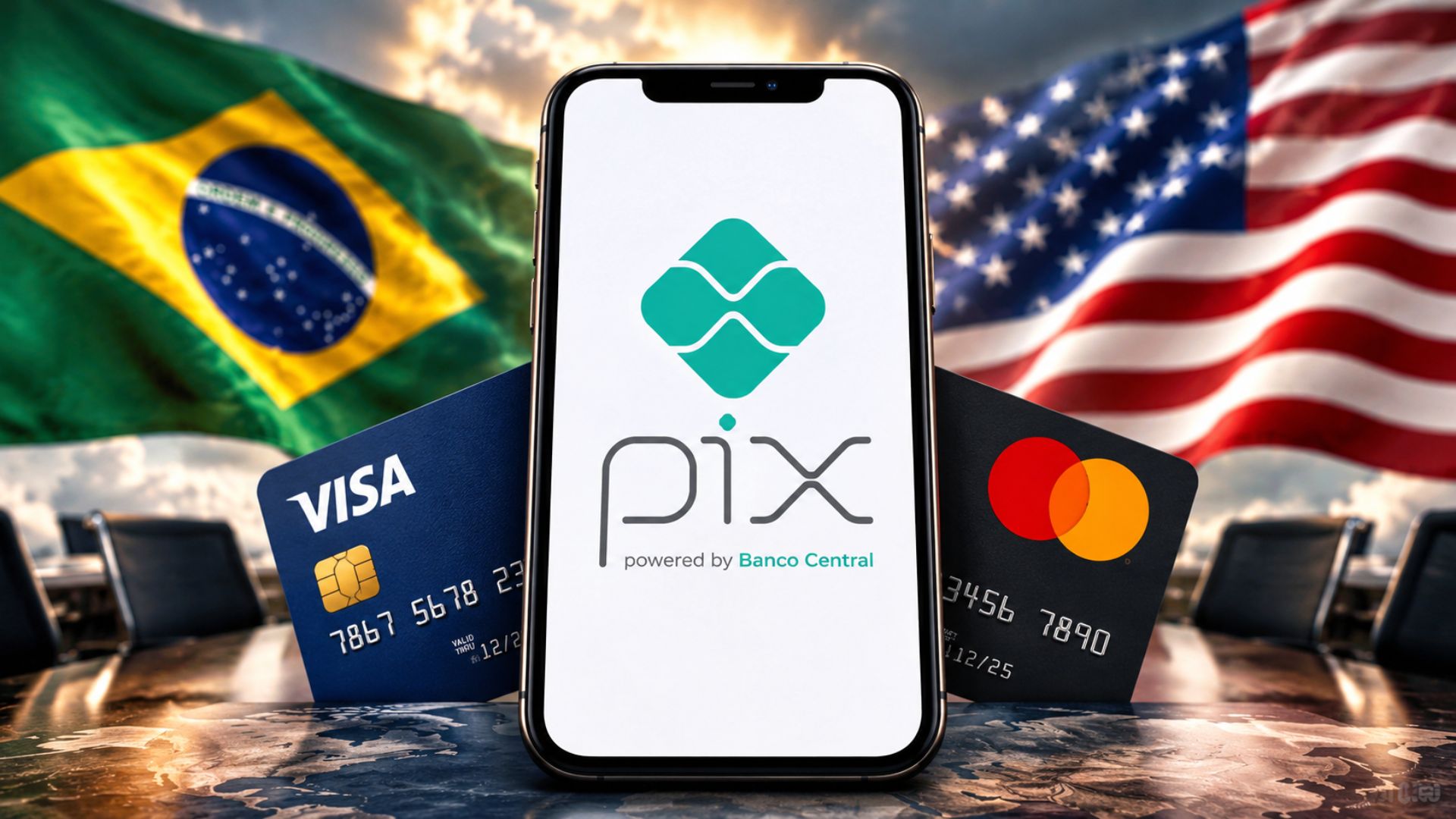

United States pressure on digital payments reignites debate over Pix, puts Eduardo Bolsonaro at the center of the controversy, and exposes differences between the Brazilian system and Zelle, a private model used by North American banks for account-to-account transfers.
Former federal deputy Eduardo Bolsonaro (PL-SP) argued that Brazil should bring Pix to the negotiating table with the United States amid commercial pressure from the Donald Trump administration against Brazilian policies on digital commerce and electronic payment services.
The statement was made on Wednesday (6/4), two days after the Office of the United States Trade Representative, the USTR, announced that practices attributed to Brazil in this area are considered actionable under Section 301 of U.S. trade law.
In an interview with the TMC News portal, Eduardo compared the Brazilian system to Zelle, a private platform used in the United States for transfers between bank accounts integrated with participating financial institutions.
-
Creative Uses for Toilet Paper Rolls That Will Change Your Perspective

-
Crab Trapped in Plastic Bottle for 62 Days Near Okinawa Highlights Little-Known Impact of Marine Pollution on Small Animals
-
Esperanza’s Bamboo Barrier in Oaxaca Redirects River and Reduces Erosion by 85% in Five Years

-
Family Builds Homemade Wind Turbine to Power Off-Grid Home, Video Reaches 555,000 Views on Ngô Thị Huyền’s Channel




“The United States has mechanisms very similar to Pix, such as Zelle, which is the Pix of the United States, here it is Zelle. So you can go to the negotiating table with the Americans with good arguments,” he stated.
The statement gained attention because Pix, created and operated by the Central Bank, has become one of the main payment methods in the country and reaches more than 170 million individuals, according to official data from the monetary authority.
This number is equivalent to about 80% of the Brazilian population, while BC statistics show more than 7 billion transactions in January 2026 and a daily record of 313.3 million operations on December 5, 2025.
Pix enters the center of the trade dispute with the USA
U.S. pressure on Brazil advanced on June 1, 2026, when the USTR reported having concluded that certain Brazilian policies are “unreasonable or discriminatory” and restrict U.S. trade.
In the statement, the agency cites digital commerce, electronic payment services, preferential tariffs, intellectual property, ethanol, anti-corruption efforts, and illegal deforestation among the topics analyzed in the trade investigation opened against Brazil.
In the section related to payments, the USTR claims that Brazil has disadvantaged North American companies competing in the electronic services sector, including policies that, according to the agency, favor a “national champion.”
The official statement does not mention Visa and Mastercard by name, but it frames the Brazilian payment system within a broader dispute involving United States companies in the digital market.


In response to the investigation, the Trump administration proposed an additional tariff of 25% on some Brazilian products imported by the United States, a measure still subject to public consultation before a final decision.
According to Reuters, the proposal would have exceptions for items such as beef, coffee, rare earths, energy, metals, and aeronautical components, while members of the Brazilian government contested the justifications presented by Washington.
The calendar released by the USTR provides a deadline for written comments until July 1, 2026, a public hearing on July 6, and a final decision by July 15.
Opened on July 15, 2025, the investigation took place under Section 301 of the United States trade law and received more than 295 comments and statements during the consultation phase.
Eduardo Bolsonaro cites rare earths and manganese in negotiation
In addition to bringing Pix and Zelle closer in the debate with the United States, Eduardo Bolsonaro stated that Brazil could include strategic mineral resources in bilateral talks with the U.S. government.
“We can put this on the table and try to hold back any retaliation on any payment method we use here,” he said, mentioning rare earths and manganese.
The reference to minerals appears in a context of international dispute over inputs used in high-tech, energy, and defense chains, areas in which rare earths and other strategic resources have commercial and geopolitical weight.
Despite the statement, there is no record of a formal proposal from the Brazilian government to replace Pix with Zelle nor of a public plan to negotiate the Brazilian payment system with the United States.
Currently, Eduardo Bolsonaro appears on the Chamber’s portal as affiliated with the PL of São Paulo, but without parliamentary activity in 2026, following a decision by the House’s Board of Directors.
The loss of mandate was declared on December 18, 2025, according to the official record of the Chamber of Deputies, which corrects the reference to him as a sitting federal deputy.
Pix and Zelle have different structures
Although Eduardo Bolsonaro compared the two systems, Pix and Zelle operate with different structures, both in the operational model and in the reach between users and participating institutions.
Pix is a public infrastructure created by the Central Bank, open to financial and payment institutions in Brazil, used by individuals, companies, and public agencies for transfers, collections, and commercial payments.
Transactions via Pix are available 24 hours a day, every day of the week, and are completed in a few seconds, according to the rules and information disclosed by the Central Bank.
On the other hand, Zelle functions as a private network integrated into bank and credit union apps in the United States, with use conditioned on the participation of financial institutions and the eligibility of the accounts involved.

According to the platform itself, the service is available in more than 2,400 financial apps and usually completes transfers in minutes when the recipient is already registered in the system.
Comparing the two models requires observing these operational differences, as Pix operates as standardized national infrastructure, while Zelle focuses on transfers between users linked to participating banks.
Gazeta do Povo reported that Eduardo’s statement was interpreted on social networks as a defense of replacing Pix with Zelle, although the proposal for substitution was not directly presented by the former deputy.
The publication also highlighted that Pix is managed by the Central Bank, while Zelle is controlled by a private network linked to major American banks.
Brazilian system gained scale and international attention
Since its launch, Pix has become part of the payment routine in Brazil, with widespread use in transfers between people, purchases in commercial establishments, QR Code collections, and company operations.
The system’s reach has also been observed outside the country, especially because it has consolidated in a market where cards, machines, and international brands had significant participation.
In March 2026, Banco do Brasil launched a feature that allowed Brazilians to use Pix for purchases in Argentina, through a partnership with Banco Patagonia.
Reuters reported that the initiative marked the first expansion of Pix usage outside Brazilian territory, with payment in reais by the consumer and receipt in pesos by the Argentine merchant.
The competition with the United States occurs at a time when the Brazilian system combines broad domestic adherence, new functionalities, and international interest in instant payment models.
For Washington, the discussion appears within a package of trade complaints involving Brazilian practices in digital commerce, electronic payment services, and other economic sectors.
In Brazil, the topic involves a public payment infrastructure managed by the Central Bank and used daily by individuals, companies, financial institutions, and public agencies.