Portuguese
  Spanish


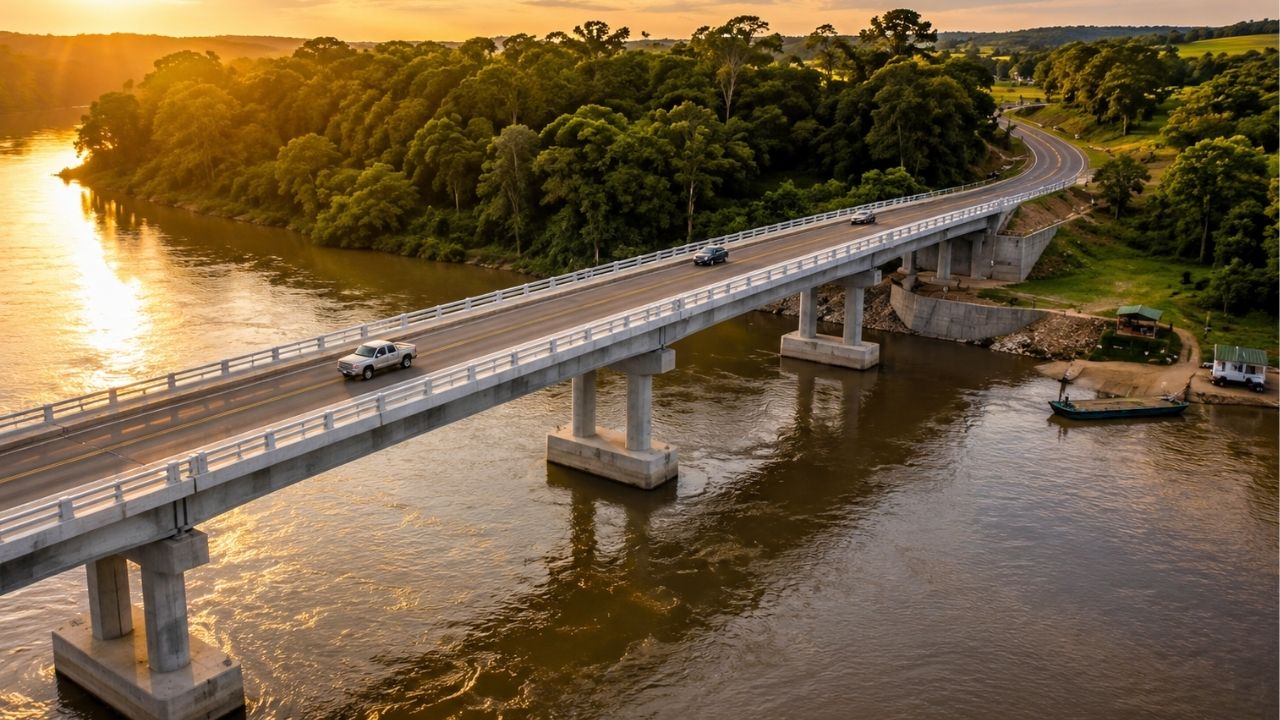

With an investment of R$ 40 million, the bridge over the Corumbataí River is expected to end the dependence on the old ferry, reduce blockages during flood periods, and improve travel between Godói Moreira, Barbosa Ferraz, and other locations, benefiting workers, students, patients, producers, and rural tourism in the Paraná region.
The bridge over the Corumbataí River in Paraná has come to fruition after more than 30 years of waiting and has been presented as a project capable of changing the routine of residents who depended on a ferry, faced isolation during flood times, and lost time on essential travel.
The announced investment is R$ 40 million. The project is expected to improve regional connections, facilitate access between municipalities such as Godói Moreira and Barbosa Ferraz, and create a more efficient route for those who need to travel for work, health, studies, commerce, rural production, and tourism.
Bridge expected to solve old flooding problem on the highway

One of the main reasons for the construction is the history of blockages caused by the river’s flooding. According to reports from the ceremony, when the river flooded, the water blocked the highway and prevented passage from one side to the other.
-
Denmark Constructs World’s Largest Immersed Tunnel to Connect with Germany, Sinking 217-Meter Concrete Sections in the Baltic Sea

-
Low-Cost Concrete Panel House Goes Viral: Investor Reveals Prefabricated Kit Structure for Around $1,500, Assembled in 30 Days, with Plans for Rental and Resale Income

-
Polymeric Mortar Revolutionizes Brazilian Construction with Efficient, Clean Application and Uniform Finish

-
Biologist Builds 160m² Dream Home in Brazil for $32,000 Using Eco-Friendly Bricks, Achieving 67% Savings Through Smart Planning and Simple Solutions


This situation directly affected those who depended on the road to work, study, sell products, seek medical care, or access services in neighboring cities. The bridge emerges precisely as a response to this long-standing bottleneck.
The project on the Corumbataí River was presented as a way to end the vulnerability of crossing during flood periods. Instead of the community being dependent on the river’s conditions, the new structure promises to keep travel more predictable.
For residents of the region, this means more than just saving time. It means reducing the feeling of isolation, especially at times when rain turned the crossing into an obstacle for basic activities.
Old ferry no longer met the needs of the population

The region relied on a ferry for more than three decades. In the account presented, the structure was described as old and inadequate to continue fully meeting local demand.
The wait for the bridge was considered a dream of over 30 years. The ferry crossing made the region seem like a “dead end,” with longer and less efficient travel for residents and producers.
With the new structure, the expectation is to replace a temporary solution that lasted for decades. The ferry was important in the past, but no longer met the current needs for mobility, safety, and regional development.
The bridge, on the other hand, tends to create a permanent connection. This facilitates daily circulation and reduces dependence on a crossing limited by operational and weather conditions.
Project should shorten paths for health, study, and work
The connection over the Corumbataí River is expected to reduce travel time between nearby communities and municipalities. The expected impact appears in very concrete areas of daily life: college, health, work, and commerce.
Residents mentioned that the new bridge could facilitate access to Barbosa Ferraz, Campo Mourão, and other localities. For those who need to leave early, face the road, and reach essential services, shortening the path can completely change the routine.
In health, improved access can be decisive for consultations, exams, and appointments in reference cities. In education, students now have a more direct route that is less vulnerable to floods.
In work, producers, merchants, and service providers gain predictability. The bridge does not eliminate all transportation problems, but it removes an obstacle from the crossing that has limited regional mobility for decades.
Rural tourism and local production should also benefit


The project was also associated with the development of rural tourism. With easier access, properties, local routes, and activities related to the countryside can receive more visitors and circulate better within the region.
Rural tourism heavily depends on reliable access. When a road floods or a crossing is limited, the visitor gives up, the producer loses opportunity, and the municipality misses out on generating income.
Besides tourism, local producers should also notice a difference. The report mentions residents who deliver products in Barbosa Ferraz, showing an already existing economic relationship between the municipalities.
With the new bridge, this connection tends to become faster and more practical. This can increase the value of nearby properties, facilitate the transportation of goods, and strengthen trade between the involved cities.
Godói Moreira and Barbosa Ferraz expect direct gains
The bridge was highlighted as an important project for Godói Moreira, Barbosa Ferraz, and the region. The two municipalities appear as direct beneficiaries of the new crossing, both for the movement of people and economic activity.
Local representatives stated that the commerce of Barbosa Ferraz could receive more residents from Godói Moreira, while producers in the region will also have better access to deliver their products. The project creates a two-way connection.
This type of infrastructure can alter the regional dynamic because it brings services, commerce, and opportunities closer. A bridge is not just for crossing a river; it reorganizes routes and shortens social and economic distances.
The expectation is that the crossing will strengthen relationships that already existed but were hindered by access difficulties. In smaller cities, this type of project can have a direct impact on the daily lives of the population.
Investment of R$ 40 million marks new regional phase
The announced value for the project is R$ 40 million. For the region, the investment was treated as a milestone, especially for ending a wait of more than three decades.
The sentiment reported by authorities and residents was one of emotion and pride, mainly because the bridge was seen as an old demand, linked to dignity, mobility, and local development.
The project also has symbolic weight. After so many years relying on a ferry and facing interruptions during flood periods, the population begins to see a definitive solution start to materialize.
There are still execution stages ahead, but the start of the works already changes the region’s outlook. For those who lived for decades with the promise, seeing machines and investment in the area represents an important turning point.
Bridge can change the routine of those who waited for years
The bridge over the Corumbataí River represents more than just a structure of concrete and steel. It addresses a problem accumulated over decades: the difficulty of crossing, isolation during floods, and reliance on an old ferry.
When completed, it should facilitate access to work, health, education, commerce, production, and rural tourism. For the region, the project has the potential to transform journeys that were once slow, uncertain, or interrupted by water.
The case shows how regional infrastructure can have a direct impact on the lives of families, producers, students, and workers. A bridge awaited for 30 years not only shortens roads; it shortens waiting.
And you, do you think projects like this should be a priority in regions that still rely on ferries and suffer from floods, or are there other more urgent investments for the interior? Share your opinion.