Portuguese
  Spanish


Weighing only 49 kg, students from the USA developed an ultralight prototype that achieved 911 km/L in an energy efficiency competition.
A group of students from Brigham Young University, in the United States, developed an experimental vehicle that managed to achieve 911 kilometers per liter of fuel during the Shell Eco-marathon, an international competition focused on energy efficiency.
The project attracted attention for showing that combustion engines can still achieve extremely low consumption when combined with lightweight structures and optimized aerodynamics.
Named Supermileage, the prototype was designed exclusively to save fuel. The model has an unusual appearance, mixing features of a tricycle and a compact car, and was created to transport only one person.
-
Rolls-Royce Turns Heads with 30-Inch Floating Wheels, 6.6-Liter V12 Engine, and 563 Horsepower

-
2019 Kia Sportage EX: A Spacious and Cost-Effective SUV with 2.0 Flex Engine and Panoramic Roof
-
Fiat Strada Becomes Top Seller in June, Surpassing Onix, Polo, Hilux, and T-Cross with 107 HP Engine and 732 km Range.

-
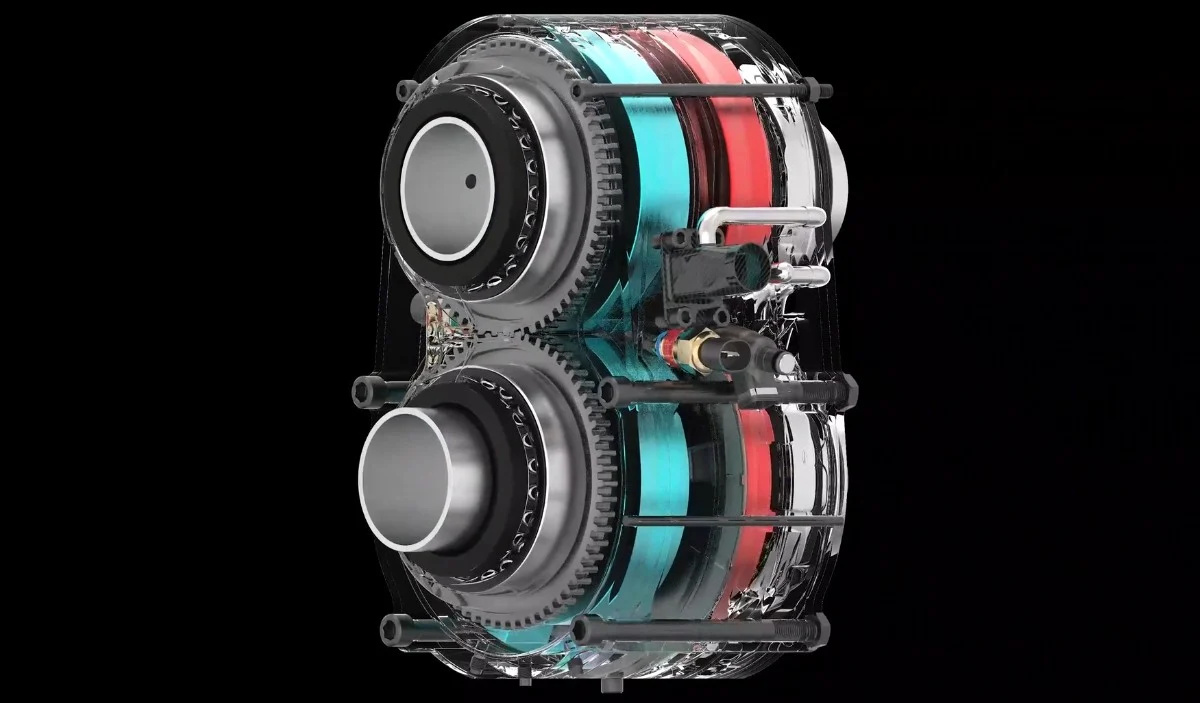
Suitcase-sized hydrogen engine spins at 25,000 rpm, nearly doubling the efficiency of conventional cars and replacing exhaust smoke with water vapor


Ultralight structure was decisive for performance
The low weight was one of the most important factors for the result achieved by the students.
Built with carbon fiber, the vehicle weighs only 49 kilograms. Additionally, its cabin is extremely compact and only accommodates drivers up to 1.63 meters tall and a maximum weight of 54 kilograms.

Students eliminated traditional tank to reduce weight
To achieve such high economy numbers, the university students also simplified the refueling system.
Instead of using a conventional tank, the prototype operates with a small container holding only 30 milliliters of ethanol directly connected to the engine.
The solution was adopted during tests conducted at the Indianapolis Motor Speedway, the circuit where the Shell Eco-marathon took place.
The course used in the competition was 16 kilometers long.
Reduced speed helps students increase autonomy
Despite the impressive efficiency, the Supermileage has important limitations.
The maximum speed of the vehicle reaches only 37 km/h, far below the performance of conventional cars.
Furthermore, the performance can vary depending on weather conditions. Even light side or headwinds can reduce the prototype’s range.
Students bet on simple solutions to save fuel
Although many manufacturers are focusing investments on electric vehicles, the university project showed that combustion engines can still become more efficient.

In the case of the Supermileage, the students focused on basic engineering concepts applied in an extreme way.
The main factors used in the project were:
- Reduced weight
- Compact structure
- Lower air resistance
- Mechanical simplification
- Maximum energy utilization
These elements helped the prototype achieve consumption far below that recorded by conventional automobiles.
University project serves as a laboratory for new ideas
Even without the possibility of immediate commercial use, the vehicle created by the students demonstrates how academic projects can contribute to the development of new mobility solutions.
Competitions like the Shell Eco-marathon serve as a space to test technologies related to energy efficiency, lightweight materials, and consumption reduction.
The result achieved by the students reinforces that a vehicle’s efficiency depends on several factors beyond the type of engine used.
Weight, aerodynamics, and waste reduction continue to be fundamental elements to decrease fuel consumption.


Although commercial cars need to meet safety, comfort, and interior space requirements, experiences like Supermileage help demonstrate how far automotive engineering can go when the absolute priority is saving energy.
With information from Xataka