Portuguese
  Spanish


At the UFMG School of Engineering, researchers created a floor that generates energy: piezoelectric sensors compressed by footsteps transform students’ steps in the cafeteria into electricity, and the energy from the steps will help cut the university’s electricity bill, in a low-cost clean energy solution.
Have you ever stopped to think about how much energy your body wastes just by walking? Every step you take pushes the ground with force, and that force disappears, becomes nothing. Well, a group of researchers at the Federal University of Minas Gerais, UFMG, decided it doesn’t have to be that way. They created a floor that generates energy from footsteps, and the laboratory became a place where walking can literally light up a room.
The innovation was announced by Grupo E4 and draws attention for its brilliant simplicity. The idea is to take advantage of the comings and goings in university restaurants, the famous cafeterias, where thousands of people circulate daily. Each step compresses a piezoelectric floor that converts the movement into electric current. It’s the energy of steps, until now wasted, becoming fuel to light up the campus itself.
How the energy-generating floor works
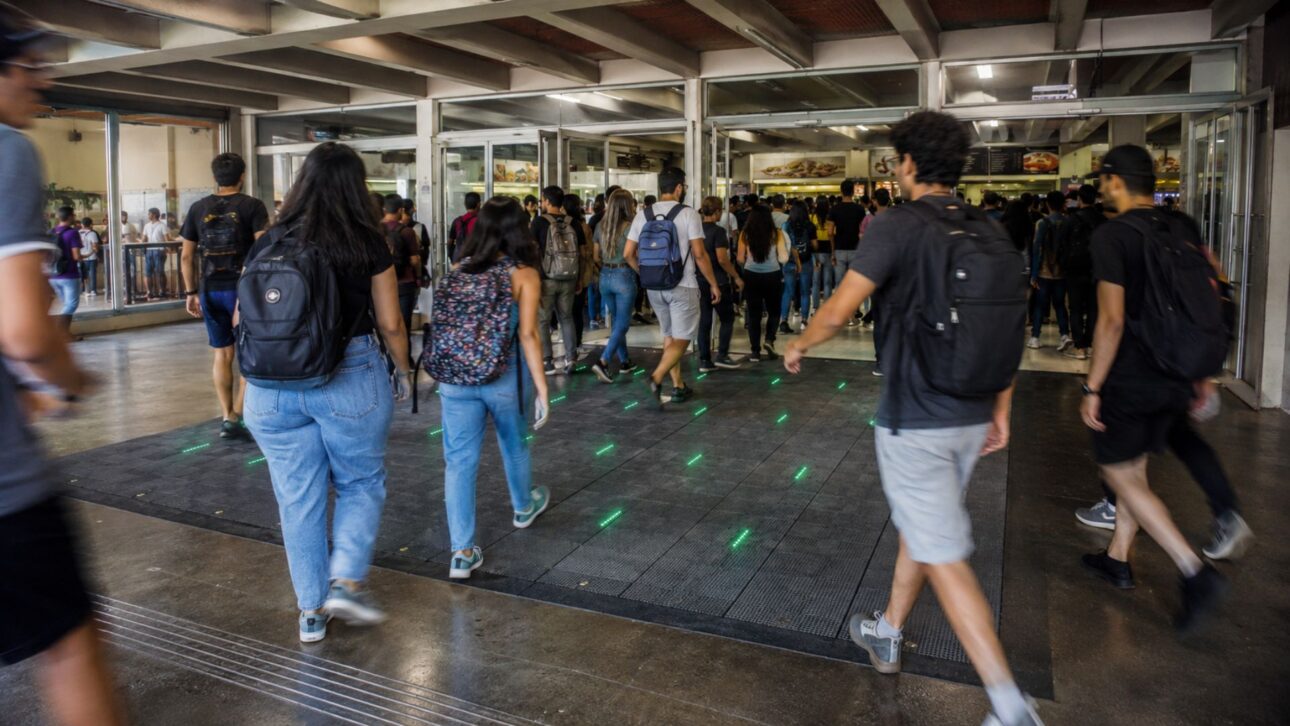
The secret lies in the piezoelectric sensors, materials that generate electricity when pressed or deformed. When someone steps on the piezoelectric floor, the weight compresses these sensors, and the compression produces a small energy discharge. It’s the concept of energy harvesting, which captures the mechanical surplus from daily activities.
-
Cambridge Scientists Achieve Solar-Powered Plastic Recycling, Converting Waste into Valuable Chemicals Without Fossil Fuels, Paving the Way for a Low-Carbon Circular Economy

-
In Ghana, Makafui Awuku Turns 250-300 Water Sachets Into Each 30-Year-Lasting School Desk, Lifting Children Off Classroom Floors

-
In September 2035, Mars to Shine Brightest Since 2003, Aligning with NASA and China’s Planned Human Mission to the Red Planet
-
Robots Descend Four Kilometers to Operate in the World’s Deepest Mine, Unbearable for Humans




The differential of the UFMG team lies in the design. According to the release from the university itself, the researchers created a 3D-printed metastructure that makes the step compress the sensor directly, instead of relying on vibration, as in conventional models. This makes better use of each step. “When the person steps and applies pressure on this floor with the microgenerator prototypes we created, the step compresses the piezoelectric system, which generates the energy,” explains Professor Antônio Ávila, project coordinator in the Department of Mechanical Engineering.
It is important to record the stage of the work, honestly. It is a prototype, a recently completed proof of concept, and not a system already installed and functioning. “We just made the prototype of the proof of concept,” said Ávila. The floor that generates energy exists, was bench-tested, and works, but it will still be implemented and evaluated on a real scale in the cafeterias. Knowing this does not take away the merit, on the contrary, it shows where a good idea starts.
13,000 steps per day: the cafeteria becomes a power plant
The choice of location was not by chance. UFMG’s university restaurants receive at least 13,000 students every day, a constant and predictable flow of people coming and going. It is the perfect scenario for step energy, because, unlike the sun or the wind, human movement in a cafeteria is practically guaranteed during meal times.
The plan is to install the floor that generates energy precisely at the entrance and exit of the restaurants, the points of highest foot traffic. Each person that passes contributes a bit of electricity, and the sum of thousands of steps per day starts to make a difference. Where there was only floor wear before, there is now energy generation. It is transforming pedestrian traffic into a small collective generator.
The logic aligns with a real advantage of the method. Sources like solar and wind depend on climate, time of day, and season. But step energy occurs whenever there are people walking, and on a university campus, that is all the time. Therefore, the cafeteria, with its intense and regular flow, is an ideal laboratory to prove that the piezoelectric floor sustains itself in practice.
R$ 1 per tile: the trump card of low cost
If the idea is already good, the price is what makes it revolutionary. Each piezoelectric tile used in the project costs about R$ 1. For comparison, similar commercial floors, sold by private companies, can cost about US$ 800 per square meter. The difference is abysmal, and it is what can take the technology from an expensive niche to real use.
This cost reduction has a noble reason. The UFMG team developed a solution that can be entirely manufactured within the university, from the tiles to the electrical circuit, without relying on expensive suppliers. Creating a floor that generates energy with low-cost material is what separates a laboratory curiosity from something that can spread. When the component costs one real, scaling is no longer a fantasy.
The low cost also changes who can use the technology. A piezoelectric floor costing hundreds of dollars per square meter is restricted to innovation showcases in wealthy countries. However, a version costing cents per tile opens the door for schools, terminals, stations, and public buildings in Brazil. It’s clean energy at a developing country’s price, and that matters a lot.
What is the energy for: cutting the electricity bill
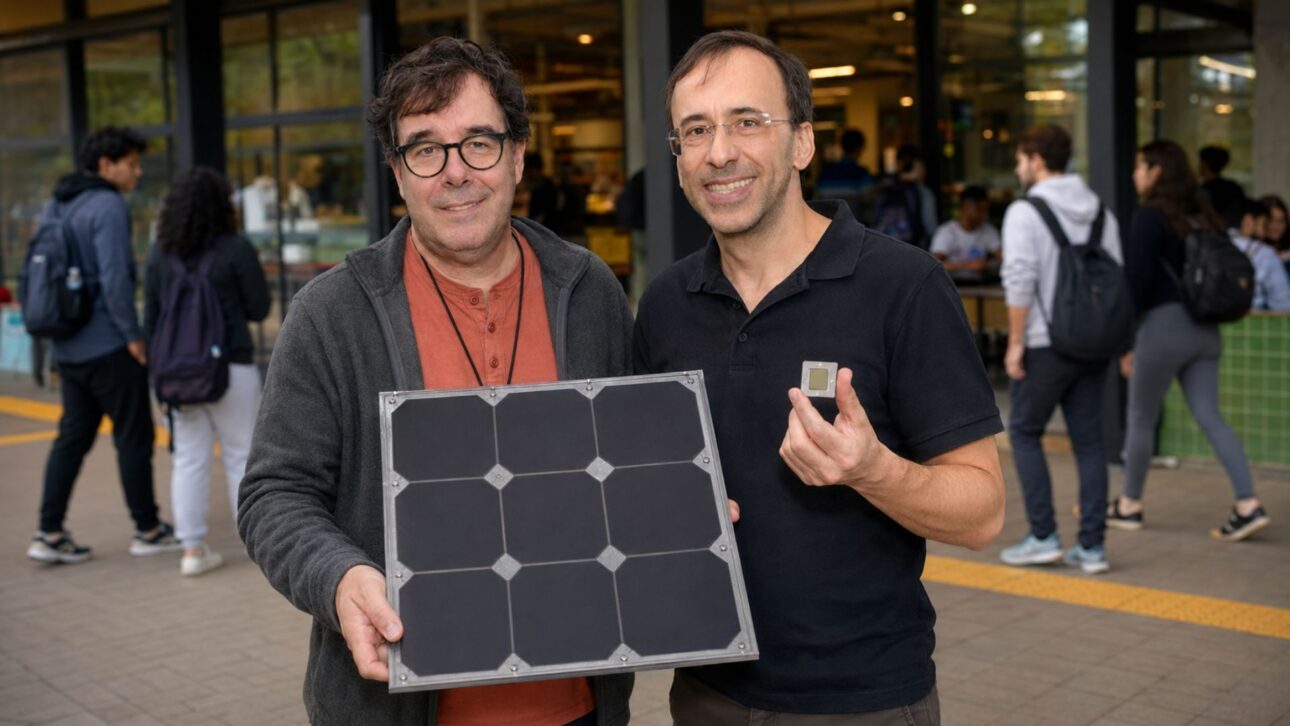
Initially, according to the researchers, the energy from footsteps will be used to reduce the lighting cost of the restaurant environments themselves. In other words, the light that illuminates the cafeteria can, in part, come from those walking through it. It’s a beautiful cycle: the user generates the energy they consume.
The potential goes beyond the light bulb, and plans already exist. The generated energy can be stored in batteries, similar to what already happens with the campus’s solar panels, and used later. The researchers also mention applications like powering library detectors. Gradually, the floor that generates energy would cease to be just a cut in the lighting bill to become a true auxiliary source in the university’s daily life.
It’s worth keeping your feet on the ground, no pun intended. The amount of electricity a step generates is small, and no piezoelectric will single-handedly power an entire building. The gain is incremental and localized, aimed at cutting specific costs, like corridor lighting. Presenting the clean energy from footsteps as a magical solution would be an exaggeration. The fair statement is that it is an intelligent and inexpensive piece within a larger puzzle of energy efficiency.
Clean energy that utilizes what is lost
The charm of this project lies in turning waste into a resource. Every time we walk, we dissipate mechanical energy that never returns. Capturing a fraction of this is, at its core, making clean energy from what already exists and would be lost anyway. There is no fuel burning, no emissions, no new impact, just the utilization of a movement that was already happening.
This principle places the energy of steps in a family of promising technologies. These are solutions that do not replace major sources but complement them, extracting electricity from places no one looked at: the vibration of a bridge, the heat of a machine, the turn of a turnstile, a step in a corridor. Each one alone is modest, but together they point to a future of total utilization.
For a country like Brazil, which increasingly discusses energy transition, having a floor that generates energy developed locally is symbolic. It shows that clean energy is not just a matter of large plants and billion-dollar investments, and that innovation can be born cheaply, within a public university, solving a concrete problem like the electricity bill of the cafeteria.
From Japan to Brazil: the technology gains a national version
The idea of generating electricity with steps did not originate at UFMG, and recognizing this values the Brazilian achievement. The most famous example is in Japan, at the bustling Shibuya station in Tokyo, where smart floors have been capturing the energy of millions of pedestrians for years. The concept of piezoelectric flooring has already proven to work in high-traffic environments.
UFMG’s major contribution is making this feasible here. While imported solutions cost a fortune per square meter, the Brazilian version bets on very cheap material and local manufacturing. It’s not about copying the Japanese floor, it’s about reinventing it with the face and budget of Brazil. It’s the difference between admiring a technology from afar and actually being able to install it in a university restaurant.
This is the kind of adaptation that turns a good idea into reality in a developing country. The energy of steps stops being an expensive showcase of innovation and becomes an accessible tool. If it succeeds on the scale of UFMG’s cafeterias, the floor that generates energy paves the way for Brazilian schools, hospitals, and terminals to adopt the same logic.
What is needed for the step to truly become light
To conclude realistically, it’s worth separating the promise from what already exists. What UFMG has today is a working prototype, a solid proof of concept, with low cost and intelligent design. What is still missing is the real-scale test in the cafeterias, the measurement of how much energy 13,000 daily steps actually deliver, and the proof that the system can withstand intense use over time.
These are precisely the next steps of the research, and they will determine the impact’s magnitude. Durability, maintenance, and efficiency need to be proven outside the lab. Only after that can we state with numbers how much of the electricity bill the energy of steps will actually cut. Until then, the most honest approach is to treat the floor that generates energy as a promising bet, not as a ready solution.
Even so, the value of the project is clear. It proves that it is possible to create clean energy with creativity and almost no money, within a Brazilian university, addressing a real cost. If the calculations hold up in tests, UFMG will have shown that the shortest path between waste and savings could simply be a well-thought-out floor beneath our feet.
And you, would you agree to have the floor of your school, the mall, or the subway generate energy with your steps to reduce the electricity bill of the place? Let us know in the comments if you believe this type of Brazilian technology has a future or if it is still just a good laboratory idea.