Portuguese
  Spanish


Founder of Mckingtorch Africa, the Ghanaian Makafui Awuku melts the plastic water sachets that clog Accra and presses them into durable panels. Each school desk uses 250 to 300 sachets, lasts decades, and is already reaching public schools in a country where more than 2 million students study on the floor.
In Accra, the capital of Ghana, the streets are constantly covered with small, stubborn trash: the plastic bags of drinking water, the sachets that clog drains and worsen floods. It was by looking at this mountain of plastic that Makafui Awuku saw what no one else did, raw material. He created a way to melt and press these sachets into hard panels and, from them, manufacture a recycled plastic school desk that lasts decades. The story was told by the program The World, from the public network PRX.
The calculation is simple and powerful. Each desk uses 250 to 300 water sachets collected from the trash, washed, and processed. Instead of clogging a canal in Accra, this plastic becomes the furniture that lifts a child off the classroom floor. In a country that needs more than 2 million school seats, Makafui Awuku’s creative recycling solves two problems at once, waste and education.
From the plastic that clogs Accra to the classroom
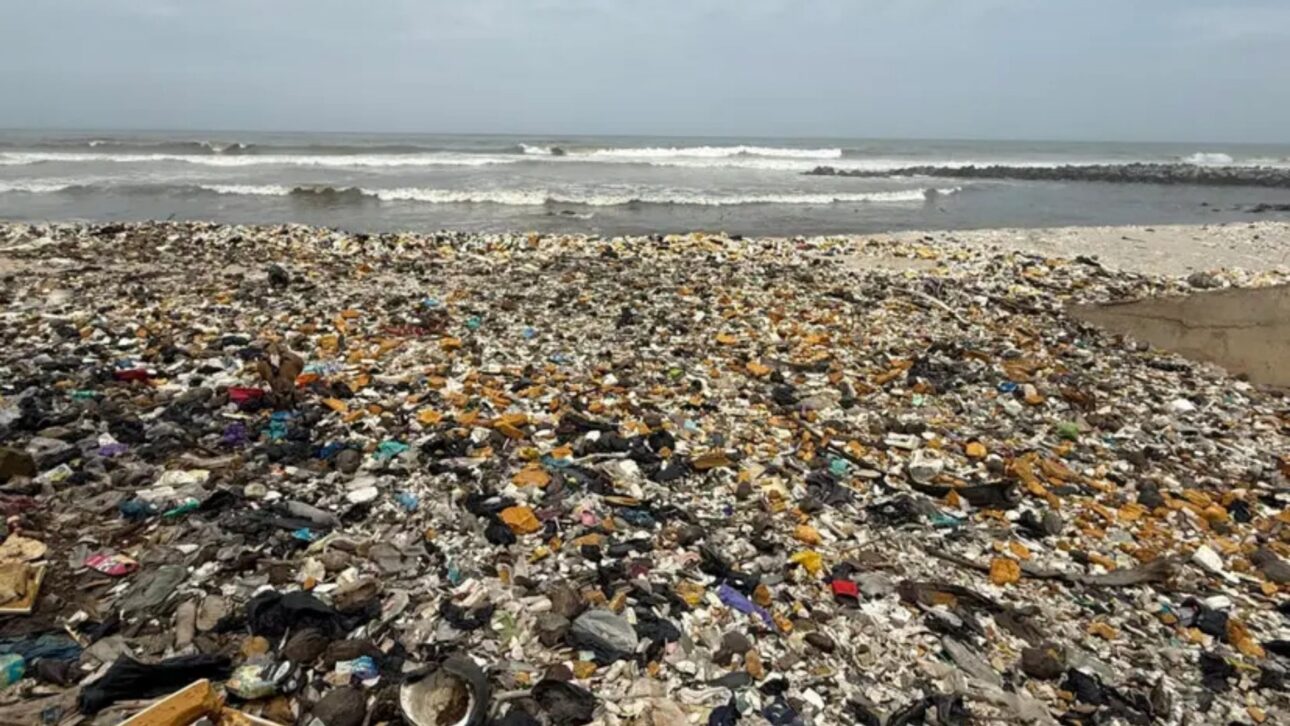
image: Ridwan Karim Dini-Osman/The World
To understand the achievement, one must understand the problem. Water sachets, small plastic bags sold for pennies, are the most common way to drink water in Ghana. The cost of this appears on the streets: billions of these discarded bags clog ditches, dirty beaches, and worsen Accra’s floods. It is one of the most visible plastic wastes in the country.
-
In September 2035, Mars to Shine Brightest Since 2003, Aligning with NASA and China’s Planned Human Mission to the Red Planet

-
Robots Descend Four Kilometers to Operate in the World’s Deepest Mine, Unbearable for Humans

-
Brazilian Students Develop Membrane to Clean Contaminated Water for Just $0.01 Per Use, Removing Oil, Dye, Turbidity, and Microorganisms, Reusable 20 Times, Offering Affordable Treatment to Communities Without Potable Water
-
Brazilian Students Turn Manganese Mining Waste into Functional Battery, Present at Major Science Fair




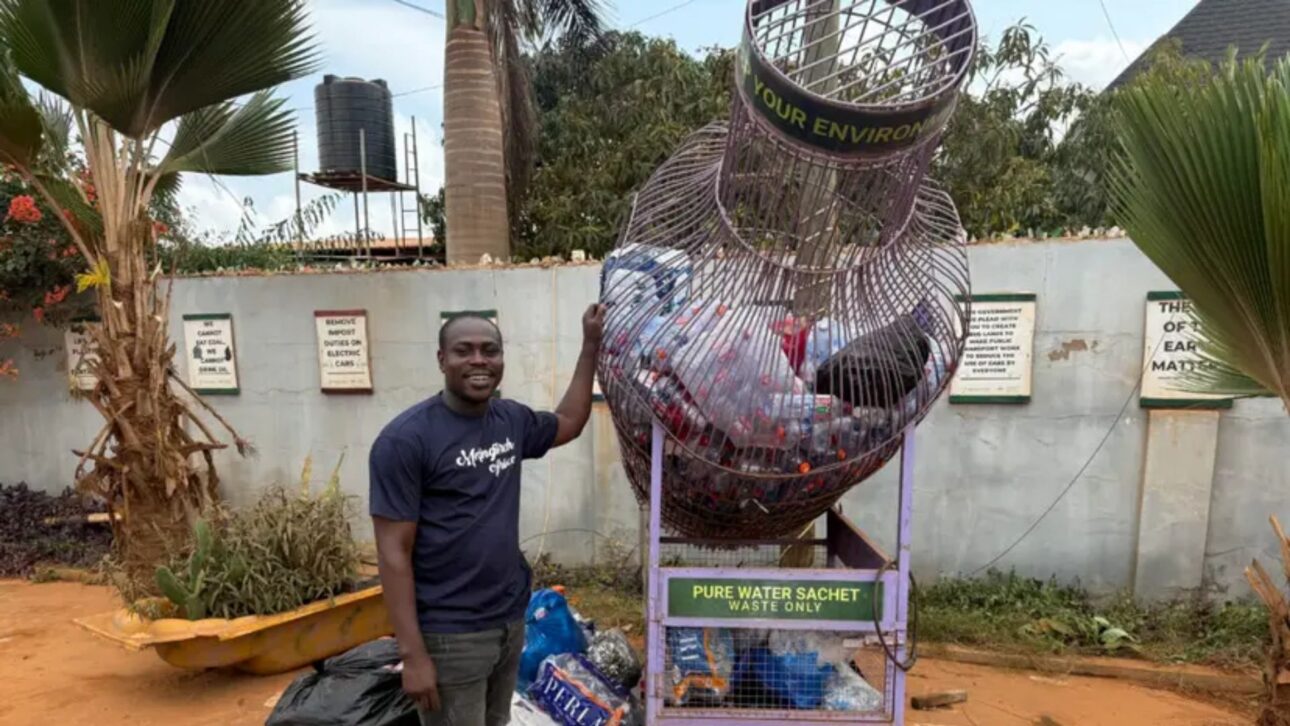
Makafui Awuku knows this problem firsthand, literally. He developed asthma from breathing in the smoke from burning plastic in his own community. Instead of just complaining, he took action. In 2017, he founded Mckingtorch Africa, a social enterprise focused on sustainability, recycling, and combating climate change. The idea that made him famous came later when he discovered how to transform water sachets into a durable material.
Ridwan Karim Dini-Osman/The World
The breakthrough was treating waste as an industrial input. Awuku’s creative recycling doesn’t stop at collection; it creates a chain: collectors gather the water sachets, the material is cleaned, melted, and pressed into panels, and these panels become furniture. “If we can transform waste into raw material that lasts decades and develop the value chain to make this accessible to production, the problem will disappear while we create jobs,” summarizes Makafui Awuku.
How a desk is born from 250 to 300 sachets
Ridwan Karim Dini-Osman/The World
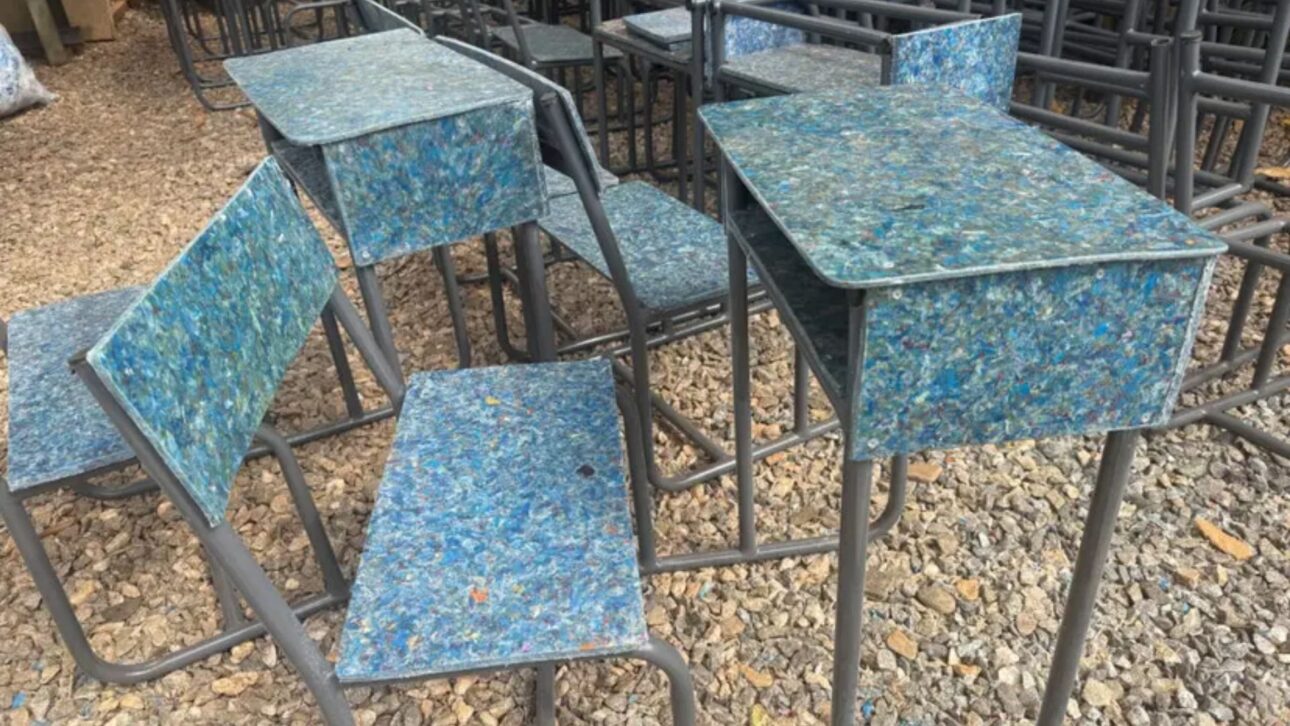
The process is ingenious in its simplicity. The sachets collected at disposal points are cleaned and melted, forming dense and sturdy recycled plastic panels. From these panels, each school desk is assembled to withstand the hustle and bustle of a busy classroom. The result is a waterproof, lightweight, and durable piece of furniture, qualities that common wood does not always provide in the humid and hot climate of the region.
Ridwan Karim Dini-Osman/The World
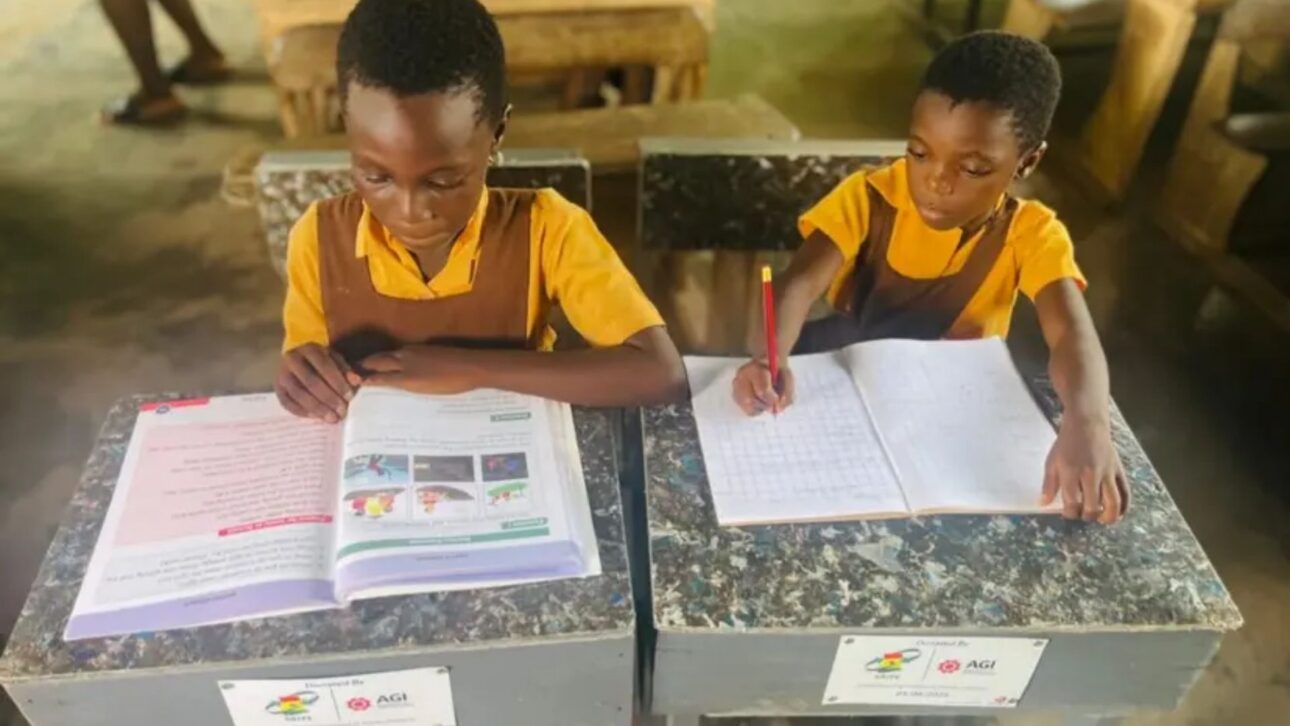
The numbers show the scale of reuse. Each school desk consumes 250 to 300 water sachets, and is designed to accommodate two to three children at the same time. Multiplying this by the production, thousands of plastic bags are removed from the streets with each batch of desks that leaves the workshop.
Durability is the trump card that changes the game. While wooden desks rot or break, the recycled plastic school desk lasts for decades without disintegrating, according to Awuku. For poor schools, which cannot afford to replace furniture frequently, a piece of furniture that lasts is almost as valuable as free furniture.
A country where more than 2 million study on the floor
The context makes the invention urgent. Ghana faces a huge deficit of school furniture. According to official data from the country’s educational management system, released by The World, about 40% of elementary students do not have desks, and more than 2 million children study sitting on the floor. In many classrooms, students crowd four to a table or lie on their stomachs to write.
The consequences go beyond discomfort. Studying on the floor or in improvised positions harms posture, tires the body, and hinders reading and writing, which directly affects school performance. The lack of a simple school desk becomes, in practice, another barrier for children who already face many others.
It is in this gap that Makafui Awuku’s creative recycling fits as a low-cost solution. Instead of relying solely on scarce public budgets to buy new furniture, schools can receive desks made from a material that would otherwise be polluting the city. One person’s trash becomes another’s seat.
About 200 desks and counting
Production is still artisanal but growing. Since it started manufacturing the desks, Mckingtorch has delivered about 200 desks, with a current pace of approximately 30 per month. It’s not enough for a deficit of millions, and no one pretends it is, but it’s living proof that the model works and can scale.
The impact goes beyond the classroom. Makafui Awuku’s operation generates income for waste pickers and young artisans, turning the collection of water sachets into a source of work. The company also maintains environmental education programs to teach kids about recycling and climate, planting the idea that recycled plastic is not garbage, it’s a resource.
Recognition has started to arrive. According to The World, Makafui Awuku was a finalist for the UN Sustainable Development Goals Action Award, and Ghanaian government bodies, such as the Ministry of Education and the environmental agency, have already expressed interest in expanding the project to schools in remote regions. The creative recycling that was born in a workshop becomes a potential education policy.
When Companies Get Involved
The larger scale has come from partnerships. In December 2025, the insurer Prudential donated 100 recycled plastic desks to Gbegbeyise Basic School in Accra. The important detail is that this donation was not the work of a single company: it was born from a partnership between Prudential, Academic City University, whose students helped manufacture the desks with their own machinery, and Mckingtorch Africa. It’s creative recycling gaining academic and corporate support.
Another company that joined was the energy distributor Vivo Energy Ghana, which commissioned Mckingtorch to make desks from recycled plastic to replace improvised seating in underprivileged schools. The most symbolic case was Breman Fosuansa D/A Basic School, in the central region of the country, where children used concrete blocks as benches, a situation revealed by a local radio before the new furniture was installed.
This chain of partners shows the way to move beyond the artisanal scale. When insurers, universities, and energy companies buy or sponsor the recycled plastic school desk, production no longer depends solely on the efforts of a small workshop. This is how a good idea stops being an exception and starts becoming the norm.
Why This Matters to Brazil
Ghana’s story resonates here more than it seems. Brazil also deals with schools lacking adequate furniture and mountains of poorly utilized plastic waste, two problems that are usually treated separately. Makafui Awuku’s insight was precisely to cross them, showing that an abundant and cheap waste can become a durable school desk.
The model is replicable because it does not depend on high technology, but rather on method and will. Identifying a plastic waste that is abundant in the region, setting up a collection chain that generates income, and transforming this material into durable furniture is a recipe that fits many cities. Creative recycling works best when it simultaneously solves an environmental and a social issue.
In the end, what Ghana teaches is a change of perspective. The same recycled plastic bag that yesterday clogged a drain in Accra today supports a child’s notebook at school. It wasn’t necessary to invent a new material, it was necessary to see value in what everyone was throwing away.
Makafui Awuku’s work proves that true creative recycling is the one that moves from discourse to a useful object in the hands of those who need it. A recycled plastic school desk, made from water bags, managed to unite urban cleanliness, income generation, and the right to education in a single gesture.
And you, what kind of plastic waste do you see every day in your city that could become something as useful as a school desk? Share your idea for repurposing that you think would work in Brazil in the comments here.