Portuguese
  Spanish


Discover How the Floating Solar Plant of Itaipu Transforms Renewable Energy into Sustainable Innovation on the Border Between Brazil and Paraguay.
The border between Brazil and Paraguay has become the stage for an innovative renewable energy project. Moreover, the floating solar plant, installed in the reservoir of the Itaipu Binational Hydroelectric Plant, represents an important step in diversifying energy generation sources.
Consequently, it contributes to the search for sustainable solutions for the future. Thus, this historic project shows technological advancements and highlights the growing concern for energy efficiency and environmental preservation.
Since its inauguration in 1984, Itaipu Binational has played a central role in supplying electricity to both countries. Therefore, the plant is now advancing to a new stage of innovation, combining hydroelectric generation with floating solar energy.
-
Solar energy reaches 55 GW, becoming the second largest power source in Brazil’s energy mix

-
Solar energy can increase property value by up to 10% and become a selling point.
-
Solar and wind energy surpass natural gas for the first time in the world and accelerate energy revolution

-
Africa has about 500,000 cell towers and most still burn diesel to operate, while companies rush to cover antennas with solar energy and avoid signal blackouts.



Historically, the region has stood out for large-scale projects, and, therefore, the inclusion of solar energy in the reservoir demonstrates the capacity to integrate modern solutions in a consolidated context.
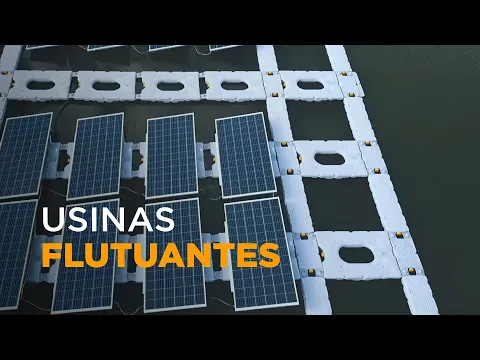
The project of the floating solar plant initially plans to install 1,584 solar panels of 705 watts each, mounted on 4,199 floaters distributed throughout the reservoir lake. Furthermore, the first phase has already begun, with 132 panels fixed on the water.
The expectation is that the plant will be fully operational by the end of the year. Thus, this installation will have a capacity of 1 megawatt, enough to supply around 650 households, demonstrating the real potential of solar energy in water bodies.
On the other hand, Itaipu plans to gradually expand the installation, incorporating more efficient technologies and materials. As a result, future phases are expected to increase energy production.
In this way, more households and businesses will be able to receive electricity from floating solar energy. This type of pilot project serves as a reference for other regions in Brazil and the world.
Pioneering and Technological Integration
According to the Brazilian General Director of Itaipu, Enio Verri, projects like this are pioneering in the electrical sector and play a strategic role in the energy transition.
“This experience helps us understand how new technologies can complement the plant’s operations without interfering with its main mission: to generate hydroelectric energy safely, reliably, and sustainably,” he stated. Therefore, integrating a floating solar plant with the existing infrastructure allows for testing hybrid solutions that other regions can replicate.
This promotes efficiency and lower environmental impact.
The choice of the Itaipu reservoir is not casual. In fact, with its extensive surface area, the lake provides ideal conditions to install floating panels that utilize areas previously unproductively used.
Historically, large reservoirs served only for hydroelectric generation and water supply. However, floating solar energy transforms these spaces into multifunctional energy assets.
Thus, it increases electricity production without requiring new land areas or deforestation.
Moreover, floating solar panels present advantages over traditional land systems. Water acts as a natural cooling agent, increasing the efficiency of the panels.
Similarly, they reduce evaporation of the reservoir, preserving a vital resource in regions at risk of water scarcity.
The concern about water management has always been critical in large-scale projects. Floating solar energy offers an innovative solution that combines energy generation and environmental conservation.
The use of smart technologies for remote monitoring allows for the quick identification of problems, ensuring continuous and efficient production.
Consequently, sensors record temperature, light intensity, and water conditions. This helps to maximize performance and reduce maintenance costs.
These innovations reinforce the pioneering nature of the initiative and, therefore, provide learning for future projects.
Performance Assessment and Learning
The experience with the floating solar plant will allow for the assessment of solar energy performance in aquatic environments.
According to Rogério Meneghetti, Superintendent of Renewable Energies at Itaipu, comparing solar generation in water and on land will be essential for planning the expansion of renewable energy in the region.
Moreover, this knowledge can guide public policies and business decisions. It shows the importance of pilot projects for sustainable development.
Historically, Itaipu has always stood out for its installed capacity of 14,000 megawatts. It supplies around 10% of Brazil’s energy demand and 86% of Paraguay’s.
The project of the floating solar plant innovates within this large-scale context, demonstrating how large consolidated systems can evolve and incorporate new technologies without compromising their main function.
As a result, the combination of hydroelectric and floating solar exemplifies how the energy sector can reinvent itself in the face of current demands for sustainability and efficiency.
The implementation of the floating solar plant also provides learning for engineers, technicians, and managers. They study the effects on the aquatic ecosystem, material durability, and energy efficiency.
Thus, this learning helps improve future projects, making investment in floating solar energy more reliable and viable.
Potential and Future Expansion
The potential of the Itaipu reservoir is impressive. Covering just 10% of its surface area with floating solar panels could generate an installed capacity of 14,000 megawatts, equivalent to the hydroelectric plant.
Therefore, investment in floating solar energy not only complements existing generation but also allows for a significant increase in renewable energy production.
This strategic vision aligns with global trends of energy transition, where integrating multiple renewable sources is essential.
Moreover, the floating solar plant contributes to the development of innovative solutions in the sector. Integrating floating solar systems into the hydroelectric infrastructure creates more efficient and less impactful hybrid models.
Consequently, this approach meets the needs of countries looking to expand their renewable energy matrix without compromising land areas or natural resources. It offers a sustainable path for economic and environmental growth.
Future expansion also plans to integrate large-scale energy storage batteries. This will allow the use of generated electricity even during periods of low solar incidence.
In this way, this combination increases the reliability of supply and makes floating solar energy a competitive option compared to traditional sources.
Floating Solar Plant: A Historic Milestone in Renewable Energy
The installation of a floating solar plant on the border between Brazil and Paraguay marks a historic moment. It shows that energy innovation is not limited to new constructions but can apply to strategic and consolidated locations.
Therefore, projects like this reinforce the role of Brazil and Paraguay as pioneers in the search for sustainable solutions. They demonstrate that integrating technology, efficiency, and environmental preservation is possible and necessary for the future.
In summary, the floating solar plant in the Itaipu reservoir represents a significant advance in the energy transition. It combines technological innovation, environmental sustainability, and efficient resource utilization.
Thus, the historic project increases electric generation capacity and serves as a reference for future clean energy initiatives, consolidating the collaboration between Brazil and Paraguay in building a more sustainable and innovative energy sector.