Portuguese
  Spanish


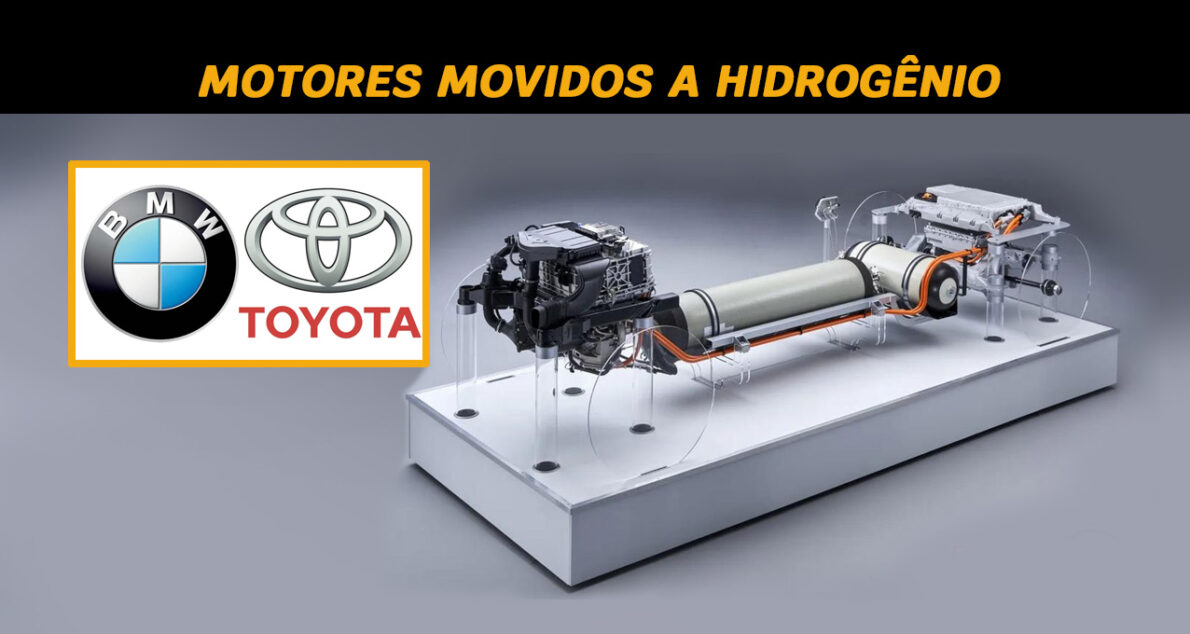

BMW and Toyota Reinforce Their Commitment to Adopting Hydrogen as Fuel for Automobiles. The Collaboration Between the Automakers May Change the Future of Mobility, Promoting Vehicles That Emit Only Water.
Have you ever imagined driving a car that instead of emitting polluting gases, only releases water? While many still believe that electricity will dominate the future of vehicles, giants like BMW and Toyota are betting on a promising alternative: hydrogen.
The partnership between these two automakers is not new, but the recent advances in this collaboration bring to light a discussion about the true energy revolution that may be on the way.
The Bet on Hydrogen as the Fuel of the Future
At the center of this scenario is hydrogen, a fuel that promises to transform the way we move. The joint work between BMW and Toyota to develop hydrogen fuel cell-based technologies demonstrates the seriousness of this bet.
-
Does a Flag on Your Car’s Hood Overheat the Engine? Expert Reveals the Overlooked Danger for Drivers

-
How to Identify and Remove Superficial Scratches Before Spending on Car Bodywork

-
Electric Car with Extended Range: Company Patents Hybrid Transmission System Using Gasoline Engine for Backup
-
GM Developed the Chevette to Rival the Beetle, Launched it in Brazil Before Europe, Sold 1.6 Million Units, and Left a Generation with Gas Station Trauma


According to the Japanese newspaper Nikkei Asia, the partnership between the companies was recently renewed, with both automakers committed to advancing the implementation of hydrogen as a viable energy source for automobiles.
The Challenges for Mass Adoption
However, the current scenario reveals that the path to this revolution is still fraught with challenges. Toyota, which already uses hydrogen in its Mirai model, one of the few mass-produced cars powered by fuel cells, continues to lead the development of this technology. But what makes hydrogen so special?
The answer lies in the chemical reaction that occurs within the fuel cells: oxygen and hydrogen combine to generate electricity, which powers the electric motor, resulting in water as a byproduct.
High Costs and Complex Infrastructure
Despite this clean and promising process, mass adoption of hydrogen faces significant barriers.
The infrastructure needed for hydrogen fueling is expensive, complex, and requires high safety standards, which hinders its expansion, especially outside markets like California in the United States.
In some locations, the supply of the fuel even faces viability challenges, raising questions about the sustainability of this energy matrix in the long term.
BMW and Toyota at the Forefront of Innovation
Still, Toyota is not limited to fuel cells. The Japanese automaker is also exploring the use of hydrogen in combustion engines, testing it in models like the GR Corolla.
The intention is to expand the use of this fuel beyond electric vehicles, opening new possibilities for traditional engines, which could revolutionize the automotive sector.
Meanwhile, BMW maintains its commitment to the partnership with Toyota, seeing hydrogen as an opportunity for energy diversification.
Although it has not disclosed new details about its plans, the German company continues to invest in the development of zero-emission technologies, seeking alternatives that can coexist with the growing electrification of vehicles.
Hydrogen in Brazil
Hydrogen is also beginning to gain attention in Brazil, where investments in green hydrogen, produced from renewable sources, are already underway.
However, the practical implementation of this technology in the country is still in its infancy and will take some time before it can be effectively integrated into the national automotive market.
In light of all these innovations, the question remains: are we really close to seeing hydrogen replace gasoline and diesel on roads around the world? Or will the complexity and costs involved limit its use to specific niches? Only time will tell, but one thing is certain: BMW and Toyota are at the forefront of this potential transformation.