Portuguese
  Spanish


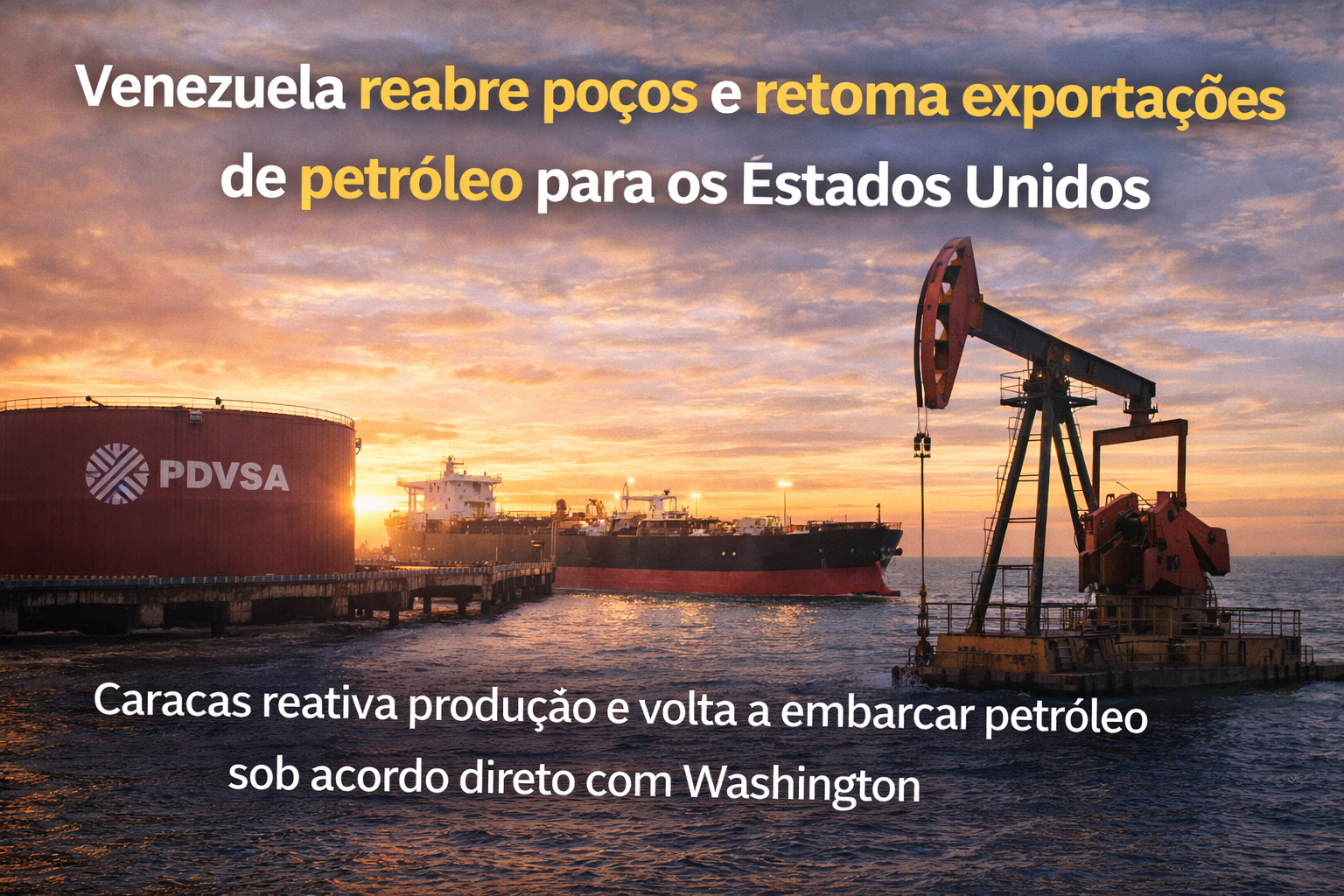


Venezuela has started reopening state-owned PDVSA wells and has resumed shipping oil to the United States.
This move ends weeks of halt caused by the American embargo imposed at the end of 2025.
According to information provided by sources connected to the state-owned company, ships have begun to depart with cargoes destined for the North American market.
Each supertanker carries, on average, about 1.8 million barrels.
Exports Resume After Weeks Of Blockade
The interruption of shipments led PDVSA to reduce activity and temporarily close wells.
The oil was stored in tanks and could not be shipped due to a lack of qualified buyers.
-
Oil production grows in Rio, but reserve replacement raises a warning sign

-
Petrobras is expected to complete the drilling of the Morpho well in the Foz do Amazonas in August 2026, the first well in the Equatorial Margin, an oil frontier that the ANP estimates at more than 30 billion barrels and could redraw the map of Brazil.

-
Oil returns to the center of concerns with tension between the US and Iran

-
IEA reduces forecast for global oil demand in 2026 after impacts of the Middle East crisis


Now, with the easing of trade rules, cargoes are beginning to flow again.
Therefore, the reopening of the wells marks the first step toward normalizing production.
Furthermore, this measure brings immediate financial relief to the government and the state-owned company.
Agreement Involves American Oversight
The resumption occurs within an understanding reached between Caracas and Washington.
Oil is sold at market prices, and the resources collected are monitored by the United States.
According to the American government, the goal is to ensure that oil revenues benefit the Venezuelan people and provide stability to supplies in the U.S.
The oil company Chevron continues as an operational partner, as it has a special license to operate in the country.
Consequently, the flow of barrels is likely to increase as more wells are reactivated.
Recovery Of Production Still Requires Investment
Despite the resumption, experts warn that rebuilding productive capacity will take time.
The Venezuelan infrastructure is operating at its limit after years of poor maintenance.
Therefore, technicians state that Venezuela needs to modernize equipment and repair pipelines before expanding its production.
Nevertheless, the reactivation represents an important advancement and may restore flow to exports.
Economic And Political Weight
Venezuela heavily relies on oil to finance public services and social programs.
With exports halted, revenue fell, and the economy faced new tightening.
Now, the return of sales creates room for fiscal relief and improved confidence.
Moreover, it consolidates a political rapprochement between the two countries, which had been distant since the increase in sanctions.
The information was discussed in January 2026, based on communications from authorities linked to PDVSA and the U.S. government.
The reopening of the wells and the shipment of the first cargoes mark a gradual resumption of the oil sector after weeks of halt due to trade restrictions.
Thus, the country resumes its role as a relevant supplier to the American market.