Portuguese
  Spanish


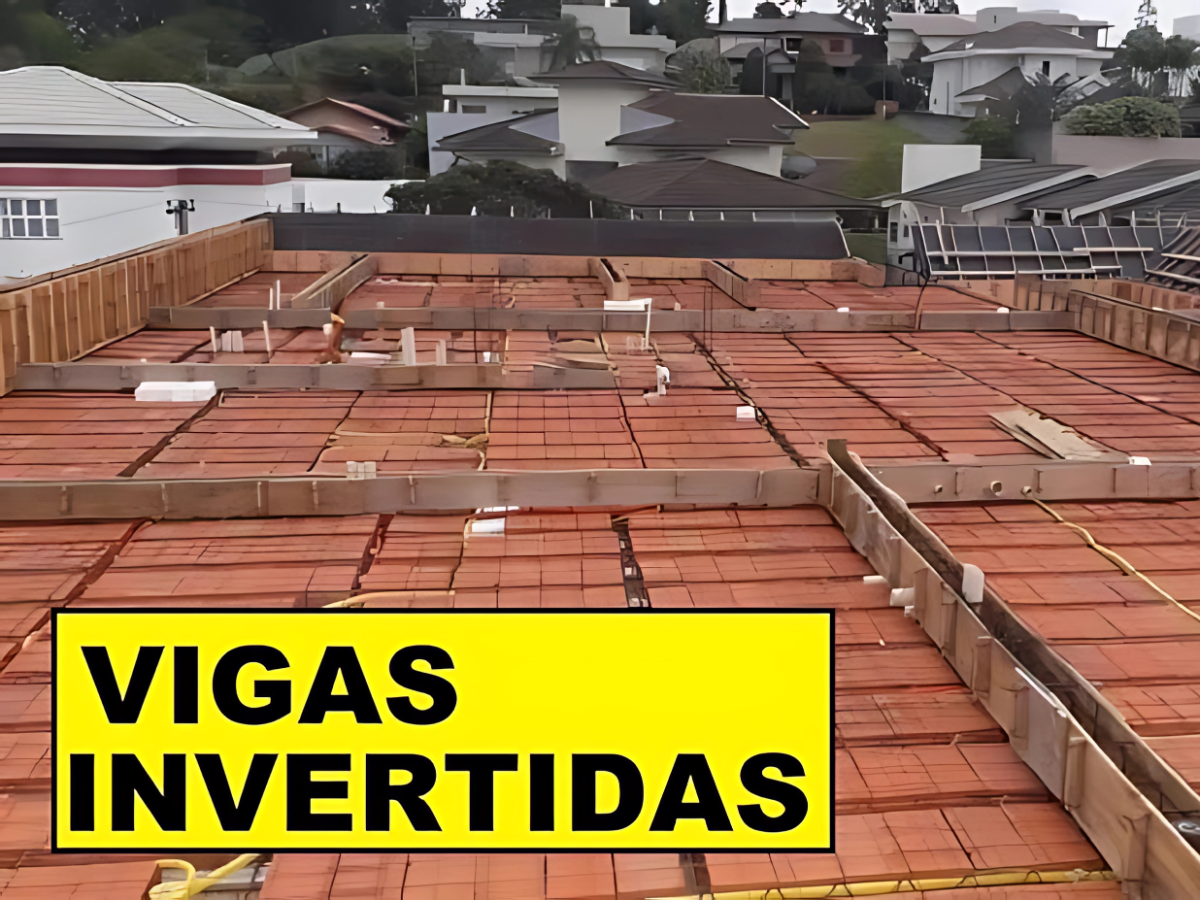


A Widely Used Technique in Civil Construction, The Inverted Beam Ensures Greater Design Freedom, Improves The Internal Aesthetics of Environments, and Allows For Constructions With High Ceilings.
The civil construction sector has adopted increasingly intelligent solutions to unite form and function. One such element is the inverted beam, a structure that, in addition to playing an essential role in load support and distribution, allows for significant architectural benefits.
Its use is growing in projects that require large spaces, refined aesthetics, and structural efficiency — such as theaters, parking lots, walkways, and halls with large clear spans.
Positioned above the slab — rather than below, like conventional beams — the inverted beam stands out for keeping the underside of the slab flat, free of protrusions, improving the finish and contributing to a visually cleaner design.
-
Cost of Installing Subflooring in 2026: The Importance of Proper Slope to Prevent Water Damage and Costly Repairs

-
New Offshore Borehole Mining Technique Extracts Lithium and Cobalt Without Damaging Ocean Floor
-
Vale Doubles Copper Drilling in Brazil’s Carajás, Plans to Drill 120 Kilometers of Rock by 2026
-
Innovative Vertical Cistern Becomes Water Tank in Container Home Amid Pressure Issues, Offering a Compact 1,000-Liter Solution Without a Tower or Underground Tank


Moreover, it is an excellent alternative for raising the ceiling height and making better use of natural light in contemporary buildings.
What Is The Inverted Beam and How Does It Work in Practice?
The inverted beam is a special type of structural beam whose web (the deepest central part) is projected upwards, over the slab.
This allows the ceiling of a space to remain entirely flat, without recesses, enhancing both the visual aspect and functionality of the spaces.
In practice, this structure is used to span large openings, eliminate the need for exposed beams, or create levels such as floor recesses (useful in pools and bathtubs).
A good example is the walkways that span highways or train stations, where height and clear spans are fundamental requirements.
In addition to its aesthetic advantage, the inverted beam distributes loads better across the slab and allows for greater architectural freedom in construction.


Benefits for Civil Construction
The choice of the inverted beam can arise from different motivations — whether aesthetic, structural, or technical. Among the main benefits, the following stand out:
- Increased clear span of the slab, allowing open spaces without many columns;
- Elevation of ceiling height, granting amplitude and sophistication to the environments;
- Recessed floors, such as in leisure areas with pools or spas;
- Utilization of natural light, by enabling larger windows;
- Cleaner aesthetics, with a uniform ceiling and no interruptions;
- Possibility of masonry construction over the slab, with greater stability;
- Cost reduction in certain cases, when used as a parapet or balcony closure.
This versatility makes it a common choice in large-scale projects or those seeking visual differentials without compromising structural safety.
Differences Between Inverted Beam and Semi-Inverted Beam
In addition to the fully inverted beam, there is also the so-called semi-inverted beam, ideal for cases where there are height limitations or a need to keep part of the beam visible underneath.
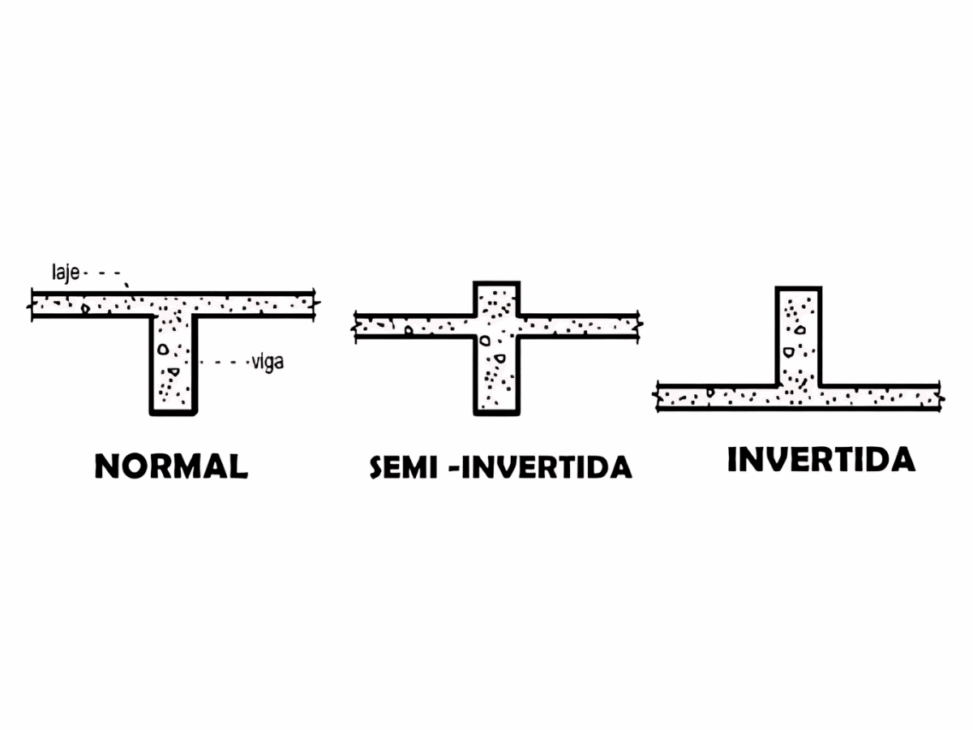
In these cases, the beam slightly exceeds both the upper and lower faces of the slab.
Often used in balcony closures, the semi-inverted beam offers a balance between aesthetics and functionality, being common in residential and commercial projects that need sturdier spans without compromising the height of internal spaces.
Common Applications: Where Does The Inverted Beam Make A Difference?
The inverted beam is frequently used in:
- Leisure areas with floor recesses;
- Cinemas and theaters;
- Sustainable buildings that value natural lighting;
- Corporate buildings with large entrance halls;
- Covered parking lots with large spans;
- Urban or highway walkways.
Its main characteristic — eliminating protrusions in the ceiling — is strategic from both an aesthetic and functional point of view, as it facilitates the installation of false ceilings, recessed lighting, and air conditioning systems.
Essential Care in Application
Despite its advantages, the use of the inverted beam requires strict technical attention. The first critical point is the structural calculation.
As civil engineering reminds us, the choice between a conventional beam and an inverted beam depends on the architectural project and the analysis by the technical responsible.
A sizing error can seriously compromise the stability of the structure.
Another important aspect is the proper assembly of the forms before concreting.
Not correctly constructing the form of the beam can lead to structural failures, especially on hot days, when the concrete reacts more quickly.
It is essential to ensure the correct alignment of the web and flanges of the beam, using well-braced forms.
Additionally, it is necessary to follow specific rules for reinforcement and overlap: in a waffle slab with an inverted beam, for example, the reinforcement of the slab must properly overlap that of the beam.
Safety and Compliance in The Execution of The Inverted Beam
During the execution of the inverted beam, all professionals involved must use personal protective equipment (PPE) and follow safety standards on the construction site.
Proper planning and constant checking of structural parameters are essential to ensure the optimal performance of the beam.
With technical oversight and correct application, the inverted beam fulfills its structural function efficiently while also providing significant gains in design freedom and sustainability.
The adoption of the inverted beam in civil construction represents an advance both in terms of engineering and architectural design.
Its application goes far beyond aesthetics: it is a functional, efficient solution that contributes to wider, brighter, and more sustainable buildings.
Whether to create more sophisticated environments, span large openings, or integrate modern visual elements, the inverted beam is a resource that has been consolidating as a trend in Brazilian construction — as long as it is applied with technique and responsibility.
Source: OBRAMAX