Portuguese
  Spanish


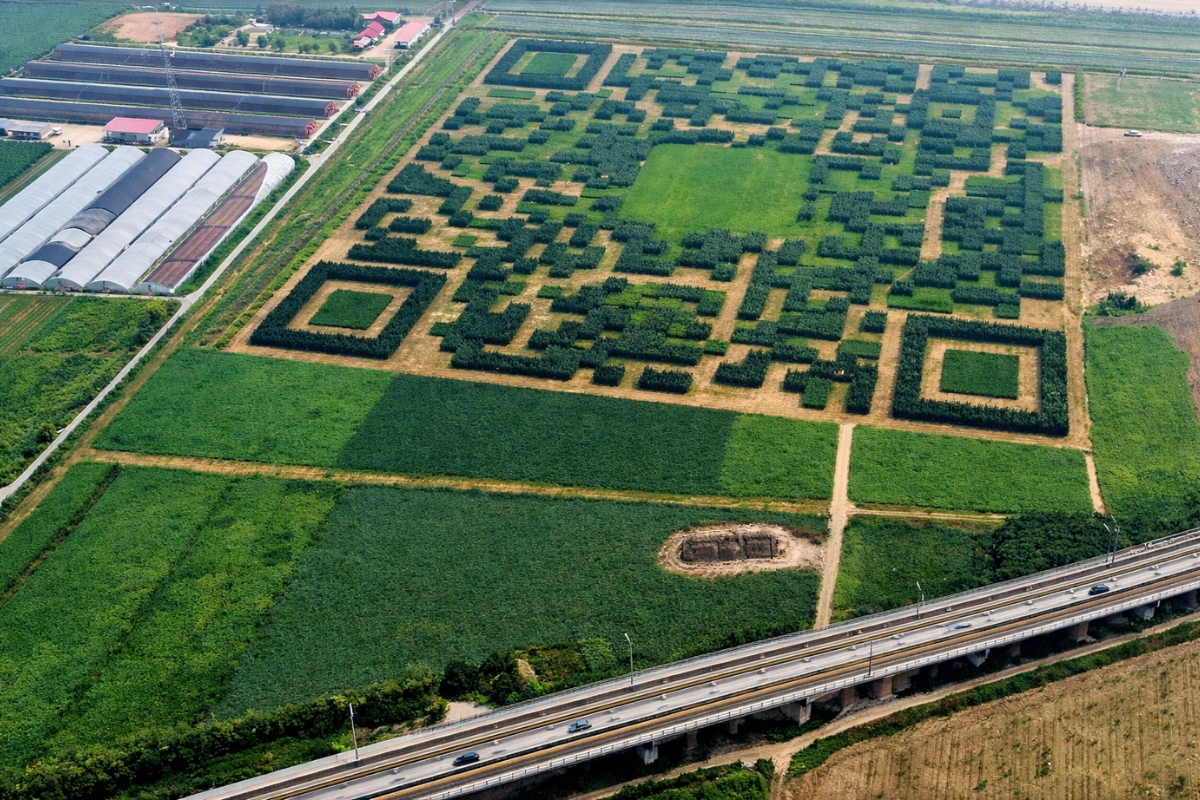


In Xilinshui, Residents Created a QR Code with 130 Thousand Trees to Promote Local Tourism, Creating Positive Environmental Impact and Catching the Public’s Attention
The Chinese village of Xilinshui became a topic of discussion by creating a giant QR Code using around 130 thousand trees strategically positioned to form the design.
The result draws attention for uniting nature, technology, and tourism promotion in a single landscape, designed to be viewed from above and function in practice.
How 130 Thousand Trees Became a Giant QR Code That Can Be Scanned
The project used around 130 thousand trees planted strategically to form a readable pattern like a QR Code.
-
Mother discovers she may have won £12 million in the lottery but faces an agonizing wait after the shopkeeper threw the ticket in the trash.

-
A couple bought a house in Sheffield and, when removing the carpet from the hallway, found a trapdoor leading to a secret 23 m² basement with a 2-meter ceiling height, a discovery that eliminated the need for an expensive extension and, according to them, added £70,000 to the property’s value.

-
A nurse bought for 20,000 a 1955 house abandoned by a hoarder in Texas, and months later, rain revealed a buried pool in the backyard valued at $160,000, which he restored himself for about $10,000, a fraction of the cost of building a new one.
-
The United Kingdom is transforming dog feces left on trails into gas to light a streetlamp through an unlikely and surprising project that shows how even one of the most rejected wastes in cities can generate energy.




The central point is the contrast of the design. The alignment of the planted areas needs to maintain the code fidelity for it to be readable.
With that, the forest stops being just a landscape and takes on a direct role in visual communication.

Why the Code Depends on Drones and Satellites to Function
The design was conceived to be identified in aerial images, such as those captured by drones and satellites.
At ground level, the shape is lost in scale. From above, the pattern appears complete and allows reading of the giant QR Code.
This detail transforms the area into a point of curiosity because the experience begins even before the visit, on the screen and on the map.
Where the QR Code Leads and How It Affects Local Tourism
When scanned, the QR Code directs users to an official channel linked to tourism promotion in the region.
The initiative connects visitors to destination information with a simple gesture, reinforcing the idea of technology-guided tourism.
China Daily, an English-language newspaper based in China, detailed that the QR Code directs users to an account that promotes local tourism.
Reforestation with 130 Thousand Trees Becomes Part of the Environmental Impact
In addition to visibility, the project reinforces a concrete effect: reforestation on a large scale with about 130 thousand trees.
This helps associate the image of the destination with a theme that is gaining strength in current tourism, the search for actions with positive environmental impact.
In practice, the initiative creates a visual landmark and also adds value to the territory with planned planting.
What the Idea of Xilinshui Shows About Creativity and Planning
Xilinshui became an example of how planning can transform a rural space into a showcase for tourism marketing.
The differentiator lies in using a well-known resource from day-to-day life, the QR Code, applied on an unusual scale and entirely integrated into the environment.
The initiative also reinforces a simple message: when the project is well-executed, even a forest can become a visible promotion tool from the sky.
In the end, Xilinshui managed to unite 130 thousand trees, technology, and tourism in a single solution, with quick reading and immediate effect for those viewing from above.
And the impact goes beyond curiosity, because the location gains attention, attracts interest, and leaves a legacy of reforestation in the landscape.