Portuguese
  Spanish


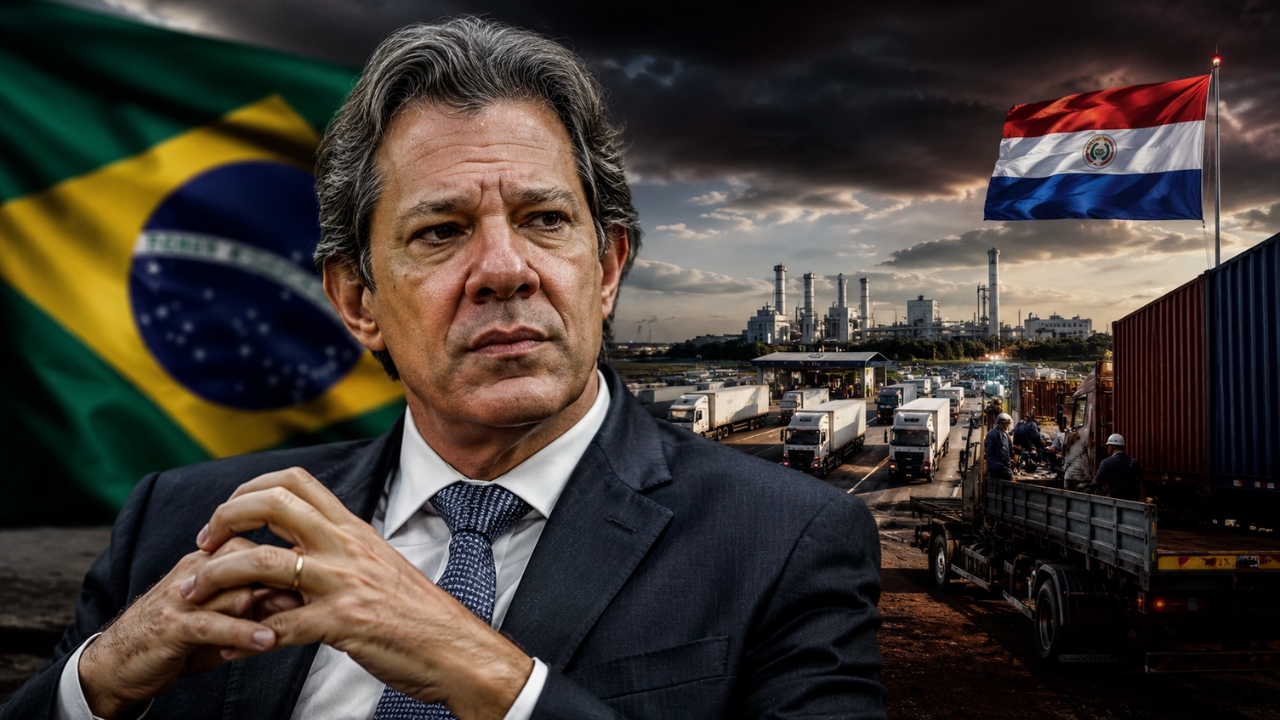


Brazilian industries seek lower taxes, cheaper energy, and simpler rules in Paraguay, reigniting the debate on competitiveness and national production.
Brazil is witnessing a movement that raises a serious alert for the national industry: Brazilian companies are fleeing to Paraguay in search of a cheaper, less bureaucratic environment with much lower taxes. What once seemed like an isolated decision by some entrepreneurs has now become a trend that exposes the weight of the so-called Brazil Cost.
According to a survey released by Poder360, 232 Brazilian companies have already started producing in Paraguay under the maquila regime. This data is noteworthy because these companies represent about 70% of the more than 320 foreign companies that chose the neighboring country to manufacture, assemble, or export products.
The explanation is straightforward and uncomfortable: while in Brazil entrepreneurs face high taxes, heavy labor charges, bureaucracy, and legal uncertainty, in Paraguay they find a simpler model focused on production and export. For many, the numbers no longer add up on the Brazilian side of the border.
-
Brazil to Introduce B16 Diesel with Increased Soybean Oil Content for Trucks by 2026
-
Brazil’s July Bolsa Família Payments May Include Extra $150 and $50 for Families with Children, Pregnant Women, and Updated CadÚnico Registration

-
Brazilian Woman Buys €1 House in Sicily, Clears 50 Truckloads of Debris, and Transforms Ancient Ruin into Inspiring Life Project by 2026

-
Havan Competitor Expands in Brazil with 170 Stores, Offering Everything from Stationery to Asian Food and Focusing on Affordable Products to Attract Shoppers



Brazilian companies cross the border to escape the weight of taxes
The movement of companies deciding to flee Brazil to produce in Paraguay has gained momentum in recent years. Industries from different sectors have started looking at the neighboring country as a way to remain competitive without being crushed by the Brazilian tax structure.
The comparison is brutal. Recent reports indicate that, under the maquila regime, companies established in Paraguay can operate with an average burden of 12% between taxes and labor charges, while in Brazil this burden can reach much higher levels depending on the sector and the company’s structure.
In practice, this means that a Brazilian company can maintain its market, customers, and commercial strategy focused on Brazil, but transfer part of its production to Paraguay to reduce costs. It is a kind of silent escape: the company does not disappear from the Brazilian radar but starts generating jobs, production, and revenue on the other side of the border.

The Paraguayan maquila has become a magnet for Brazilian entrepreneurs
The main driver of this exodus is the Paraguayan Maquila Law, a regime created to attract exporting companies. In this model, the company can import machinery, parts, and raw materials with tax advantages, produce in Paraguayan territory, and then export.
The most striking point is the tax. In the maquila regime, there is a single tax of 1% on the added value in Paraguay or on the export operation, according to local rules. For the Brazilian entrepreneur accustomed to a mountain of forms, ancillary obligations, tax disputes, and regulatory uncertainty, the difference seems like a reality check.
Moreover, Paraguay offers cheaper energy, less bureaucracy, reduced labor charges, and more predictable rules. It is precisely this combination that has been enticing Brazilian factories, especially those that rely on tight margins to compete.
While Brazil weighs on the wallet, Paraguay sells simplicity
The contrast between the two countries has become a central argument among entrepreneurs. In Brazil, producing means facing a long list of costs: federal, state, and municipal taxes, labor charges, complex tax obligations, energy costs, expensive logistics, and constant litigation.
In Paraguay, the official discourse is different: less tax, less bureaucracy, and more ease for exporting. For those who need to reduce the final price, compete with imports, or maintain profit margins, the difference can determine the survival of an industry.
That is why the term “escape” has gained strength among critics of the Brazilian model. It is not just about international expansion. For many entrepreneurs, the move to Paraguay is seen as an attempt to escape an environment that punishes those who produce, hire, and try to grow.

Jobs that could be in Brazil are now being created in the neighboring country
One of the most sensitive points of this story is the impact on jobs. Brazilian companies established in Paraguay already generate thousands of jobs in the neighboring country. These are positions in factories, assembly lines, logistics, administration, and export.
The problem, according to critics, is that some of these jobs could be in Brazilian cities if the business environment were more competitive. Instead, production crosses the border and helps strengthen Paraguayan industrial hubs.
This is the most explosive side of the debate: Brazil trains entrepreneurs, creates a consumer market, charges high taxes, and then sees part of the production flee to another country. For opponents of the current economic policy, this is a clear sign of loss of industrial competitiveness.
The paradox: Brazilian companies flee while Chinese arrive in Brazil
The situation becomes even more controversial when another fact enters the debate: while Brazilian companies seek Paraguay, Brazil sees the growing presence of Chinese workers and investments, especially in industrial projects in Bahia.
Recent reports indicate that more than a thousand Chinese per month have started receiving work visas in Brazil, driven by large industrial investments, including projects linked to BYD in Camaçari. For the government, this shows international confidence in the Brazilian economy.
But critics see an uncomfortable contradiction. If Brazil is so attractive, why are so many national companies seeking Paraguay? And if there is billion-dollar foreign investment, why do Brazilian entrepreneurs continue to complain about taxes, charges, and bureaucracy?
Government talks about investment, critics talk about loss of competitiveness
Government supporters claim that Brazil remains one of the largest markets in Latin America and that billion-dollar foreign investments demonstrate economic strength. The arrival of automakers, factories, and Chinese groups would be proof that the country still has industrial potential.
On the other hand, businesspeople and opponents say that this argument does not solve the central problem: producing in Brazil remains too expensive. For them, attracting foreign capital is not enough if the national entrepreneur needs to cross the border to be able to compete.
The dispute, therefore, is not just political. It touches the heart of the Brazilian economy: can those who produce in the country survive paying the current costs? For hundreds of companies, the answer seems to be given with their feet, or rather, with trucks, machines, and production lines heading to Paraguay.
The flight to Paraguay exposes an open wound of the Brazilian industry
The advance of Brazilian companies in Paraguay reveals more than just a simple pursuit of profit. It shows that the national industry is pressured by a system that many entrepreneurs consider suffocating.
While Paraguay offers low taxes, cheap energy, and simple rules, Brazil continues trying to balance revenue collection, tax reform, labor charges, and competitiveness. The problem is that, while the debate advances slowly in Brasília, companies make quick decisions in the real world.
And the decision of many of them is becoming increasingly clear: fleeing to Paraguay may be cheaper than insisting on producing in Brazil. For a country that claims to want to reindustrialize, this is a signal that cannot be ignored.