






 Portuguese
  Spanish
  5 min of reading
  0 comments


Maximum Symbol of European Luxury, Villa Leopolda Combines Aristocratic History, Monumental Gardens, and Billionaire Figures, Consolidating Itself as One of the Most Impressive, Exclusive, and Valuable Private Properties of the Contemporary World.
Located in Villefranche-sur-Mer, on the Côte d’Azur, Villa Leopolda is not just a luxury home: it serves as a historic, landscaping, and architectural residential complex on an almost urban scale. Over more than a century, the property has accumulated figures, powerful names, and dimensions that place it on an extremely rare level even among the largest mansions on the planet.
Historical Origin and Transformation into a Symbol of Power
The history of Villa Leopolda begins in the early 20th century when King Leopold II of Belgium acquired an extensive area on the French Riviera. At that time, the Mediterranean coast was consolidating as a refuge for the European elite, but few properties reached such a territorial scale. The land, originally occupied by olive groves and agricultural areas, was gradually transformed into a monumental private domain.
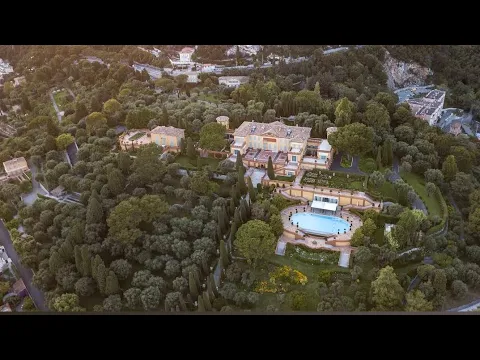

Decades later, between 1929 and 1931, the mansion took on its best-known form, with a design attributed to architect Ogden Codman Jr., one of the most respected names in European and American classicism of the time. The architecture adopted lines inspired by the Belle Époque style, with wide volumetric forms, strict symmetry, and direct integration with the coastal relief.
-
Transnordestina sets record by installing 1.69 km of tracks in a single day, reaches 81% completion, and plans to deliver an additional 100 km of railway by the end of June 2026.

-
Instead of plastering the wall, Argentine architects left ordinary bricks exposed, without traditional mortar, without finishes, without paint, and created a perforated pavilion that looks like an art installation.

-
Prefabricated wooden house surprises in Spain with 132 m², two floors, up to four bedrooms, and a price starting from 45,751 euros, while the version with insulation for living can reach 80,059 euros without assembly, installation, and architect included.

-
China builds a bridge over a river in just 24 hours using two 650-ton Zoomlion cranes, 9 beams of 125 tons, and a convoy of over 100 km with trailers, counterweights, and heavy trucks in synchronized operation during the early hours.



Since then, Villa Leopolda has passed through the hands of some of the richest families on the planet, including industrialists, bankers, and automotive magnates, consolidating its reputation as a real estate asset reserved only for extremely restricted circles.
Territorial Dimensions That Challenge the Concept of Mansion
The most impressive fact at first glance is the total area of the property: about 7.3 hectares, equivalent to approximately 73,000 square meters of continuous land. By comparison, this corresponds to several urban blocks or dozens of conventional luxury mansions concentrated in a single private domain.
A large part of this area is occupied by planned gardens, terraced levels, internal pathways, and ornamental vegetation zones. It is estimated that maintaining the landscaping requires the permanent work of dozens of specialized gardeners responsible for keeping rare species, geometric lawns, and flower areas that extend across the entire slope facing the sea.
The geographical position is also strategic. The property gently rises above the Mediterranean, ensuring continuous panoramic views of the Bay of Villefranche and the coastline between Nice and Monaco, one of the most valued regions in the global real estate market.
Residential Structure on Palatial Scale
The main residence of Villa Leopolda occupies a central portion of the land and features dimensions far above the standard for luxury homes. Although exact figures for built area and number of rooms are kept confidential, historical surveys and specialized reports indicate dozens of bedrooms, multiple residential wings, monumental halls, and spaces designed for large receptions.
In addition to the main building, the complex includes auxiliary constructions integrated into the ensemble, such as support houses, service areas, pavilions, and structures intended for the daily operation of the property. This configuration makes Villa Leopolda function more as a small private village than as a traditional residence.
The infrastructure also includes a large swimming pool, its own irrigation systems, paved internal accesses, and technical areas discreetly integrated into the landscaping, ensuring modern comfort without compromising the historical aesthetics of the site.
Monumental Gardens and Landscape Engineering
One of the most expensive and complex elements of Villa Leopolda is its gardens. Designed on multiple levels to follow the natural topography of the slope, they required significant work for soil retention, drainage, and terracing.
Retaining walls, stone staircases, drainage channels, and landscaped platforms were built to stabilize the terrain and allow for large-scale ornamental cultivation. The result is a landscaped ensemble that combines structural function and aesthetic value, something rare even among high-end properties.
This silent engineering, invisible to the casual visitor, is one of the factors that drastically increase maintenance costs and explain why Villa Leopolda remains a practically unattainable asset in the traditional real estate market.
Estimated Value and Position in Global Ranking
Over the years, various evaluations have placed the value of Villa Leopolda at levels ranging from US$ 500 million to US$ 750 million, depending on the economic scenario, the luxury real estate market, and the profile of the buyer considered. In current conversions, this represents something close to or exceeding R$ 4 billion.
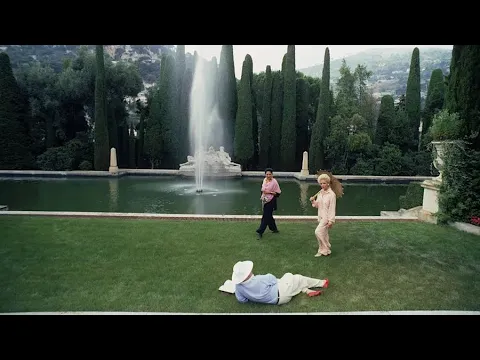
These figures regularly position the property among the most expensive private mansions in the world, alongside palaces in the Middle East, historic residences in London, and exclusive properties in the United States. The differential of Villa Leopolda, however, lies in the simultaneous combination of territorial area, premium coastal location, and continuous historical heritage.
Why Villa Leopolda Is Almost Impossible to Replicate
Even if an investor had equivalent financial resources today, reproducing a property like Villa Leopolda would be practically unfeasible. The urban legislation of the French Riviera prevents new developments of this scale in consolidated coastal areas. Additionally, the scarcity of continuous land with direct views of the Mediterranean makes the existence of 7.3 hectares an almost unrepeatable event.
The sum of factors — location, scale, historical time, landscape engineering, and legal exclusivity — makes Villa Leopolda a unique asset. Unlike modern mansions, which can be designed from scratch, this property carries a value that cannot be accelerated or artificially reproduced.
A Real Estate Colossus That Goes Beyond Luxury
More than a symbol of ostentation, Villa Leopolda represents an extreme stage in the relationship between architecture, territory, and economic power. It shows how, at certain historical moments, sufficient wealth allowed entire landscapes to be transformed into private properties, something that today would be politically, legally, and environmentally unthinkable.
For this reason, the mansion continues to evoke fascination not only due to its price but also because of the almost surreal scale of its existence. In a world where seaside land has become increasingly contested and regulated, Villa Leopolda remains a physical reminder of an era when space, money, and ambition could combine without apparent limits.





-

-

-

5 people reacted to this.