






 Portuguese
  Spanish


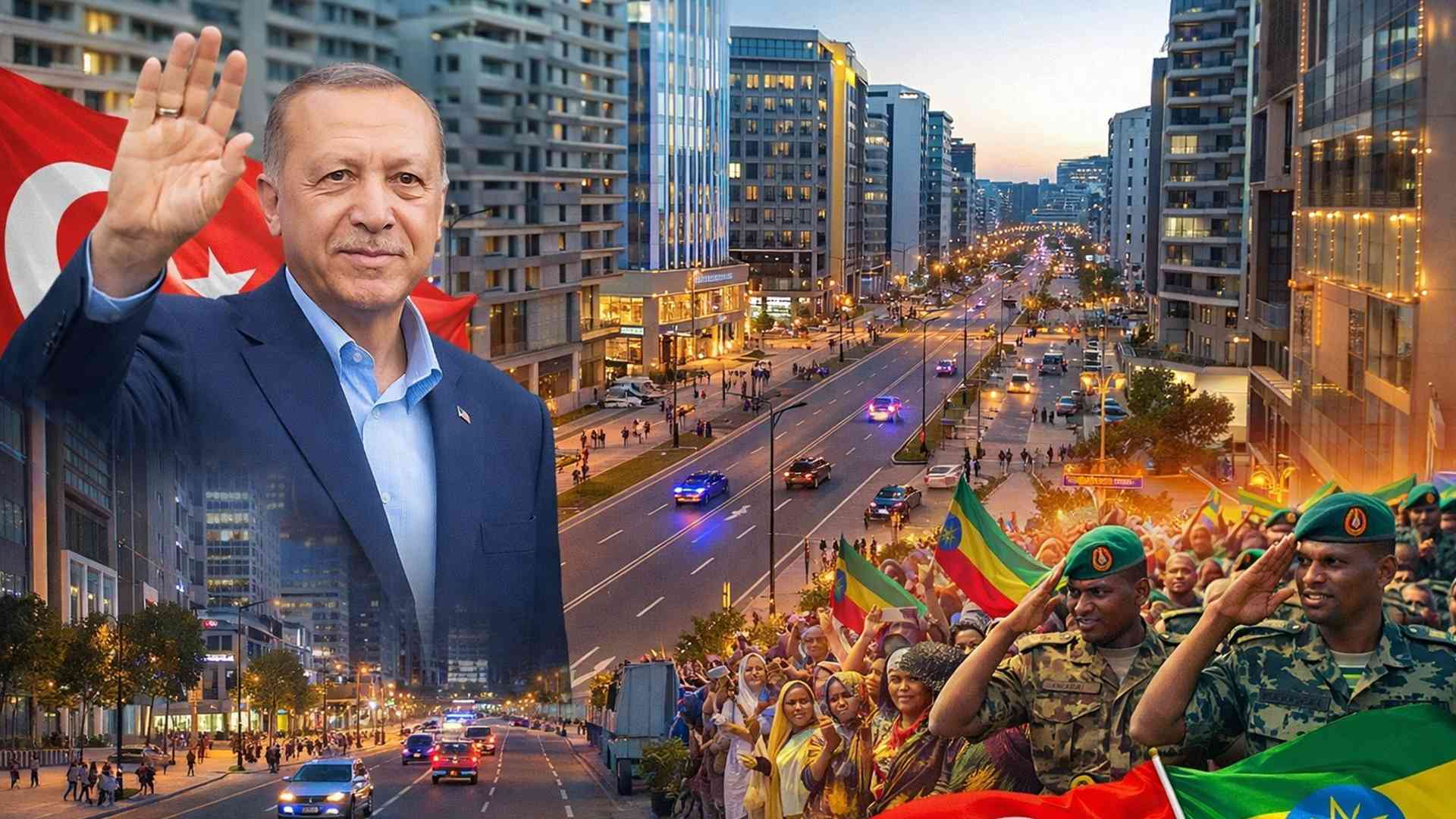


Videos from the Official Visit of the Turkish President to the Capital of Ethiopia in February 2026 Went Viral on Social Media by Showing Buried Wires, Wide Avenues, and Organized Public Lighting, Provoking Thousands of Comments from Brazilians Who Compared Addis Ababa to Capitals in Brazil
On February 17, 2026, the President of Turkey, Recep Tayyip Erdogan, arrived in Addis Ababa, the capital of Ethiopia, for an official visit. The goal of the meeting was to strengthen bilateral ties, with discussions on political and trade agreements between Turkey and Ethiopia.
However, what stood out on social media was not the official agenda of the visit, but rather the images of Addis Ababa that quickly went viral.
The videos and photos show the city with modern and well planned infrastructure, including wide streets, efficient lighting, and buried wiring, which provided an image of a first-world city.
-
Californian gives up on buying a house, purchases a roughly 1-hectare island for $31,000 in Finland, learns construction from scratch, and begins building a refuge without running water or electricity.

-
A 3-year-old deaf student received the first white belt in Jiu-Jitsu and understood the achievement because the teacher learned Libras to communicate with him, in a video that surpassed 7 million views and moved social media by showing inclusion happening on the mat.

-
Miguel Krigsner opened a small compounding pharmacy in Curitiba in 1977, turned Brazilian fragrances into a national success, and created O Boticário, now one of the largest beauty networks in the world.

-
Meet the charming parrot grandpa, who became known for hugging free birds and revealed how he gained their trust over the years.




This vision of the Ethiopian capital generated intense debates on social platforms, mainly among Brazilians.
Comparison with Brazilian Capitals
The viralization of images of Addis Ababa on social media was followed by thousands of comparisons with the large Brazilian capitals.
Brazilian internet users, especially those from major cities like São Paulo, Rio de Janeiro, and Salvador, began discussing the infrastructure of the Ethiopian capital.
Many comparisons highlighted the organization and modernity of Addis Ababa, while some Brazilian cities continue to face basic infrastructure problems, such as pothole-filled streets and exposed wiring.
This discrepancy led to discussions about urban planning in Brazil and the urgent need for investments in the modernization of Brazilian cities.
The visible contrast between the two realities led many Brazilians to reflect on the challenges of urban mobility and planning in their own cities.
Buried Wires and Wide Streets: The Example of Addis Ababa
The infrastructure of Addis Ababa drew attention particularly because many electrical cables are buried, a aspect of urban modernization that is still rare in many Brazilian capitals. The presence of exposed wiring is a recurring problem in Brazil, creating an image of disorganization and even putting citizens’ safety at risk.
In contrast, the Ethiopian city not only maintained wide and well-kept streets but also focused on urban sustainability by planning an underground electrical system, something many Brazilian cities have yet to implement. This model was widely praised on social media, with users questioning why Brazilian cities, with more resources, do not adopt similar practices.
Impact on Social Media: Praise and Criticism
The comparison between Addis Ababa and Brazilian capitals generated a series of praises for Ethiopia and, at the same time, criticisms of Brazil.
Most comments on social media expressed admiration for the organization of the Ethiopian city, while many Brazilians felt disappointed with the state of their own cities.
These comments became particularly evident in posts of videos and photos of the streets of Addis Ababa, where the difference in infrastructure became clearer.
The contrast was particularly notable among comments from Brazilians living in peripheral areas, where access to basic services, such as quality public transport, is still limited.
For these individuals, the view of a city with modern infrastructure was a reminder that Brazil still faces challenges in terms of urbanism and investments.
The Growth of Ethiopia and Its Infrastructure
Despite being one of the poorest countries in Africa, Ethiopia has made significant progress in improving its infrastructure in recent decades.
The capital, Addis Ababa, has stood out as an example of urban planning and sustainable development. The city has invested in basic infrastructure and urban modernization, focusing on areas such as public transport, energy, and sustainable urbanism.
Erdogan’s visit to Ethiopia further highlighted these advancements, showing how Ethiopia, in a relatively short period, was able to transform its capital into a model of modern and functional city, something many experts believe is essential for the future of large cities in the developing world.
Reflections on Brazil and the Future of Urban Infrastructure
The visit of Erdogan to Ethiopia and the discussions generated on social media about Addis Ababa and Brazilian capitals are part of a broader debate about urban planning and sustainable development.
For Brazil, criticism of its infrastructure system is not new, but it intensifies increasingly with the growth of cities and the increase of social and territorial inequality.
Experts in urbanism and infrastructure warn that, to improve the conditions of Brazilian cities, effective planning focused on sustainability, efficient resource use, and the implementation of new technologies is necessary.
The example of Addis Ababa could serve as inspiration for Brazil, especially regarding the implementation of underground infrastructures and controlling the unchecked growth of cities.
What Brazil Can Learn from Addis Ababa?
The visit of Erdogan to Ethiopia and the repercussions of the images of Addis Ababa on social media reveal that urban infrastructure continues to be a central theme in the debate about the future of large cities.
The comparison with Brazilian capitals, especially with Brazil, highlights the inequalities and the need for modernization of cities in the country.
If Addis Ababa, with fewer resources, managed to become a modern and organized city, perhaps Brazil, with its more robust economy, can learn from this example and invest more in urban transformation.
This learning could be crucial to improving the quality of life in large Brazilian cities and reducing disparities in access to essential services.


Brasil já foi ultrapassado por uns 40 países nos últimos 60 anos. E agora está sendo ultrapassado por mais outros países até mesmo da África, oriente médio e sudeste asiático.