Portuguese
  Spanish


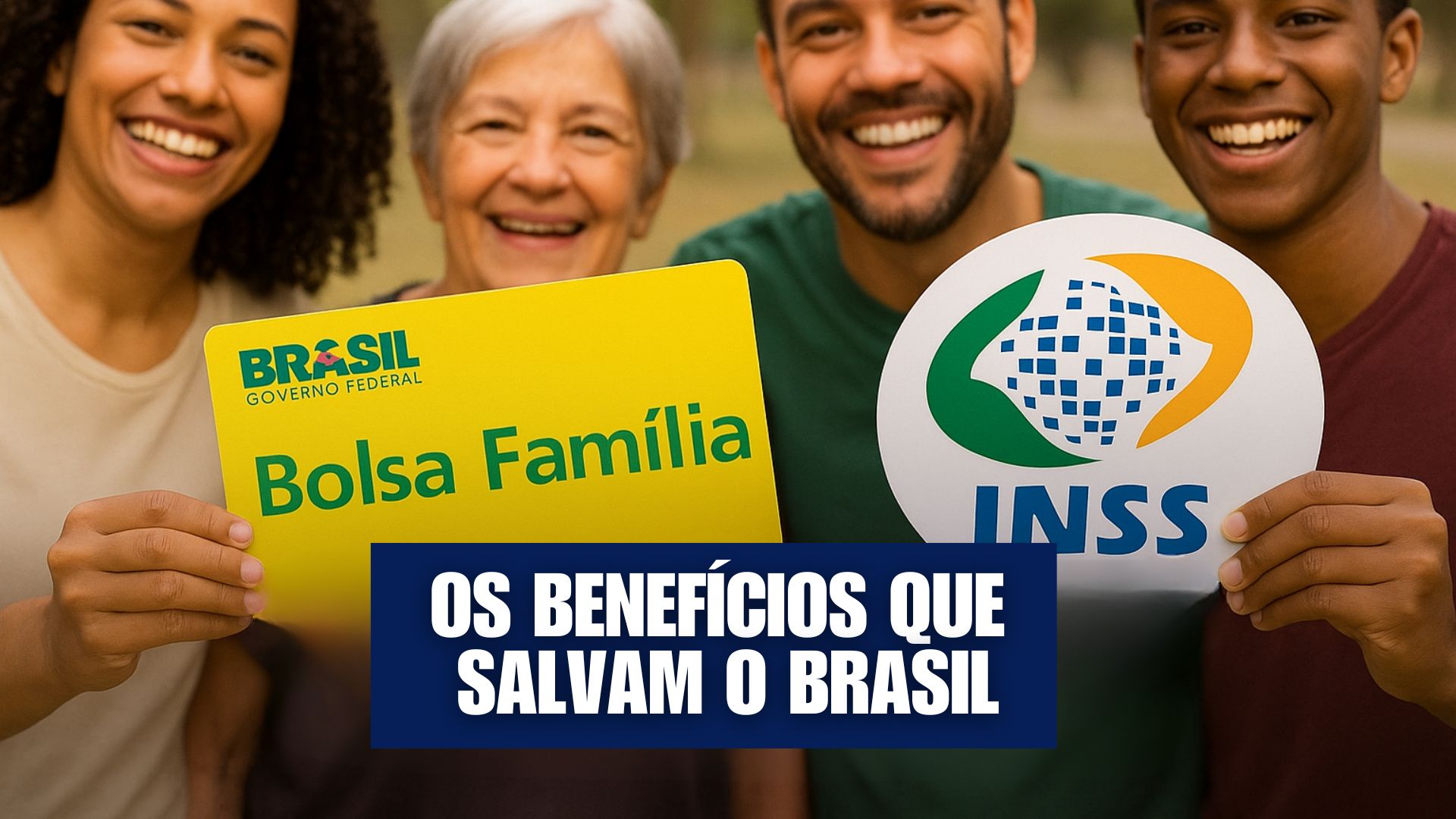


The Impact of Social Programs Gains New Focus with IBGE Data and Simulations Revealing Significant Poverty Increase without Income Transfers.
In the midst of the debate on the necessity of programs like Bolsa Família and other social benefits, new data from IBGE shows that the impact of these policies on poverty is wide-ranging and measurable.
Calculations from the publication Synthesis of Social Indicators 2025, based on 2024 data, indicate that without income transfers and pension benefits, poverty and extreme poverty in the country – especially among the elderly – would be much higher.
According to the study, in the absence of income transfer programs, the proportion of people in extreme poverty in Brazil would have increased from 3.5% to 10.0% of the population in 2024.
-
China Tightens Control on Antimony, Driving Prices from $22,000 to Nearly $40,000 per Ton as U.S. Rushes to Bolster Strategic Reserves

-
BlackRock Freezes $1 Billion in Brazilian Renewable Energy, Impacting 1.5 GW of Planned Projects and Highlighting Investor Concerns Over Infrastructure Bottlenecks Cutting Up to 25% of Solar and Wind Generation
-
Labor Shortage: Despite Record Average Salary, 90% of Brazilian Bar and Restaurant Owners Struggle to Hire Key Roles Like Sushi Chefs and Head Cooks

-
Supermarket Deli Counter Attendants in Brazil Could Earn Over $2,100 Monthly by 2026, Plus Benefits Package


The poverty rate would rise from 23.1% to 28.7% in the same period.
These numbers result from simulations made by the institute to estimate what would happen if benefits such as Bolsa Família and the Continuous Cash Benefit (BPC) were removed from the social protection structure.
Social Programs and the Reduction of Extreme Poverty
IBGE analyzed the weight of income transfer policies on family budgets and well-being indicators.
According to the Synthesis of Social Indicators, the existence of programs like Bolsa Família prevents extreme poverty from reaching a level three times higher than observed.
In practice, the survey calculates two scenarios: what actually occurred in 2024 and a hypothetical scenario where these policies would not exist.
In this exercise, the institute considers as extreme poverty the condition of people living on a daily income below the line used in their official statistics.

Poverty encompasses a broader group with slightly higher income, but still insufficient to ensure an adequate standard of living.
In both cases, the effect of income transfers is described as decisive in reducing the number of people in vulnerable situations.
In addition to strictly assistance programs, pensions, retirement benefits, and other social security benefits are also included in this count.
The set of these policies composes the income protection network that IBGE incorporates into the simulations, allowing an estimate of what the situation would be if these mechanisms did not exist or were significantly reduced.
Income Inequality and the Lowest Gini of the Series
The Synthesis of Social Indicators also updated the Gini Index, an indicator that measures income inequality.
The index stood at 0.504, the lowest in the historical series that began in 2012.
In the previous year, 2023, the Gini was 0.517.
The study further shows how this indicator would look if there were no income transfer programs.
In this simulated scenario, the Gini Index would rise to 0.542, signaling greater income concentration and increased inequality.
The difference between the observed Gini and the simulated Gini without social programs is used by the institute as statistical evidence of the redistributive role of these policies.
Although the recent performance reflects factors such as the warming of the labor market and the recovery of labor income, IBGE points out that the maintenance of transfer policies helped consolidate the decline in inequality in 2024.
Elderly Income and Dependency on Benefits
Among all analyzed groups, the elderly population appears as one of the most dependent on the social protection network.
The survey highlights the importance of pension and assistance benefits, such as pensions, retirement benefits, and the BPC, in preventing a significant increase in poverty among older age groups.
In IBGE’s simulations, if people aged 60 or older had no access to these sources of income, the extreme poverty among the elderly would rise from 1.9% to 35.4%.
The proportion of elderly people in poverty would increase from 8.3% to 52.3%.
This difference between the real scenario and the simulated scenario is directly linked to the broad coverage of pensions, retirement benefits, and the BPC itself among the elderly.
In practice, these resources serve as the main source of income in millions of households, especially in those where part of the family is unemployed, works informally, or has very low wages.
Role of Bolsa Família and BPC in Income Protection

The Bolsa Família is the main federal direct income transfer program for low-income families.
Since 2023, the program has reverted to its original name after replacing Auxílio Brasil.
It retained the basic reference value and incorporated supplements for children, pregnant women, and adolescents.
The Continuous Cash Benefit (BPC) guarantees a minimum wage monthly to individuals aged 65 or older and to individuals with disabilities in low-income situations, according to the Organic Law of Social Assistance (LOAS).
The combination of these programs with labor income is identified by researchers as one of the factors explaining the recent decline in poverty and extreme poverty.
At the same time, the study emphasizes that progress is not uniform across the national territory.
The North and Northeast still show higher proportions of people in vulnerability, even with the social protection network’s actions.
Although data indicate general improvement, IBGE observes that the country still has a significant number of people below the poverty line.
The maintenance of results depends both on the dynamics of the labor market and the continuity of social policies.
Debate on the Future of Social Programs
The numbers released reignite the debate on the design, scope, and cost of income protection policies.
The study provides evidence that programs like Bolsa Família, BPC, and pension benefits reduce poverty, extreme poverty, and inequality.
The topic remains at the center of discussions on fiscal sustainability, benefit focus, and improvement of eligibility criteria.
In light of this data, how should Brazilian society conduct the debate on the size, focus, and form of social programs aimed at reducing poverty and income inequality?