Portuguese
  Spanish




What Is the CIB and Why Is It Being Implemented
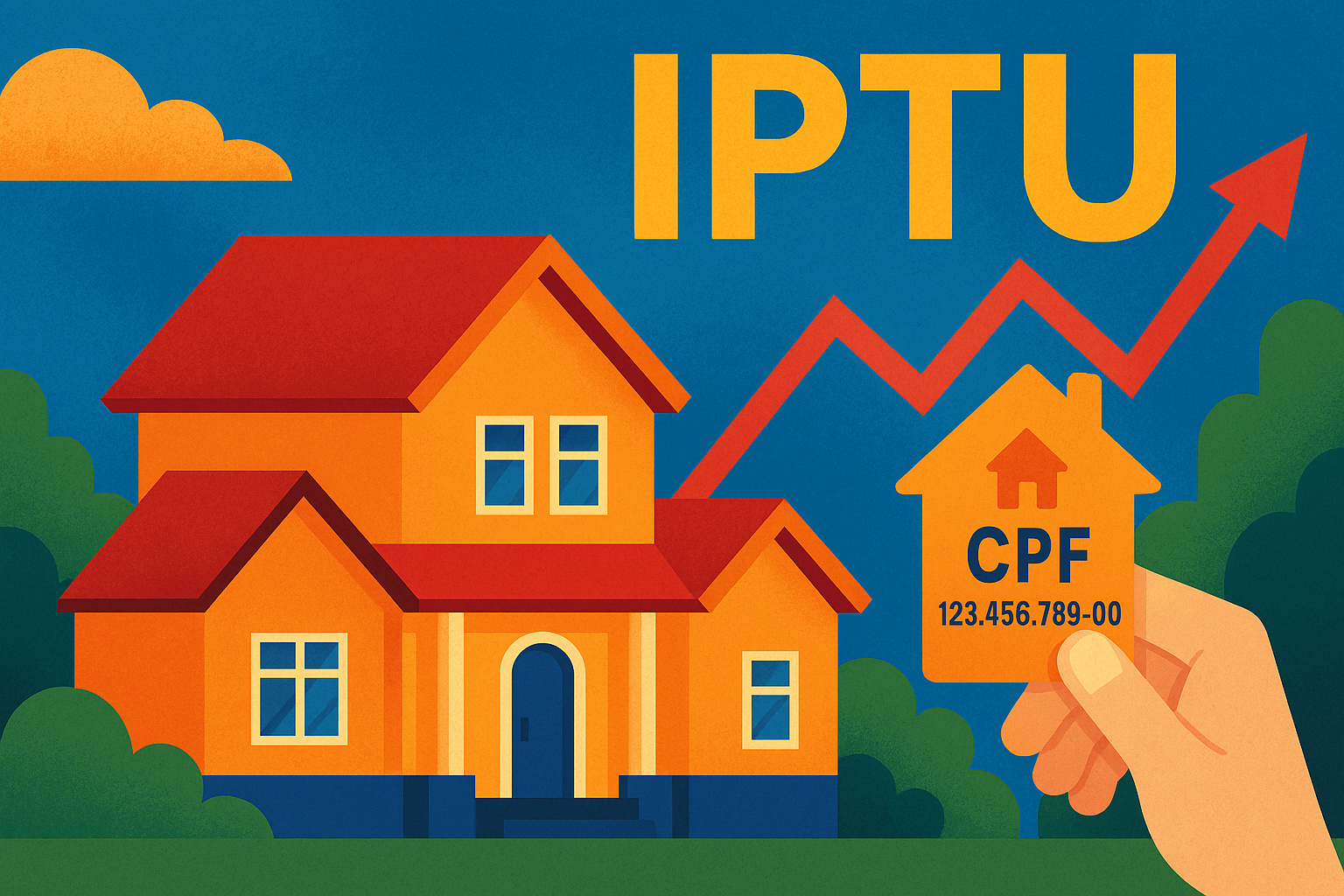
Since 2025, Brazil has created the Brazilian Property Registration (CIB), a unique identifier for each property. This registration applies to both urban and rural properties.
It will function as a “CPF of the property.” The Sinter — National System for Territorial Information Management — will integrate the system.
This system consolidates land data used by federal, state, and municipal agencies. Thus, there will be greater integration and control over property records.
-
A 180-meter ship with a deck the size of a football field was christened to carry 25,000 tons of giant energy modules around the world.

-
To erect the “Baleia” building on the richest avenue in Brazil, he bought 35 houses, paying with trips to Disney, a truck, and even an apartment, waited over 20 years, and today the complex is valued at R$ 2.5 billion.
-
The land belonged to her great-great-grandfather and was worth R$ 25 per square meter during the pandemic; the couple sold 250,000 m² for the nearly R$ 30 billion project that is transforming the “neighbor of Jericoacoara,” and today a house in the region goes for R$ 4.2 million.

-
Labor shortage reaches the truck drivers’ area: Brazil is already facing a deficit of 120,000 drivers, 65.1% of transport companies feel the impacts, and Mercedes-Benz strengthens training in the face of the new generation of technological trucks.



The Sinter has existed since 2022. However, its full integration with notaries and municipalities is still in implementation.
The goal is for capitals to start using it in 2026. By 2027, all municipalities are expected to be integrated.
The information comes from the Federal Revenue Office and tax specialists.
How This May Affect IPTU and the Calculation Base
Although the measure does not mandate an increase in rates, it promises to improve oversight. Experts highlight that transactions involving buying, selling, or renting are expected to become less informal.
As a result, the use of market values that are closer to reality is anticipated. The calculation will use the so-called ‘reference value’.
In summary, municipalities that use outdated assessed values may need to review their registrations. Consequently, there may be an increase in the IPTU calculation base.
More properties may end up paying higher taxes. This will occur in accordance with the new reference value.
Who Will Feel It the Most in Their Pockets and Why
Smaller cities, with limited technical infrastructure, are more impacted. There, assessed values are often outdated.
These municipalities will need to update the assessed value when using the CIB as a parameter. The goal is to bring records closer to the actual market value.
Additionally, there are complications with rural properties, plots, or transition areas. In these situations, determining the value can be more complex.
Experts warn that if there are no clear criteria, the risk increases. Taxpayers may end up paying more without adequate compensation.
What Changes in the IPTU Calculation and Implementation Timelines
Each municipality charges the IPTU annually based on the assessed value of the property. It applies to ownership, beneficial ownership, or possession.
The assessed value is estimated by the municipality according to local laws. Thus, each city maintains autonomy over this calculation.
According to lawyers and tax consultants, there are no changes in the rates. However, what defines the tax base of the property tax may be altered.
In other words, the tax burden may indirectly increase. This will happen if the assessed value is revised upwards.
The timeline indicates that the CIB was officially created in 2025. The implementation in capitals is expected for 2026.
The expansion to other municipalities should occur by 2027.