Portuguese
  Spanish


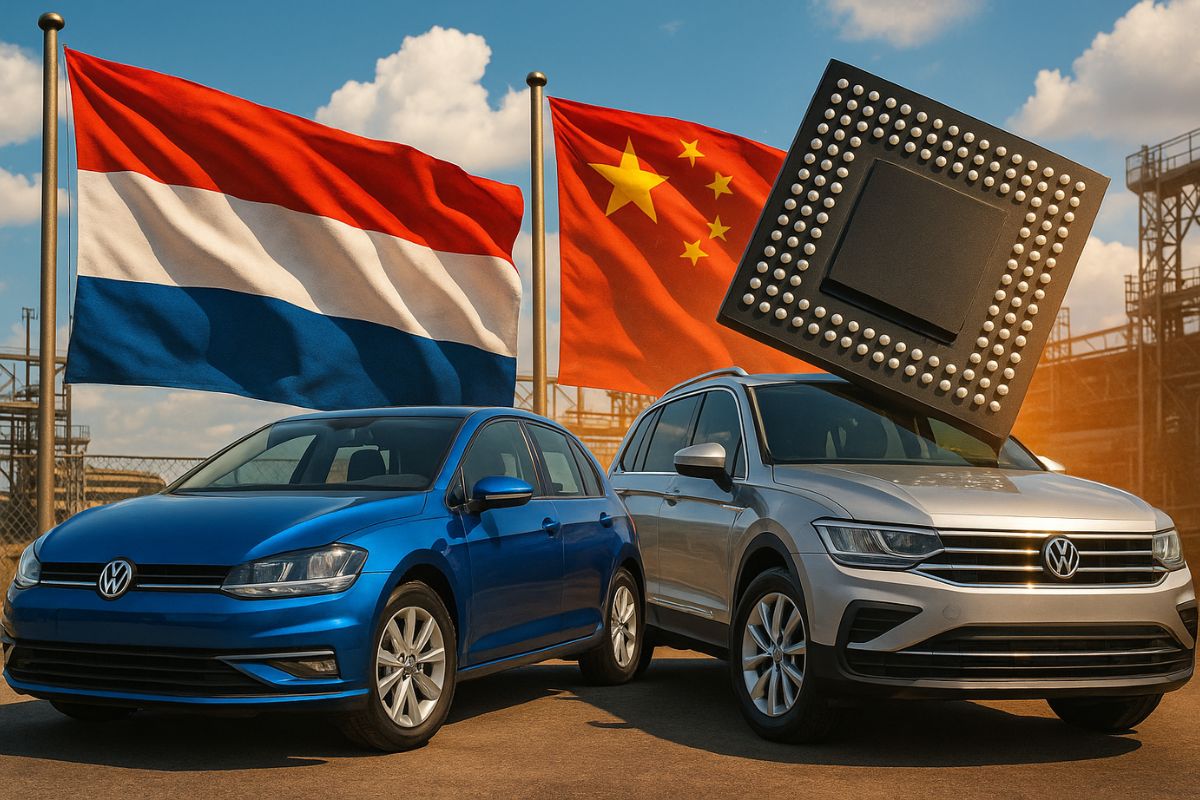


Volkswagen Confirms Temporary Pause in Production of Golf and Tiguan Models, Denies Chip Shortage but Monitors Effects of Crisis Involving Semiconductor Manufacturer Nexperia Blocked by the Netherlands and China
The Volkswagen announced on Tuesday (21) a temporary interruption in the production of the Golf and Tiguan models, two of the most important vehicles in its global lineup. According to the company, the decision was planned in advance and is related to stock management and the autumn holiday schedule in the northern hemisphere.
Despite speculations, the automaker denies any direct relation to the semiconductor crisis that has intensified following the blocking of Dutch manufacturer Nexperia, whose production has been affected by disputes between the governments of the Netherlands and China. Nonetheless, Volkswagen admitted it is closely monitoring the global scenario, given the risk of new bottlenecks in the automotive supply chain.
Crisis Between Netherlands and China Pressures Semiconductor Supply
The diplomatic tension began when the Dutch government took control of Nexperia on September 30, citing security reasons and protection of intellectual property.
-
Does a Flag on Your Car’s Hood Overheat the Engine? Expert Reveals the Overlooked Danger for Drivers

-
How to Identify and Remove Superficial Scratches Before Spending on Car Bodywork

-
Electric Car with Extended Range: Company Patents Hybrid Transmission System Using Gasoline Engine for Backup
-
GM Developed the Chevette to Rival the Beetle, Launched it in Brazil Before Europe, Sold 1.6 Million Units, and Left a Generation with Gas Station Trauma


The reaction came from Beijing: China banned the export of finished products from the company, which compromised the international flow of electronic components widely used by the automotive industry.
Although they are not cutting-edge chips, Nexperia’s semiconductors are essential because they are present in large volumes in the production of modern vehicles, especially in control modules and injection systems.
The interruption in exports has raised concerns among European manufacturers, who have already faced similar shortages during the pandemic of 2020 and 2021.
Volkswagen Denies Chip Shortage but Acknowledges Alert Scenario
According to Volkswagen, the current pauses are not directly linked to semiconductor supply, but the company acknowledges that the market remains vulnerable to new logistical and diplomatic restrictions.
“The pauses were planned long ago and should end by the end of the week,” a company spokesperson informed Reuters.
Still, the German automaker keeps technical teams assessing possible impacts in the coming weeks, especially if sanctions on Nexperia are extended.
The company has been seeking to diversify suppliers and reduce regional dependencies, a strategy that has gained strength since the disruptions caused by the pandemic.
The Strategic Role of Nexperia in the Automotive Industry
Nexperia, a subsidiary of Wingtech Technology from China, is one of the main suppliers of automotive chips in Europe.
Its portfolio includes basic yet critical components for the electrical and electronic functioning of vehicles.
Unlike high-performance chips used in navigation or autonomous driving systems, Nexperia’s semiconductors are support parts, yet irreplaceable on a large scale.
Therefore, any blockade on the company has the potential to create ripples throughout the sector, affecting everything from factory schedules to supply contracts.
The case reignites the debate about Europe’s dependency on components manufactured under Asian influence and the need for technological autonomy in strategic segments.
Global Landscape and Domino Effect Risks
Industry analysts point out that if trade restrictions between the Netherlands and China prolong, other automakers may face delays or need to adjust assembly lines, even if only temporarily.
Companies like Stellantis, BMW, and Mercedes-Benz are closely monitoring the situation.
The Volkswagen, for its part, tries to demonstrate control over the situation, reiterating that its units will continue to operate normally after the planned pause.
Nevertheless, the combination of geopolitical tensions, technological dependencies, and industrial recovery pace places the automotive sector under a new cycle of global vulnerability.
Volkswagen’s pause comes at a time when the global industry is still seeking stability after years of disruptions and adjustments in the supply chain.
The uncertainty surrounding Nexperia highlights how political and technological issues intersect directly with vehicle production.
And you, do you believe that Nexperia’s blockade could trigger a new chip crisis in the automotive sector? Do you think Volkswagen will manage to maintain stable production in the coming months? Leave your opinion in the comments — we want to hear from those who closely follow the automotive market and understand its intricacies.