Portuguese
  Spanish


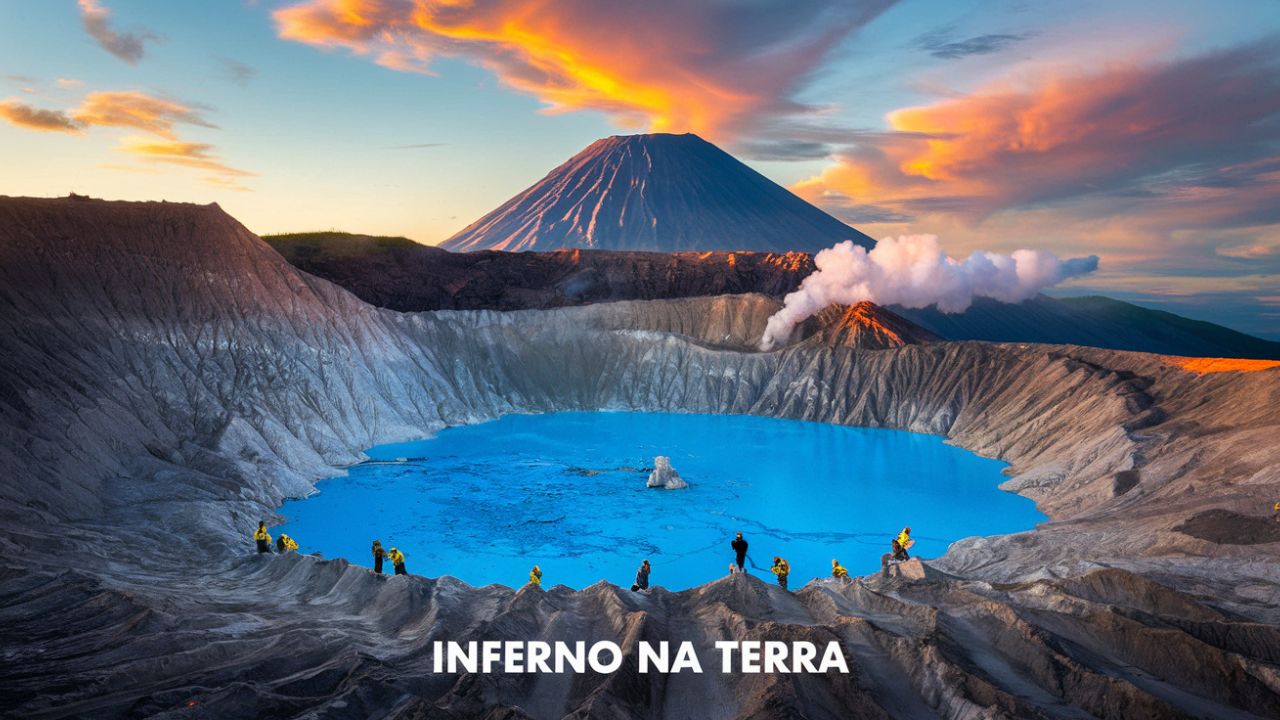


Discover the Volcano with the Largest Acid Lake in the World, a Fascinating Scenario in Indonesia Where Blue Fire Shines at Night, the pH of the Water Can Dissolve Skin Instantly, and Workers Risk Their Lives in the Sulfur Mines.
A place where water can melt your skin and fire seems to glow in a hypnotizing blue? This surreal combination is the reality of the Kawah Ijen volcano, on the island of Java, Indonesia. The site houses the largest acid lake in the world and one of the most fascinating and dangerous natural phenomena ever recorded. Ready to discover this “hell on Earth”?
The Giant Volcano Kawah Ijen
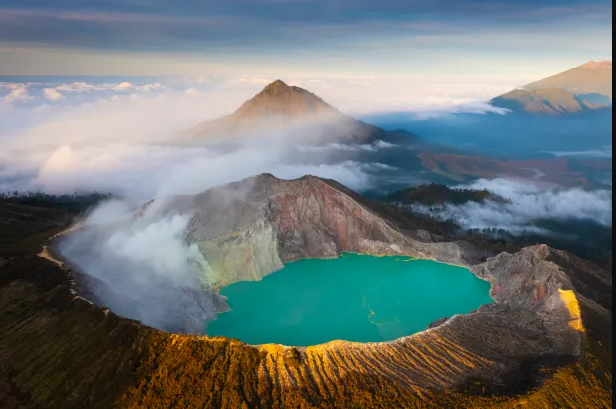
Located in the stunning regency of Banyuwangi, Kawah Ijen is a volcano inside a 19-kilometer-wide caldera. This gigantic geological formation is not only grand in size but also in its unique composition. The lake in its crater has a pH close to 0.3 — similar to battery acid. It’s as if the Earth itself holds a deadly potion inside.
But it’s not just the danger that attracts visitors. The beauty of its vibrant colors and the phenomenon of blue fire have turned the volcano into one of Indonesia’s top tourist attractions.
-
Berries, Strawberries, and Blueberries Could Transform Agriculture in Northeastern Brazil, New Tests Reveal

-
Danish Resident Discovers Six Viking Gold Bracelets Weighing 762.5 Grams, Third Largest Gold Treasure in Denmark

-
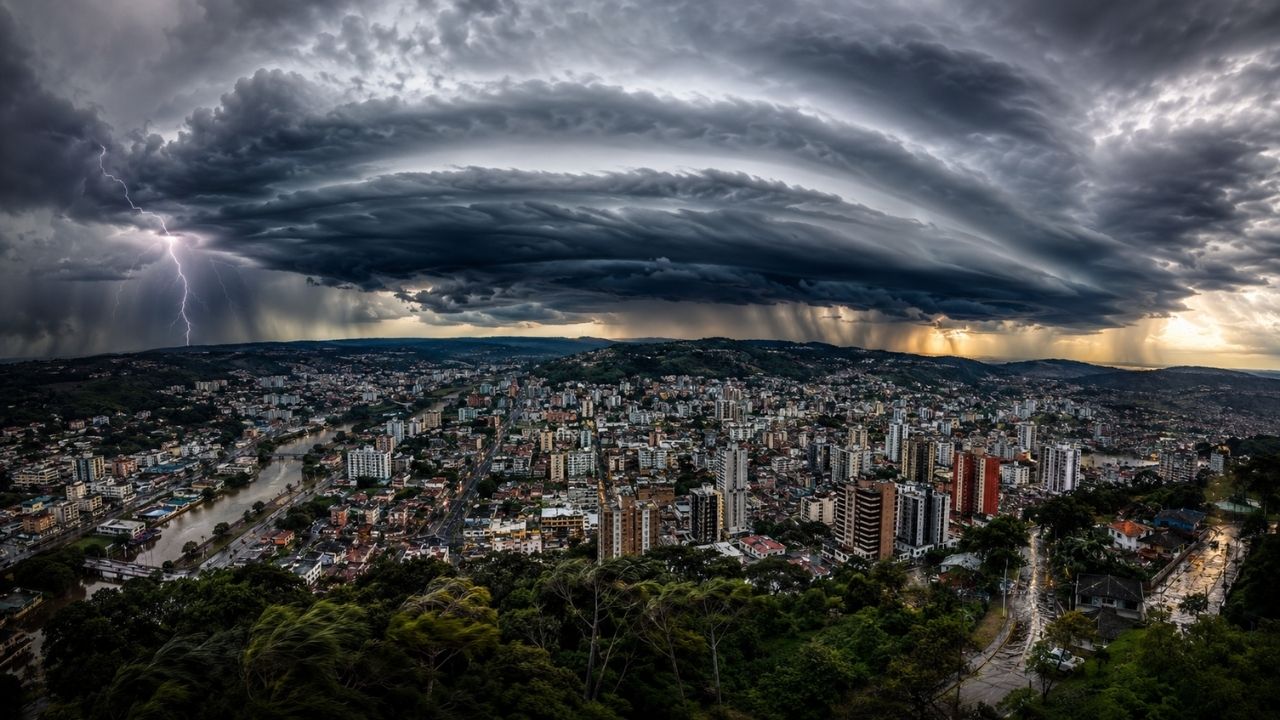
Over 200 Cities in Southern Brazil on Storm Alert as Cyclone Near Uruguay Brings Heavy Rain, Hail, and Winds Up to 100 km/h

-
Archaeologists Discover 2,300-Year-Old Beer in Sealed Bronze Vessel from Ancient Chinese Tomb



The Fascinating Blue Fire
Kawah Ijen wouldn’t be as famous without its unique phenomenon: blue fire. But what causes this spectacle? When sulfur-rich gases escape from the volcano’s fissures and ignite, flames as high as 5 meters illuminate the darkness. The result is a magical sight, as if the volcano itself is breathing light.
This blue glow occurs in only a few places around the world, and Kawah Ijen has the largest area where the phenomenon takes place. However, the paradisiacal scenery comes at a cost: the flammable gas can be fatal for those who get too close.
The Deadly Acid Lake
The lake in the crater of Kawah Ijen is one of the most dangerous on the planet. With a pH of 0.3, it can dissolve organic matter in seconds. Despite this, the water reflects such an intense blue-green that it can be seen even from space. A paradox of beauty and mortality.
Interestingly, even in such an extreme environment, scientists have discovered a small community of microbes surviving in the lake.
When the lake overflows, its corrosive water feeds the Banyupahit River, which means “bitter water.” It is proof that the volcano’s influence goes far beyond its crater.
The Horror of Working in the Sulfur Mines
If you think visiting Kawah Ijen is risky, imagine working there. The sulfur mines around the volcano are one of the most dangerous working environments in the world. Miners face toxic gases and extreme temperatures to extract sulfur rocks, which are then used in industry, mainly in sugar refining.
Workers carry baskets full of heavy stones down the mountain, receiving meager amounts for their efforts. It’s a cruel reminder of how the natural beauty of Kawah Ijen hides stories of sacrifice and exploitation.
Tragedies at Kawah Ijen
The volcano does not forgive carelessness. Over the years, tragedies have marked the history of Kawah Ijen. Tourists, drawn by the blue fire and surreal landscapes, face dangerous and often deadly paths. In April, a Chinese tourist fell from a height of 75 meters while trying to take a photo, a tragic outcome to what should have been a memorable adventure.
The extreme conditions of the site also put workers at constant risk, from chemical burns to prolonged exposure to toxic gases.
Kawah Ijen is one of the most stunning and deadly places on Earth. Its acid lake and blue fire remind us of the raw and uncontrollable power of nature. But they also make us reflect on the risks and sacrifices involved in exploring this kind of beauty. So, if you ever think of visiting, remember: Kawah Ijen is as fascinating as it is relentless.