Portuguese
  Spanish


Brazilian exports to the Persian Gulf fall with war in Iran and obstacles in Hormuz, and agribusiness feels the impact of extra costs and alternative routes.
Brazilian exports to Persian Gulf countries fell in March, amidst the effects of the war in Iran and navigation difficulties in the Strait of Hormuz, one of the main maritime routes for world trade. Data from the Ministry of Development, Industry, Trade and Services (MDIC), compiled on the ComexStat platform, show that sales to the region totaled US$ 537.1 million in the month, a drop of 31.47% compared to March last year.
The impact was mainly concentrated on agribusiness products, which represent about 75% of Brazilian exports to the Persian Gulf. With partial interruption of maritime transport, items that depend on regular and large-scale shipments were the most affected, with corn practically zeroed out and a strong retraction in sugar and molasses, while meats maintained demand, according to the described scenario.
What happened in the Gulf and why Hormuz became a bottleneck for exports
The Strait of Hormuz is a strategic maritime route for global trade, and with the increased risk in the region, navigation became more difficult. This new scenario directly affected the flow of cargo leaving Brazil for the Persian Gulf.
-
Brazil’s Central Bank’s Tight Monetary Policy Risks Stifling Both Production and Demand Amid High Inflation and Fiscal Imbalance

-
Over a Century After the Sinking, US Takes Legal Action to Stop Auction of Over 100 Titanic Artifacts

-
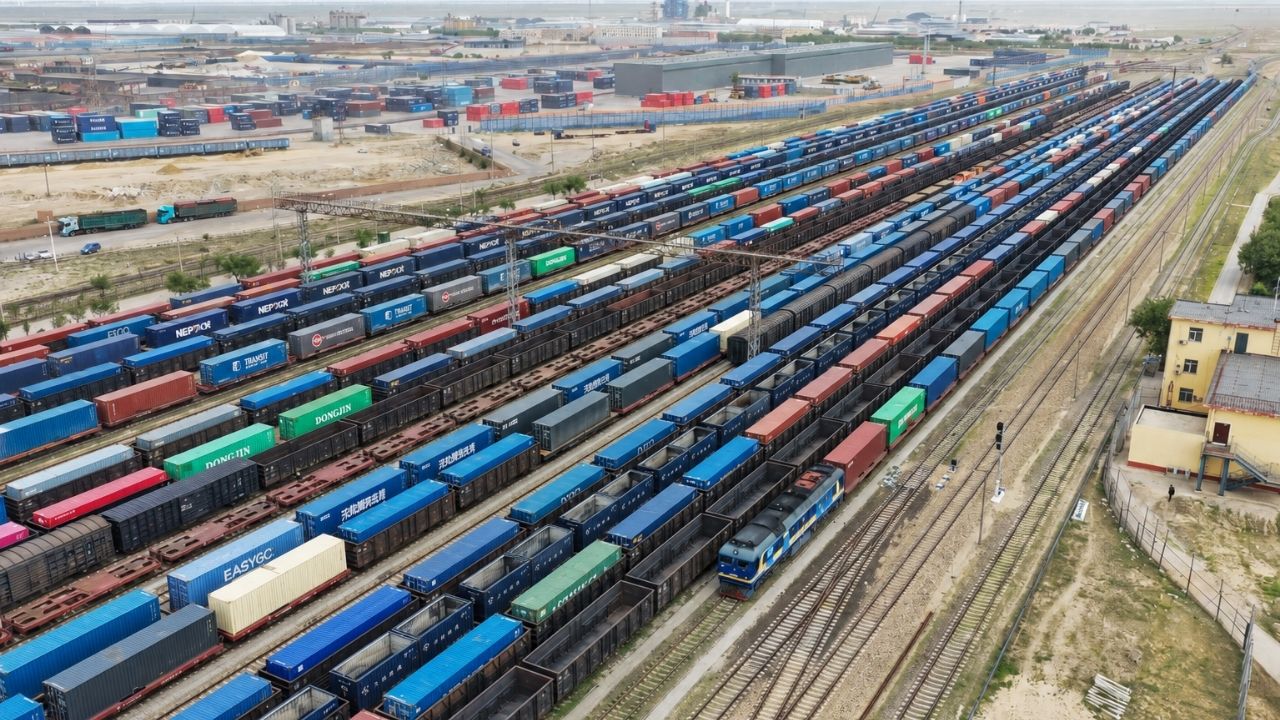
Chinese Rail Port in Inner Mongolia Surpasses 25,000 China-Europe Trains, Connecting 75 Routes Across Over 10 Countries, Showcasing Central Corridor as a Strong Land Alternative to Long Sea Routes
-
Brazilian State Government Establishes New Fire Brigade Battalion with $74 Million Investment



In practice, the problem ceased to be merely commercial and became logistical: shipping companies began to charge additional fees and, in many cases, to adopt longer routes to reduce risk, which slowed shipments and made transport more expensive.
The numbers that explain the 31.47% drop in exports
The decline in exports is clearly visible in the total shipped in March. Brazilian sales to Gulf countries totaled US$ 537.1 million in the month, with a 31.47% drop in the annual comparison.
The region brings together relevant markets for Brazil, such as Saudi Arabia, United Arab Emirates, Qatar, Kuwait, Oman, and Bahrain. As the purchasing profile of these countries is strongly linked to food, the logistical downturn hit the heart of Brazil’s export agenda to the Gulf.
Corn almost zeroes out and sugar falls sharply: the most affected products
The retraction was evident in items that depend on large volumes and regularity of shipment. In March, corn practically stopped being shipped, while sugar and molasses suffered a strong retraction.
The detailed data shows how the drop materialized:
- Corn: from a monthly average in 2025 of approximately US$ 37.4 million to just US$ 25.1 thousand in March 2026
- Sugar and molasses: in March 2026, US$ 54.1 million, below the average monthly standard of 2025 of about US$ 130 million
- Wheat and rye: no significant shipments in March
- Soybean meal and other animal feed: US$ 519.9 thousand in March, below the monthly average of 2025 of about US$ 3.4 million
- Oilseeds (sunflower, sesame, canola, etc.): approximately US$ 1.1 million in March, below the monthly average of 2025 of about US$ 4.9 million
The result is a blow concentrated on grains and derivatives, precisely the items most sensitive to delays, routes, and freight costs.
Why more expensive freight and longer routes stalled agribusiness shipments
The main explanation pointed out is logistics. With the increased risk, shipping companies began to raise costs with additional fees and redesign routes.
Instead of crossing Hormuz under normal conditions, some routes began to circumvent the African continent to avoid passage, which lengthens the journey and makes transport more expensive. For agribusiness products, which depend on scale and predictability, this becomes an immediate brake on exports.
What changes in practice for Brazil when exports to the Gulf go awry
When exports to the Gulf fall, the impact is not restricted to a monthly figure. The partial interruption of transport affects shipment planning, compliance with logistical windows, and the ability to maintain a regular flow of food in large volumes.
The retreat of corn to practically residual levels and the fall in sugar show that, in times of high risk, trade can stall due to cost and route, even when there is demand, creating bottlenecks that affect producers, trading companies, and supply chains.
Next steps: what to observe to understand if exports react
The evolution of exports depends mainly on how navigation in the region will proceed in the coming weeks and how freight and insurance costs will behave in the face of risk.
If long routes and additional fees persist, large-scale items with low tolerance for delays tend to remain under more pressure, keeping agribusiness at the center of the logistical impact.
In your opinion, can Brazil react quickly to this type of export shock by redirecting routes and markets, or does the dependence on maritime transport in critical routes like Hormuz make the decline inevitable?