Portuguese
  Spanish


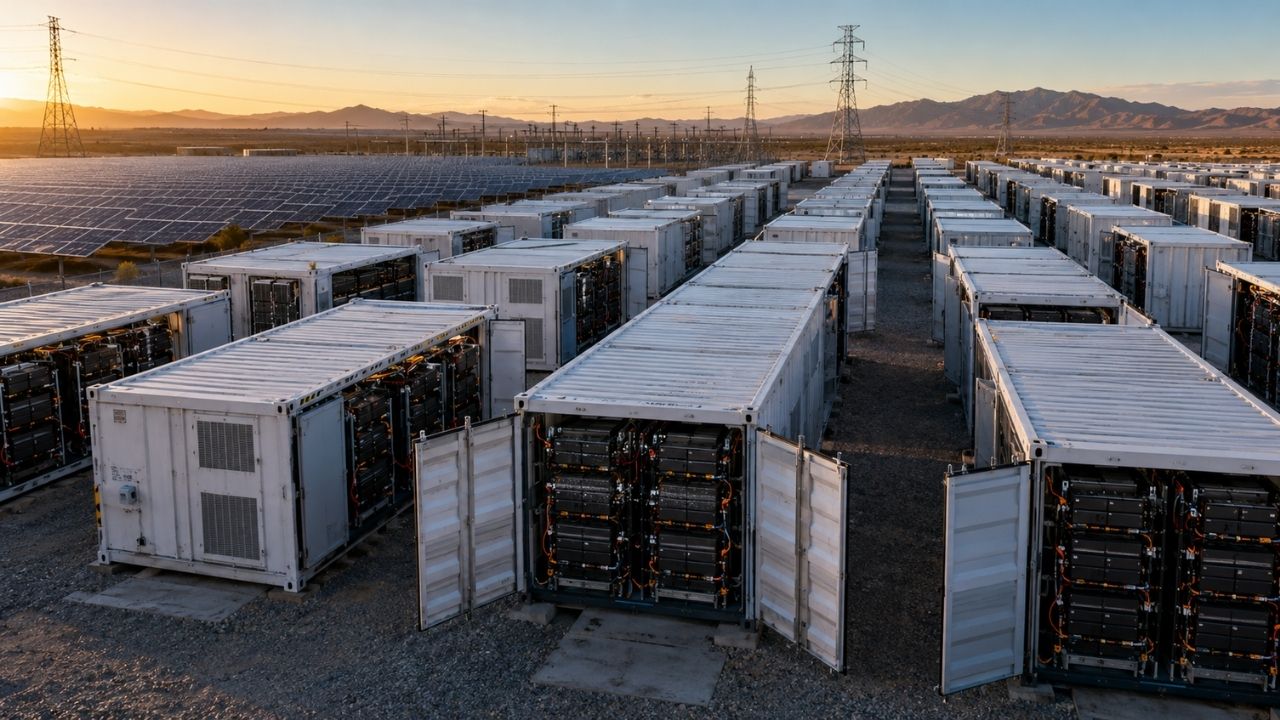

Waymo partnered with B2U to repurpose old electric vehicle batteries into stationary solar energy systems. Published in June 2026, the agreement provides for thousands of used packs in container-type cabinets, connected to the power grid in California and Texas, where its fleet already operates.
Waymo’s old electric car batteries will gain a second life in the United States through a partnership with B2U Storage Solutions. The agreement was reported to WSJ Pro Sustainable Business in an article published on June 4, 2026, and recorded in the print edition on June 5.
According to a report by WSJ Pro Sustainable Business and information published by electrive, the initiative involves Waymo, Alphabet’s autonomous car company, and B2U, a startup that repurposes electric vehicle batteries. The goal is to transform used modules from the driverless fleet into solar energy storage to strengthen the power grid in California and Texas markets.
Autonomous car batteries will have a second life off the streets
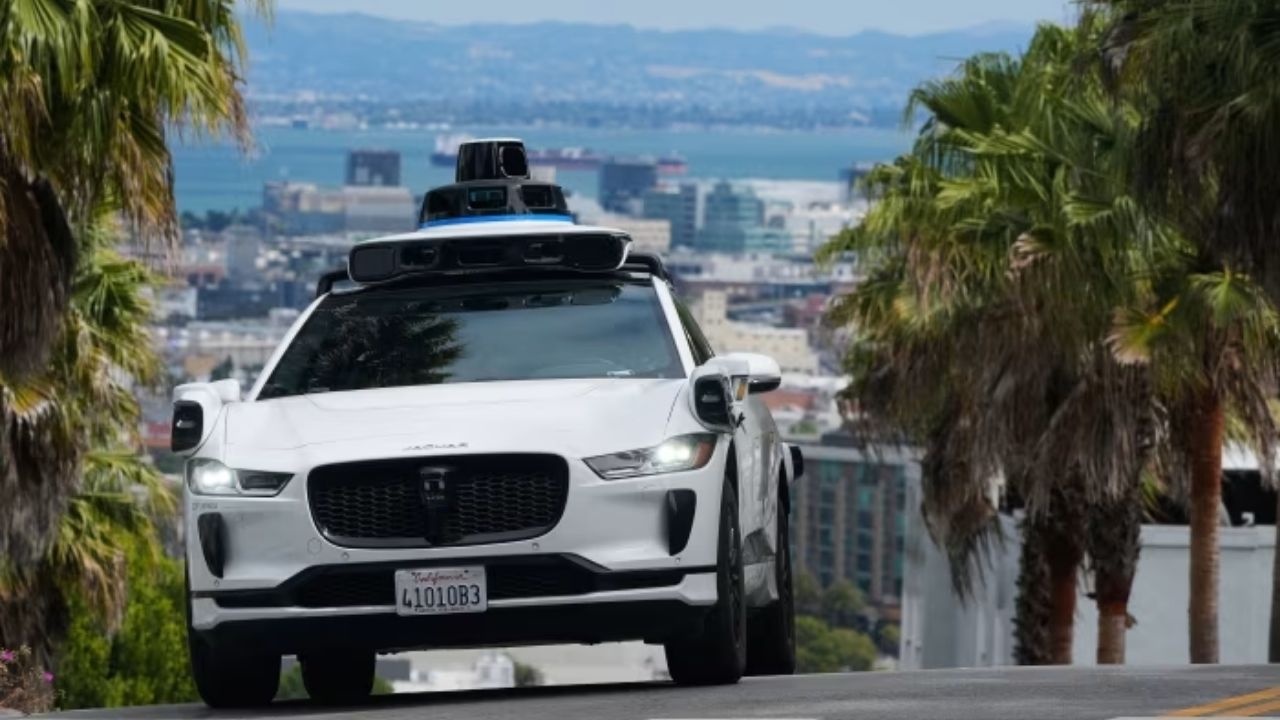
Waymo put driverless cars on the streets, but now needs to deal with a direct consequence of this operation: the accelerated wear of the batteries. Since autonomous vehicles are shared and run much more than personal cars, the packs reach the end of automotive use at a more intense pace.
-
Forgotten Canadian Machine Harnessed Waterfall Power to Supply Mines with Compressed Air for 70 Years Without Motors or Electricity

-
Berries, Strawberries, and Blueberries Could Transform Agriculture in Northeastern Brazil, New Tests Reveal

-
Danish Resident Discovers Six Viking Gold Bracelets Weighing 762.5 Grams, Third Largest Gold Treasure in Denmark
-
Over 200 Cities in Southern Brazil on Storm Alert as Cyclone Near Uruguay Brings Heavy Rain, Hail, and Winds Up to 100 km/h





According to Adam Lenz, head of sustainability and environmental impact at Waymo, personal vehicles spend much of their time parked, while the company’s cars are heavily used. This makes the second life of the batteries an important part of the fleet’s environmental and operational strategy.
The partnership with B2U seeks to prevent the modules removed from the vehicles from going directly to disposal or final recycling. Instead, they will be tested, reorganized, and installed in stationary energy storage systems.
The logic is simple: a battery that no longer meets the demands of an electric car can still store energy in less demanding applications. In this new use, it stops moving vehicles and starts helping to stabilize the power grid.
Waymo runs more, wears out more, and creates a new flow of used packs
Waymo’s operation is growing at a time of expansion for robotaxis in the United States. According to an estimate by Morgan Stanley cited in the report, the number of autonomous trips in the country is expected to rise from about 15 million in 2025 to approximately 36 million in 2026.
Waymo itself stated that its fleet performs about 500,000 trips per week. The more trips, the greater the pressure on tires, sensors, vehicles, and also on the batteries that power these electric cars.
This intensive use differentiates Waymo from regular consumers of electric vehicles. A personal car may take years to accumulate high mileage, while a shared vehicle works almost like an urban infrastructure asset.
Therefore, the company tends to generate a more frequent flow of retired batteries. The agreement with B2U creates a route to repurpose these modules before final recycling, extending their economic and energy value.
B2U transforms used packs into cabinets resembling containers
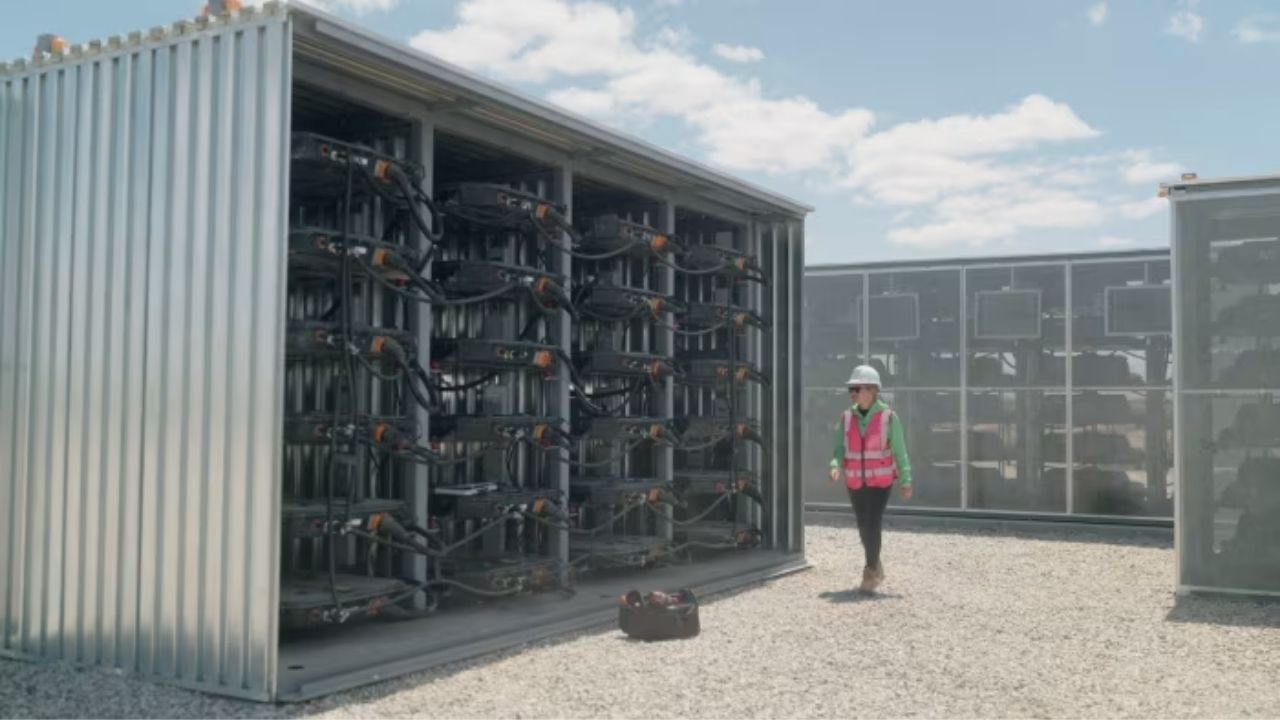
B2U Storage Solutions has been repurposing electric vehicle batteries since 2020. In the process, the modules are removed from the cars, tested, and installed in cabinets approximately 2.7 meters high, similar to small containers.
Each cabinet houses dozens of used electric vehicle batteries. These sets function as large energy reservoirs, charging when there is an excess of renewable generation and discharging when the grid needs reinforcement.
Freeman Hall, CEO of B2U, explained to the WSJ that the system is charged when prices are low, during periods of abundant sun or wind, and discharged after sunset. This mechanism allows for better utilization of solar energy that might be wasted during low-demand hours.
The company estimates that a single cabinet can provide energy for an average home for up to three months. This figure helps translate the practical impact of modules that, individually, might seem like just old parts of electric cars.
Solar energy from California and Texas enters the center of operation
The initiative will initially be implemented in California and Texas. The two states appear as strategic markets because they have a large presence of solar energy and are also part of the areas where Waymo’s autonomous fleet already operates.
In California, storage can help address the mismatch between solar generation during the day and high consumption in the late afternoon. In Texas, the electrical grid increasingly relies on renewable sources, such as solar and wind.
The role of used batteries is precisely to store energy when there is an abundance and return electricity when demand grows. This flexibility is increasingly important in grids with a large share of intermittent generation.
B2U claims that its systems provide valuable services to the electrical grid. For Waymo, the benefit is also strategic: strengthening the networks that help supply the company’s own electric vehicles.
Thousands of retired vehicles can supply stationary systems
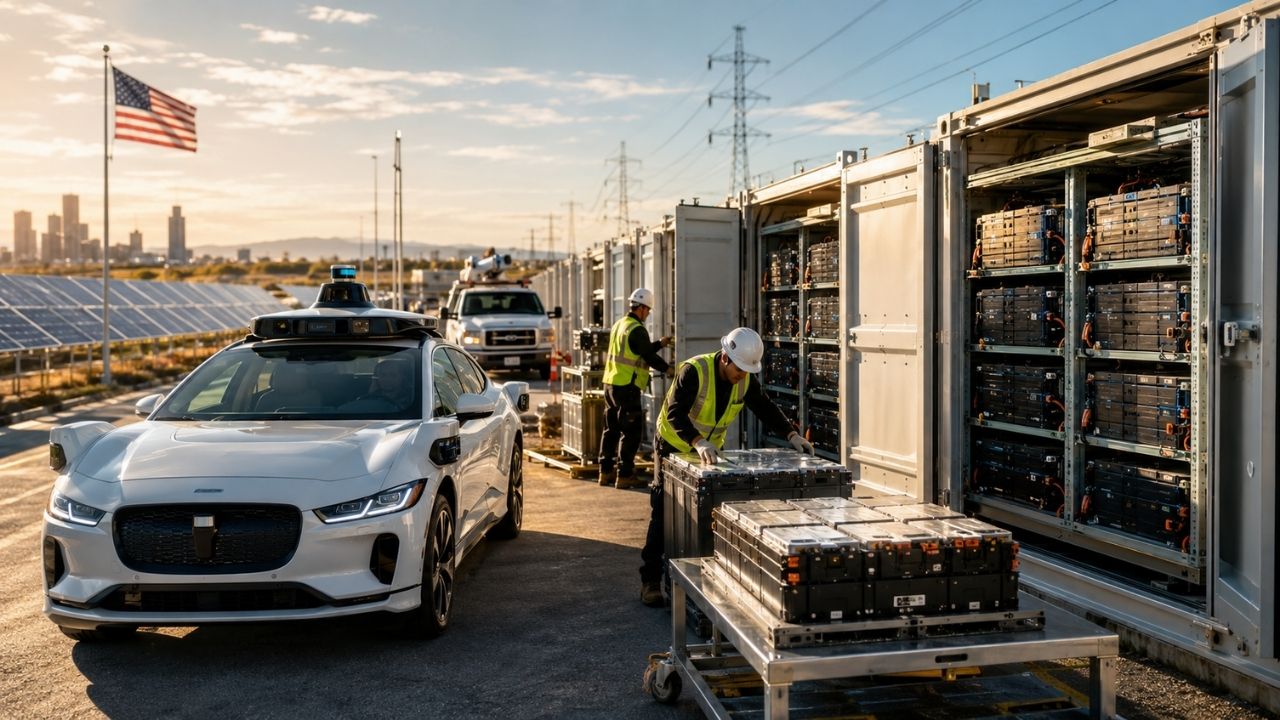
B2U reported, in a statement echoed by Electrive, that thousands of retired vehicles from the streets will be directed to the energy sector through the agreement with Waymo. The idea is to transform batteries that have lost their automotive function into storage assets.
The technical justification is that traction batteries usually stop being ideal for vehicles when they drop to about 70% to 80% of the original capacity. Even so, they can still maintain enough energy for additional years in stationary applications.
This explains why the second life can be financially and environmentally interesting. The module loses performance to run in a car but can still operate in a fixed system, without the same requirements for acceleration, weight, and range.
After this second life, B2U also claims to ensure proper recycling, considering the residual value of the batteries. Thus, the cycle does not end in storage: it continues until the final recovery of materials.
Each reused battery can generate additional electrical value
Freeman Hall stated that each battery reused by B2U can add $8,000 to $10,000 in electric energy value. This data shows why repurposing interests not only the environmental discourse but also the economics of electrification.
The battery is one of the most expensive components of an electric vehicle. When it can still generate value outside the car, the total lifecycle cost improves, and immediate disposal becomes less rational.
The second life transforms wear into an asset. For a company like Waymo, which operates a high-use fleet, this can reduce waste and create a narrative of circularity around its robotaxis.
For B2U, the agreement expands access to used modules at scale. The larger Waymo’s autonomous fleet, the greater the future volume of batteries available for storage systems can be.
Partnership also strengthens the energy security of its own fleet
Waymo states that repurposing electric vehicle batteries helps obtain renewable energy for its fleet. The logic is to connect the retired modules to local grids that support the operation of the autonomous cars themselves.
This point is relevant because robotaxis depend on reliable electricity. If the grid becomes unstable, expensive, or overloaded, the operation of shared vehicles can also be affected.
The company thus tries to close a cycle between autonomous mobility and energy infrastructure. The cars that used batteries on the streets can later help store energy for the grid that powers new trips.
The initiative does not eliminate the challenges of electrification but points to a more organized way to deal with the aging of modules. Instead of treating the old battery only as a problem, the company starts to see it as part of the infrastructure.
Waymo is not the first, but it has an important difference
B2U has already worked with other automakers, including Nissan and Tesla, to collect used batteries and apply them in grid storage. The difference with Waymo lies in the usage rate of the vehicles.
Autonomous ride-hailing cars run more, accumulate kilometers more quickly, and may retire batteries in different cycles than private vehicles. This makes Waymo’s fleet a relevant case for testing reuse logistics at scale.
The agreement shows how vehicle autonomy also creates new industrial challenges. It is not enough to develop software, sensors, and driverless driving; it is necessary to plan the complete cycle of physical components.
The autonomous car company operates today in a market where trip growth, energy cost, sustainability, and public trust are connected. The fate of the batteries enters this equation.
Second life can become a key piece of electric mobility
The reuse of old batteries from Waymo by B2U shows an important shift: the electric transition doesn’t end when the car goes out of circulation. The value of the battery can continue in stationary systems, especially in networks with a high presence of solar energy.
This logic helps reduce electronic waste, extends the lifespan of materials, and creates a bridge between transport and energy. Instead of separating electric cars and the power grid, the partnership shows that the two sectors are increasingly interconnected.
The agreement starts with a focus on California and Texas but follows a broader trend. As electric fleets age, companies will need to decide whether to discard, recycle, or repurpose their packs before the final end.
And you, do you think giving a second life to autonomous car batteries is a real solution for the power grid or just a way to postpone the disposal problem? Leave your opinion in the comments.