






 Portuguese
  Spanish



Invisible resource guarantees water for millions, maintains rivers and springs, and requires rigorous management in the face of water crises
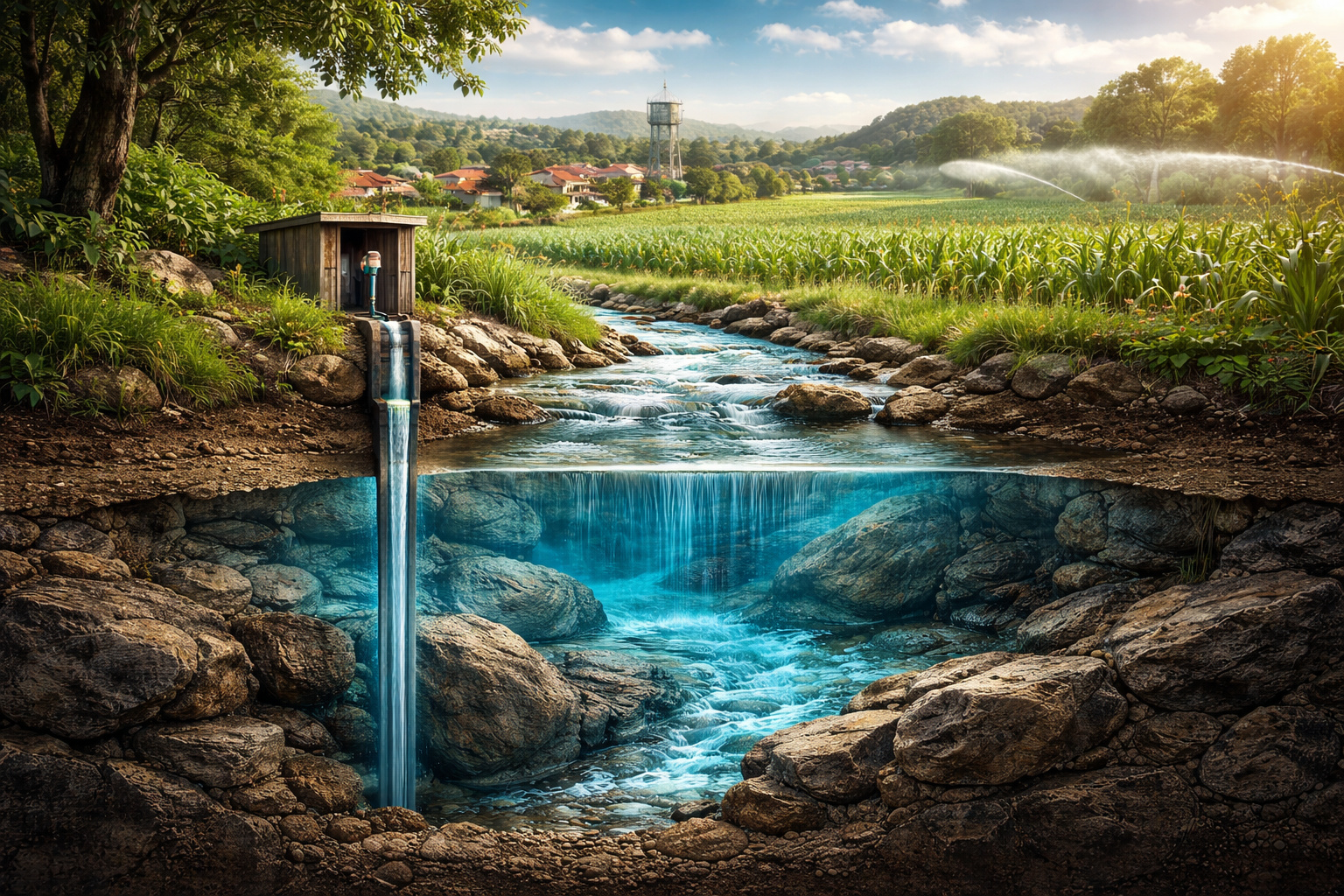
The groundwater in Brazil is consolidating as the basis of national water security, especially in the face of climate change, urban expansion, and failures in public supply.
This invisible resource supports rivers, springs, and entire ecosystems, ensuring water for millions of people in different regions.
At the same time, the pressure on aquifers is increasing due to contamination and irregular exploitation, as pointed out by the National Water Agency (ANA).
This scenario demonstrates the importance of understanding the functioning and preservation of these natural reserves.
Technical definition reinforces the strategic value of aquifers
Groundwater refers to freshwater that infiltrates the soil, stored between sediments and rocks, forming aquifers.
These reservoirs function as a long-term water reserve, capable of maintaining availability even during dry periods.
In Brazil, this system maintains the flow of perennial rivers and springs, as well as supporting forests, wetlands, and mangroves.
This natural support also reduces saline intrusion in coastal regions and preserves environmental balance.
Without this resource, various areas would present greater aridity, lower biodiversity, and higher water vulnerability, according to the Geological Service of Brazil (CPRM).
Use of groundwater expands across the country
The use of this resource is continuously growing, especially in regions with failures in public supply.
Tube wells, springs, and dug wells ensure water for millions of Brazilians in urban and rural areas.
Millions of wells are distributed throughout the country, many still not officially registered.
Residences, businesses, industries, and rural properties use this source to ensure autonomy and reduce operational costs.
Among the main uses, domestic supply, partial public service, agricultural irrigation, and industrial and commercial use stand out.
According to IBGE, in data consolidated until 2022, this expansion accompanies urban growth and the need for diversification of water sources.
-
Farmer Revives Arid, Abandoned Land in Brazil’s Bahia into Thriving Forest, Demonstrates How ‘Syntropic Agriculture’ Can Transform Rural Futures

-
Study Reveals 40% of Brazilians Unaware of Circular Economy, Highlighting Challenges in Sustainable Transition and Recycling Expansion
-
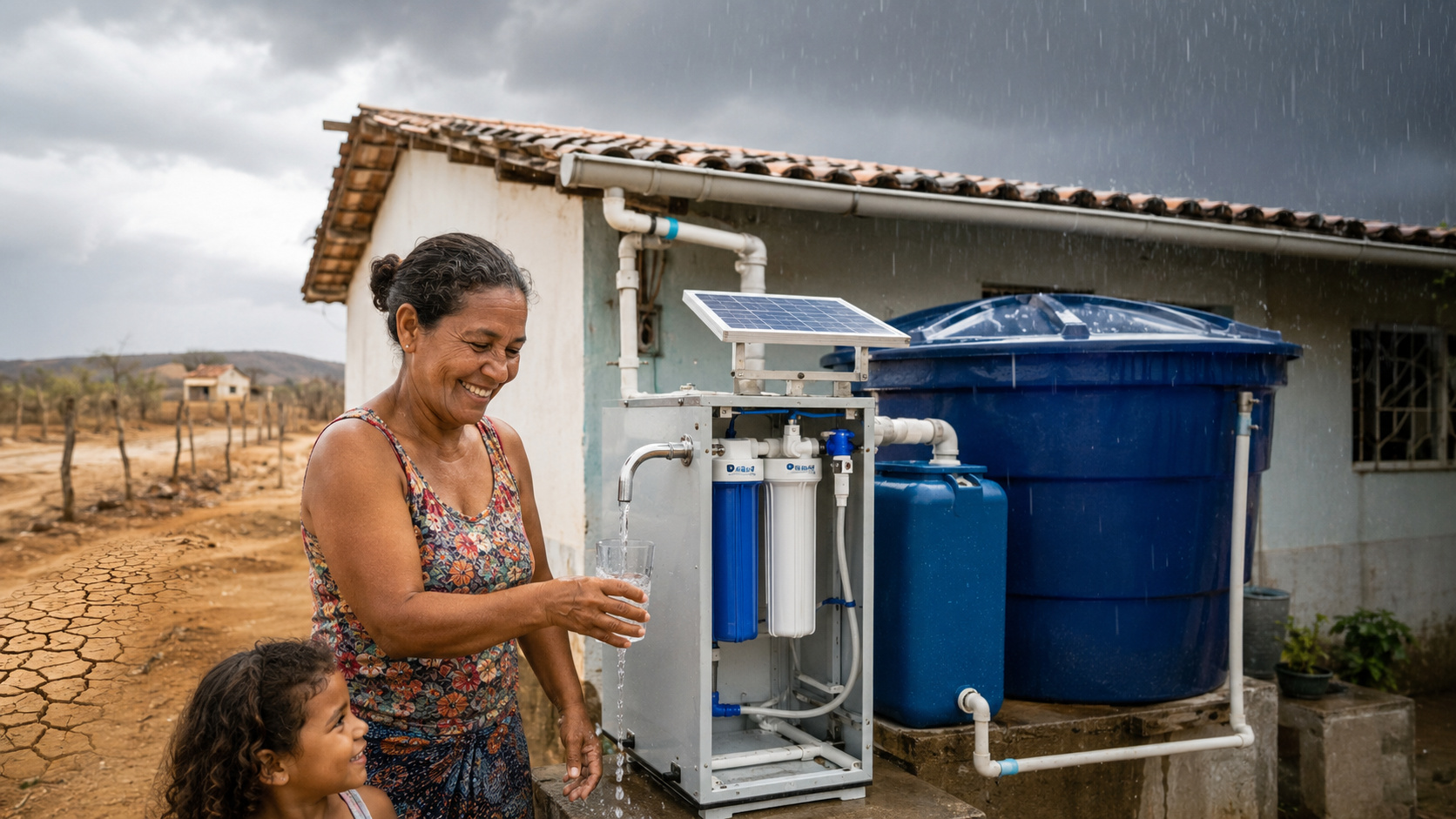
Brazilian Startup Converts Rain into Potable Water Without Chemicals, Surpasses 10 Million Liters, Joins $1.2 Million Project to Bring Simple Technology to Drought-Stricken Areas in Northeast Brazil
-
Brazilian Company Innovates with Treated Water Billing Model, Surpassing 10 Billion Liters and Offering Up to 40% Savings for Large Industries



Sanitation deficit intensifies contamination risks
The sanitation deficit represents the main threat to the quality of groundwater in Brazil.
Millions of Brazilians still do not have adequate access to sewage collection and treatment, according to the National Sanitation Information System (SNIS).
Waste is disposed of directly into the soil, in rudimentary pits, and in watercourses.
This process allows nitrates and pathogenic microorganisms to reach aquifers, especially in densely populated areas.
The proximity between pits and wells significantly increases the risk of contamination.
The recovery of a degraded aquifer occurs slowly, potentially taking decades or even centuries, according to experts from ANA.
Regulation sets limits and requires technical control
The use of groundwater is regulated by the National Water Resources Policy, established by Law No. 9,433 of 1997.
Extraction requires a grant of usage rights, which establishes limits, deadlines, and responsibilities.
This instrument aims to prevent overexploitation and conflicts between users.
The drilling of wells depends on authorization from the managing agency and a technical project prepared by a qualified professional.
It is also necessary to register the extraction and, in some cases, monitor the water quality.
Improper sewage disposal can lead to legal sanctions and significant environmental impacts, especially in cases of irregular use.
Aquifer management defines future water security
Recent events of rainfall scarcity have shown important differences between regions.
Municipalities with well-managed aquifers faced dry periods with greater stability in supply.
Cities dependent on surface sources resorted to drilling emergency wells.
The management of these resources faces challenges, mainly due to the large number of unregistered wells.
This scenario complicates the planning and proper control of groundwater use.
According to ANA, in reports from 2022 and 2023, future water security will depend on the integration of surface and groundwater sources, oversight, and the expansion of sanitation.
The appreciation of these natural reserves will be essential to ensure quality water for future generations.
Do you think Brazil will be able to protect its groundwater before the impacts of contamination and disorderly use become irreversible?








