Portuguese
  Spanish


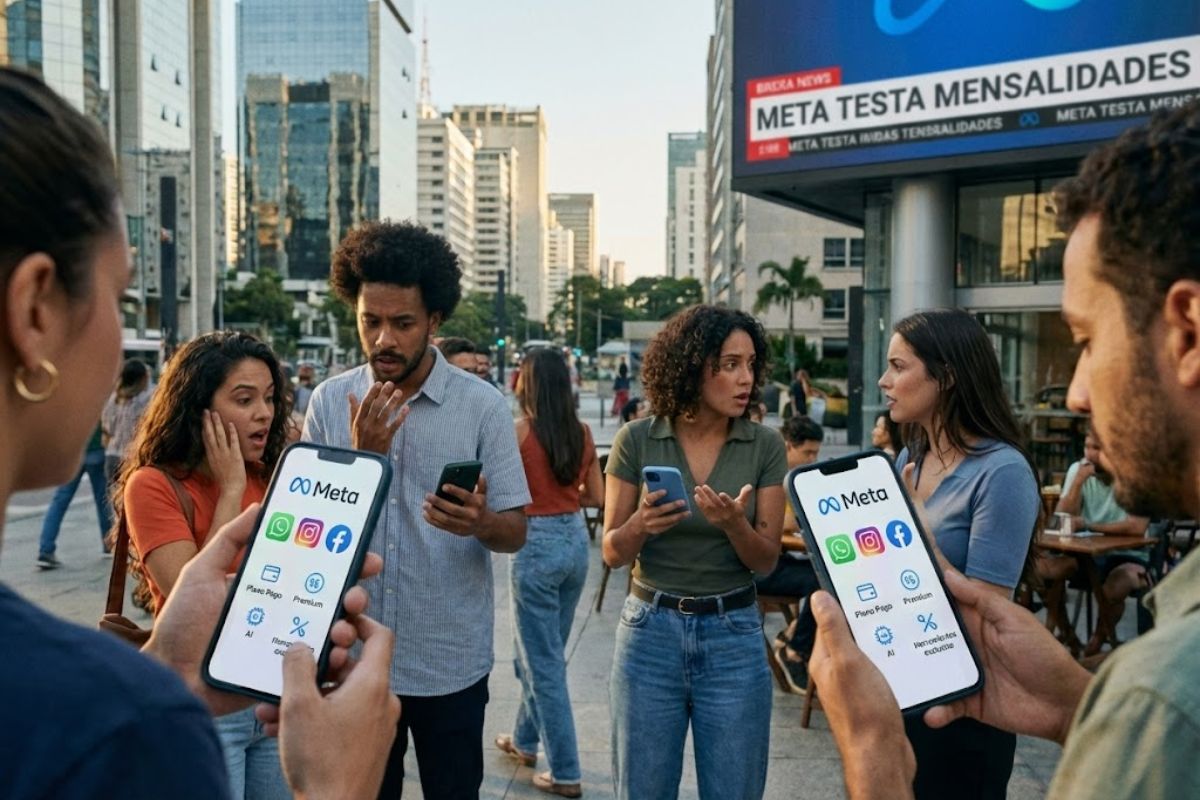


According to TechCrunch, WhatsApp, Instagram, and Facebook are entering the subscription radar: Meta is considering premium plans to offer exclusive features without eliminating basic free functions. The company is expected to test different package combinations, including productivity, creativity, and expanded artificial intelligence, debuting in the coming months with no official date.
WhatsApp, Instagram, and Facebook may be moving toward a new phase where part of the experience is no longer entirely free. Meta, the owner of the three platforms, is evaluating testing “premium plans” that would add exclusive features for users who choose to pay a subscription fee, without imposing charges on those who just want to use the essential functions.
The discussion has gained momentum because these networks are already a structural part of many people’s routines, work, and studies. The change, if it progresses, could redefine expectations about what is “basic” on these platforms and even open a global debate about the economic model of social networks, which is currently predominantly sustained by advertising and scale.
What Meta Is Testing and What Doesn’t Change in Basic Use
The central information is that Meta is considering testing premium plans for WhatsApp, Instagram, and Facebook, according to TechCrunch. The most sensitive point of the announcement is that this does not mean that every user will have to pay to continue seeing content or using the app in a normal way.
-
Brazilian Homebuyers Still Fall for Illegal “Drawer Contracts,” Risking Foreclosure and Long Legal Battles Without Deeds.

-
World’s Largest Pencil Factory, Producing 2 Billion Annually, Operates in a Brazilian University Town with Its Own Sustainable Forest

-
World’s Largest Banknote Printer is a British Private Company Producing Currency for Over 69 Nations
-
Europe’s Largest Hydrogen Truck Fleet Begins Operation with 125 Vehicles Emitting Only Water Vapor




The proposal described is more segmented: charging for some users to access exclusive features within these platforms. At the same time, the indication is that the main functionalities would remain free, preserving the broad access model that has made these services ubiquitous.
This separation creates two levels of experience: an essential, open set, and an additional paid layer, with extras. The final design is not yet detailed, but the guideline is clear: subscription to enhance capabilities, not to block basic use.
Premium Packages with Different Strategies and Distinct Benefits Per App
Another relevant point from what was reported is that Meta would not be tied to a single formula. The expectation is to test various features and subscription packages, and that each subscription, in each app, would have its own set of benefits.
This suggests that the paid plan for Instagram may offer one type of advantage, while WhatsApp and Facebook could take different paths, with packages and “exclusive” features that do not necessarily repeat. The logic is similar to the idea of optimizing subscriptions for specific needs, rather than a universal package.
In practice, this approach tends to generate comparisons between platforms and an internal competition for package attractiveness, as each subscription will need to justify its value with clear and perceived useful deliverables.
Why This Is Becoming a Trend and the Example of Snapchat+
The model cited as a reference is that of Snapchat, which adopted a subscription called Snapchat+. The example is relevant because it shows a path already tested in the market: keeping the service open for the majority, but offering extra benefits for those who pay.
The existence of a known case with a subscription helps explain why Meta considers the strategy. When a service proves that there are users willing to pay for convenience, additional features, or status, other platforms begin to see subscriptions as a second revenue driver, without relying solely on advertising.
By mentioning Snapchat+, the discussion shifts from “this will never happen” to “this already exists and can scale,” especially when the subject involves platforms with billions of users and daily presence.
Artificial Intelligence and Productivity and Creativity Resources at the Center of the Bet
According to Olhar Digital, the company intends to invest more in productivity and creativity, as well as expanded artificial intelligence resources. The critical point is that, for now, there is no detailed description of what these premium features would be, which fuels speculation and curiosity.
Still, the direction of investment signals the type of package Meta wants to build. Instead of selling just “cosmetics” or small conveniences, the discourse aims at something that can be perceived as a tool: resources that speed up tasks, organize activities, facilitate creation, and expand capabilities within the platforms.
This choice also resonates with the actual use of the networks: WhatsApp as infrastructure for daily communication, Instagram as a showcase and creation channel, and Facebook as an ecosystem of groups, pages, and communities. If the premium packages are designed to support these uses, adoption could be driven by those who depend on these networks for routine and production.
Subscription Is Not Verification: Separate Paid Services and Different Publics
An important detail is that paid plans would be separate from the platform’s verification service. This service would continue to be reserved for profiles like content creators, artists, politicians, and other public figures.
In practice, this creates two payment categories with different objectives. One payment for functional advantages and exclusive features, and another for signaling identity and public credibility. By separating the two, Meta avoids confusing the premium package with a “verified badge” and keeps verification as a service directed at a specific type of user.
This distinction also suggests that the premium package may target various audiences, not just influencers. The subscription, in this format, would have the potential to reach ordinary users interested in extra features, while verification would remain a tool for public positioning.
When WhatsApp, Instagram, and Facebook Could Charge a Subscription Fee
The indicated window is “in the coming months,” according to TechCrunch. There is no official date announced, which means that the timeline still depends on testing, adjustments, and defining what will be included in each package.
What is clear is that the movement is treated as an experiment. Instead of a definitive announcement with price, date, and closed package, Meta is working with tests and multiple combinations, which opens space for rapid changes based on public reaction and feature performance.
In practical terms, this places the topic in a state of continuous observation: the market is watching which features emerge first, in which regions, for which profiles, and how the company communicates the separation between basic free and paid layers.
What Changes in the Global Debate About “Free” Networks
The hypothesis of a subscription fee, even partially, disrupts a consolidated belief: that large social networks will always be free for everyone, with invisible monetization through ads and behavior data. Premium plans shift this axis and place an explicit price on part of the value delivered.
At the same time, the discourse of keeping essential functions free attempts to preserve the scale pillar. The tension becomes another: which features will go to premium and which will remain in basic. It is this line, more than the charge itself, that tends to determine public reaction and the extent of the debate.
If the subscription comes with features perceived as necessary, the risk is to create a sense of “disguised paywall.” If it comes with truly optional extras, it may just become another alternative for those wanting additional functionalities.
Would you pay a subscription fee to use WhatsApp, Instagram, and Facebook with exclusive features, or do you think this changes the logic of free social networks too much?