Portuguese
  Spanish


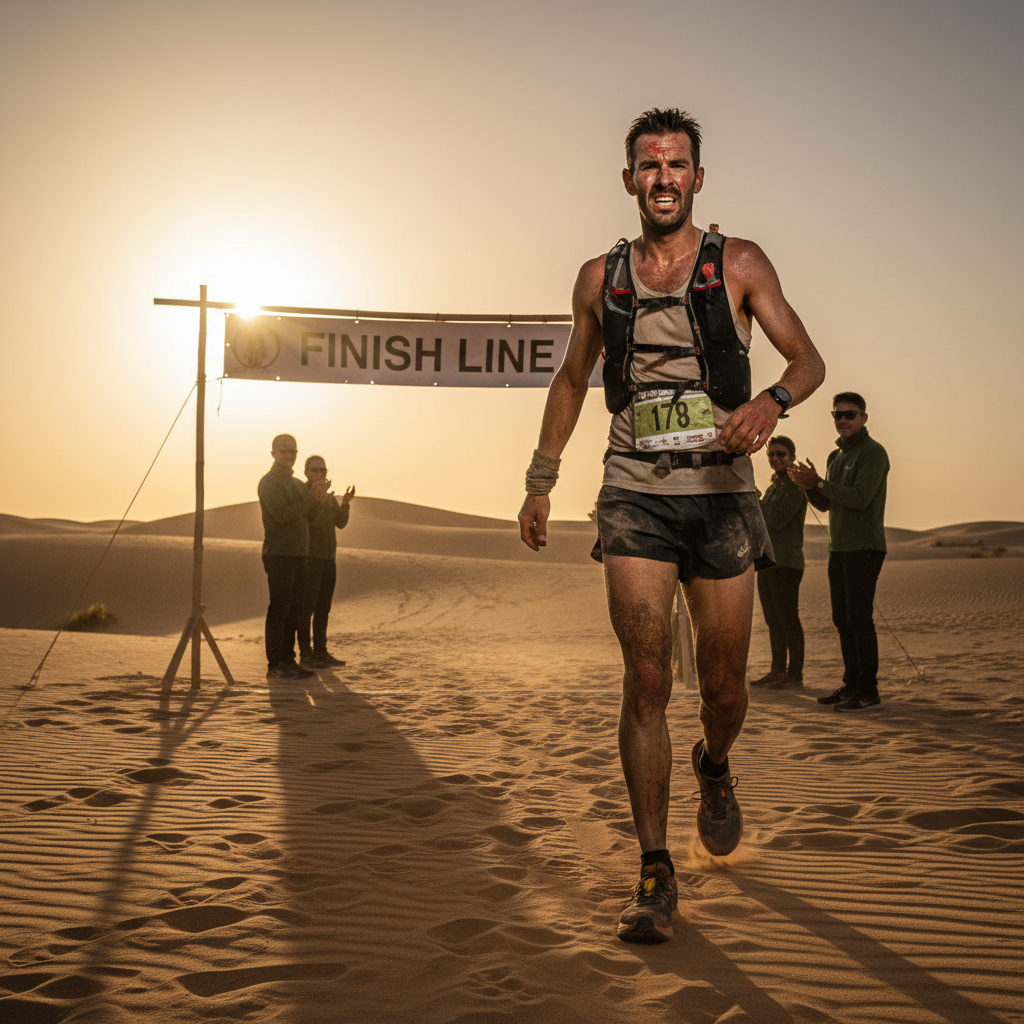


A study published in Evolutionary Human Sciences analyzed ultramarathon and Ironman triathlon athletes and revealed that, under extreme physical stress, the body enters selective shutdown — prioritizing immune defense above all else
Imagine running 226 kilometers non-stop.
That’s what an Ironman athlete does: 3.8 km of swimming, 180 km of cycling, and 42 km of running.
All in up to 17 hours.
-
Couple buys 1905 colonial house, plans to tear down walls to unite three rooms, but finds hidden service staircase and rethinks the entire renovation to preserve details that have survived for over a century.

-
For the first time, scientists have seen the ocean floor open up in real-time—plates moving apart by two meters in a few days and 160 million cubic meters of lava emerging on the seafloor.

-
Couple receives a quote of $50,000 to install a built-in refrigerator, decides to do the work themselves, spends $6,000, and claims to have saved over $100,000 by renovating the house.
-
At 77 years old, an elderly woman lives alone in an almost ghost village in the French Alps, at an altitude of 1,000 meters, where there is a town hall, a mayor, and an entrance sign, but only she lives there every day in a place destroyed by a landslide and almost erased from the map.


What happens inside the body during these moments?
According to a study published in Evolutionary Human Sciences, the body makes a radical decision.
It shuts down systems it considers “non-essential” for immediate survival.

What the body shuts down — and what it keeps
The discovery is surprising for the clarity of the choice.
Under extreme physical stress, the body prioritizes immune defense over two fundamental functions:
- Reproduction — reproductive hormones are suppressed
- Tissue repair — healing and cellular regeneration are slowed down
All available energy is redirected to keep the immune system functioning.
From an evolutionary perspective, surviving an infection is more urgent than reproducing or healing a wound.
The logic of ancestors
The researchers argue that this mechanism is an evolutionary inheritance.
Our ancestors faced extreme stress during hunts or escapes from predators.
With limited energy, it was impossible to keep all systems at maximum.
Evolution “programmed” the organism to prioritize what keeps the individual alive now.
During an escape, any open wound becomes a gateway for infections.
Keeping immunity active was a matter of life or death.

Athletes as living laboratories
Ultramarathon and Ironman athletes are the living humans who come closest to the stress faced by ancestors.
They spend hours in maximum continuous effort.
The body enters “selective shutdown”.
It’s not total collapse — it’s a strategic redistribution of resources.
The consequences for modern athletes
This mechanism explains known phenomena in elite sports:
- Post-event performance drop — the body did not repair tissues during the event
- Increased susceptibility to diseases after marathons — the immune “boost” depletes reserves
- Hormonal changes in endurance athletes — especially reduction of reproductive hormones
The human body is paying a price for immediate survival.
Soldiers, firefighters, astronauts
The discovery goes beyond sports.
Soldiers in combat, firefighters in fires, and astronauts on long missions face comparable stress.
Understanding how the body redistributes resources can lead to treatments that optimize this response.
Moreover, it can help understand why researchers isolated in Antarctica for 14 months suffer profound physiological changes.
The mechanism may be the same.

Caveats
The study is based on extreme athletes — sedentary populations may respond differently.
The immune prioritization is adaptive in the short term, but if chronic, it can lead to risks such as infertility.
The data is preliminary and subject to peer review.
Still, the discovery reveals something profound: when pushed to the limit, the body knows exactly what to do — and the first thing it protects is not the heart or the brain, but the system that defends us against invisible invaders.