Portuguese
  Spanish


Amid severe drought, Morocco uses floating solar panels in a reservoir near Tangier to reduce evaporation, generate clean energy, and avoid occupying new land areas
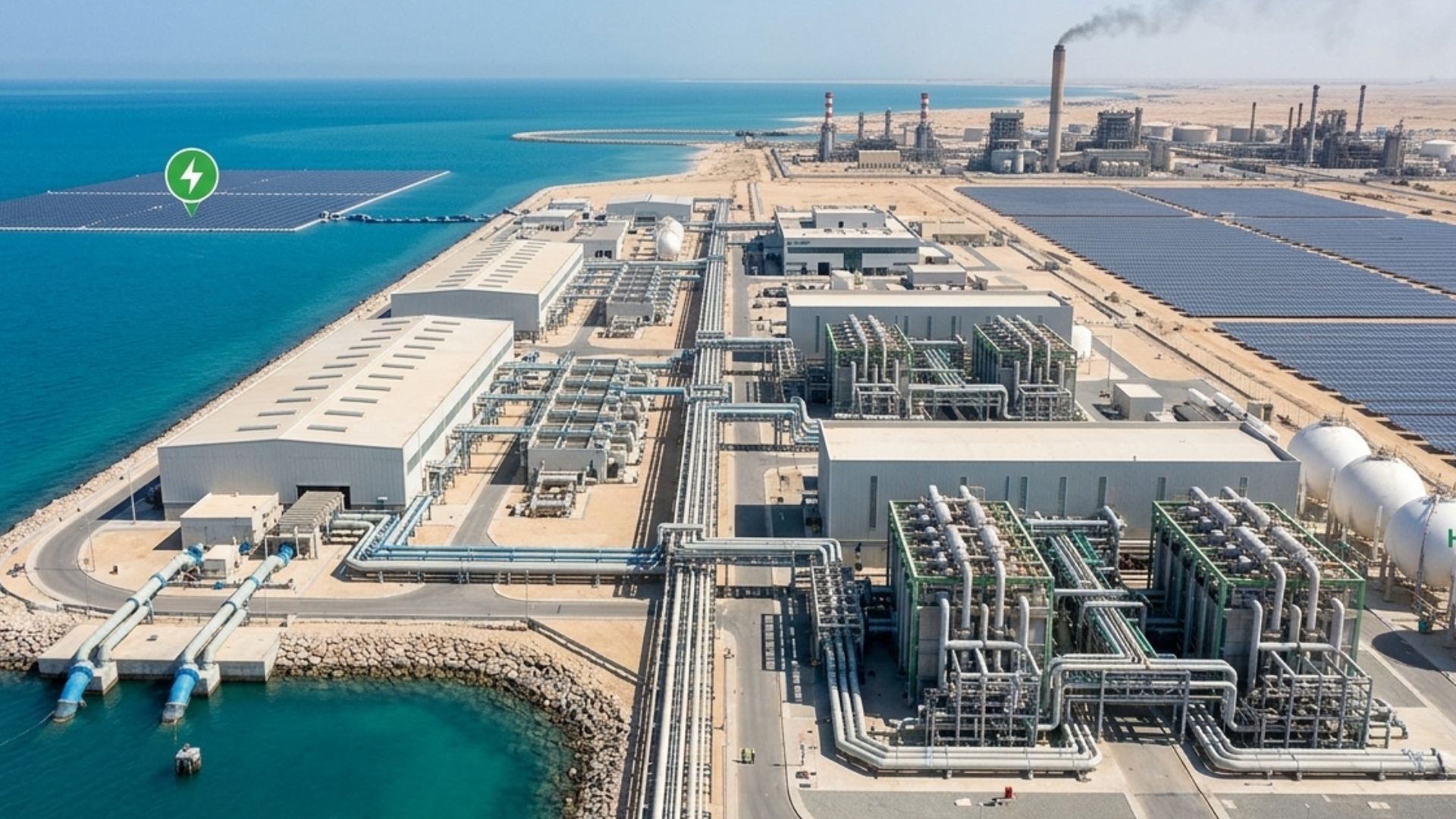
Morocco is testing floating solar panels in a large reservoir near Tangier, in the north of the country, to combat drought without occupying new land areas.
The findings were published by Al Monitor, an independent Middle East news outlet. The installation uses panels on the water to reduce evaporation and generate electricity in the same space where the reservoir already exists.
The proposal draws attention because it solves two problems at once. The water is less exposed to strong sun, while the panels transform sunlight into clean energy.
-
Brazil to Hold First Auction for Batteries to Store Solar and Wind Energy from the Northeast

-
Brazilian scientists are simultaneously advancing two research projects on clean hydrogen and driving solutions that could transform the energy matrix, enhance industrial competitiveness, and accelerate large-scale emission reduction targets.

-
Advancement in renewable energy: A R$ 150 million project launched by Petrobras and Finep aims to create state-of-the-art electrolyzers for green hydrogen, strengthening national research and preparing Brazil to compete in a billion-dollar energy market.
-
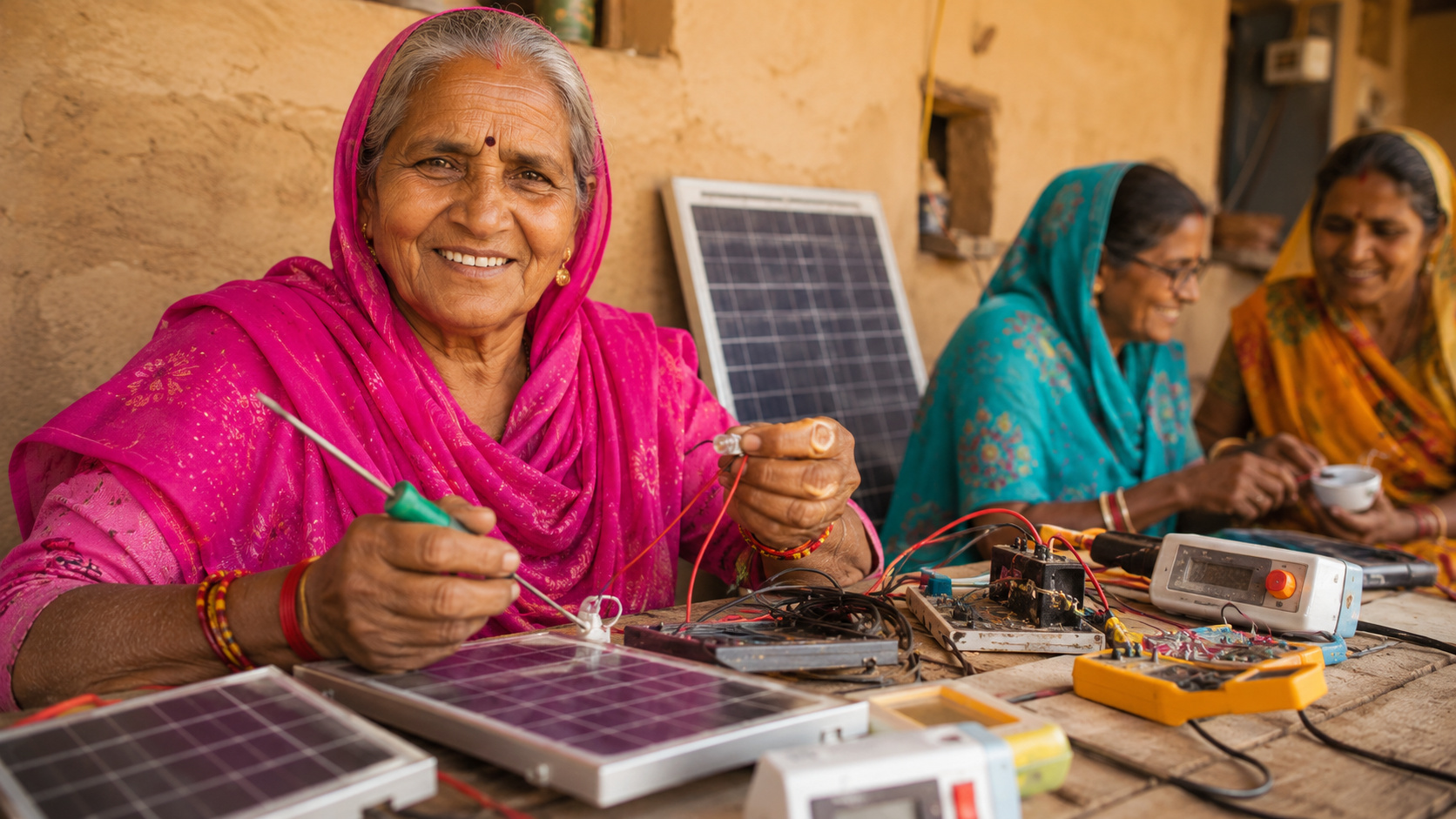
Illiterate or semi-literate grandmothers were trained to repair solar systems, open rural workshops, and light up homes that still depended on kerosene.


Floating solar panels act as an energy lid over the water
Floating solar panels are supported by structures that float on the reservoir’s surface. They receive sunlight and produce electricity, as happens in a common solar power plant.
The difference lies in the installation location. Instead of occupying land, the equipment is placed on the water. This creates a cover that helps protect part of the surface from direct heat.
This cover acts as an energy lid. It doesn’t completely close off the reservoir, but it reduces the water’s exposure to the sun and still generates electricity.

Reservoir near Tangier becomes a test against drought and evaporation
The project is taking place in a large reservoir near Tangier, a city in northern Morocco. The region is suffering from a severe drought, which increases the importance of preserving available water.
Evaporation occurs when heat transforms part of the water into vapor. In hot and dry places, this loss can be constant and difficult to notice day by day.
With floating solar panels, the reservoir’s surface gains shade over part of the covered area. This helps reduce water loss and creates a new source of solar electricity.
Al Monitor shows that expansion could involve thousands of floating solar panels
Al Monitor, an independent Middle East news outlet, detailed that there are expansion plans involving thousands of floating solar panels in the reservoir near Tangier.
This growth would make the project more relevant for the country. The larger the covered area, the greater the contribution to reducing evaporation and increasing energy generation.
The central point is the dual use of space. The reservoir continues to store water and also serves as a base for a floating solar power plant.
Clean energy without occupying new land areas gains traction in dry countries
Solar energy requires space to install panels. In many places, this can lead to disputes over areas that also serve for agriculture, housing, or preservation.
In Morocco’s case, the choice to place panels on the water avoids this conflict. The project uses an area that is already part of the country’s water infrastructure.

This solution can be important for dry countries. Where there are reservoirs exposed to heat, the same surface can help protect water and produce renewable energy.
Sun that evaporates water can also turn into electricity
Strong heat is often an enemy of reservoirs. It increases evaporation and reduces the amount of water stored for future use.
With floating solar panels, part of this problem turns into an opportunity. The sun that once accelerated water loss is now used to generate electricity.
The logic is simple and easy to visualize. The water receives shade, the panels receive sun, and the reservoir gains a new function in the search for **clean energy**.

Technology shows practical way to unite water and electricity
The test in Morocco shows how an existing structure can gain new utility. The reservoir ceases to be just a space to store water and becomes part of energy generation.
The measure also shows that solutions against drought do not need to depend only on new water sources. Preserving what is already stored is also a way to face the water crisis.
The **floating solar panels** near Tangier reinforce a simple idea: when water becomes scarcer, every available surface can have strategic value.
Morocco is testing a solution that combines water protection and clean electricity in the same place. The reservoir’s surface becomes a cover against the sun and also a base for solar generation.
Do you believe that floating solar panels in reservoirs can become a real solution against drought in other hot countries? Share your opinion.