Portuguese
  Spanish


While 100 million Brazilians live without sewage collection and rivers receive raw waste, Singapore — an island with no natural water sources — manages to recycle 100% of its sewage and transform it into internationally awarded potable water
According to data from Instituto Trata Brasil based on SNIS 2024, sanitation in Brazil serves only 55.8% of the population with sewage collection. In practice, this means that about 100 million people do not have their sewage collected — and what is collected, in many cases, is not treated.
Furthermore, the Legal Framework for Sanitation approved in 2020 established the goal of universalization by 2033. However, experts warn that the current pace of investment makes this goal practically unattainable.
Therefore, while Brazil — a continental country with an abundance of rivers and aquifers — has not yet solved the basics, Singapore — an island of 733 km² with no natural freshwater sources — already recycles 100% of the sewage it produces.
-
China’s Engineered Bamboo: The “Material of the Future” Stronger Than Steel and a Sustainable Wood Alternative

-
Egypt’s “New Nile”: 170 km Artificial River Aims to Turn Desert into Farmland, but Water Supply Concerns Loom
-
Unable to secure a mortgage as a self-employed single mother, she designed her own floating home from a 20-meter boat and now lives “off-grid” with her two children and solar panels on an English canal.
-
Man Transforms Rusty Shipping Container into Luxury Home with Insulated Walls, Large Windows, and Drywall Finish, Surprising Onlookers


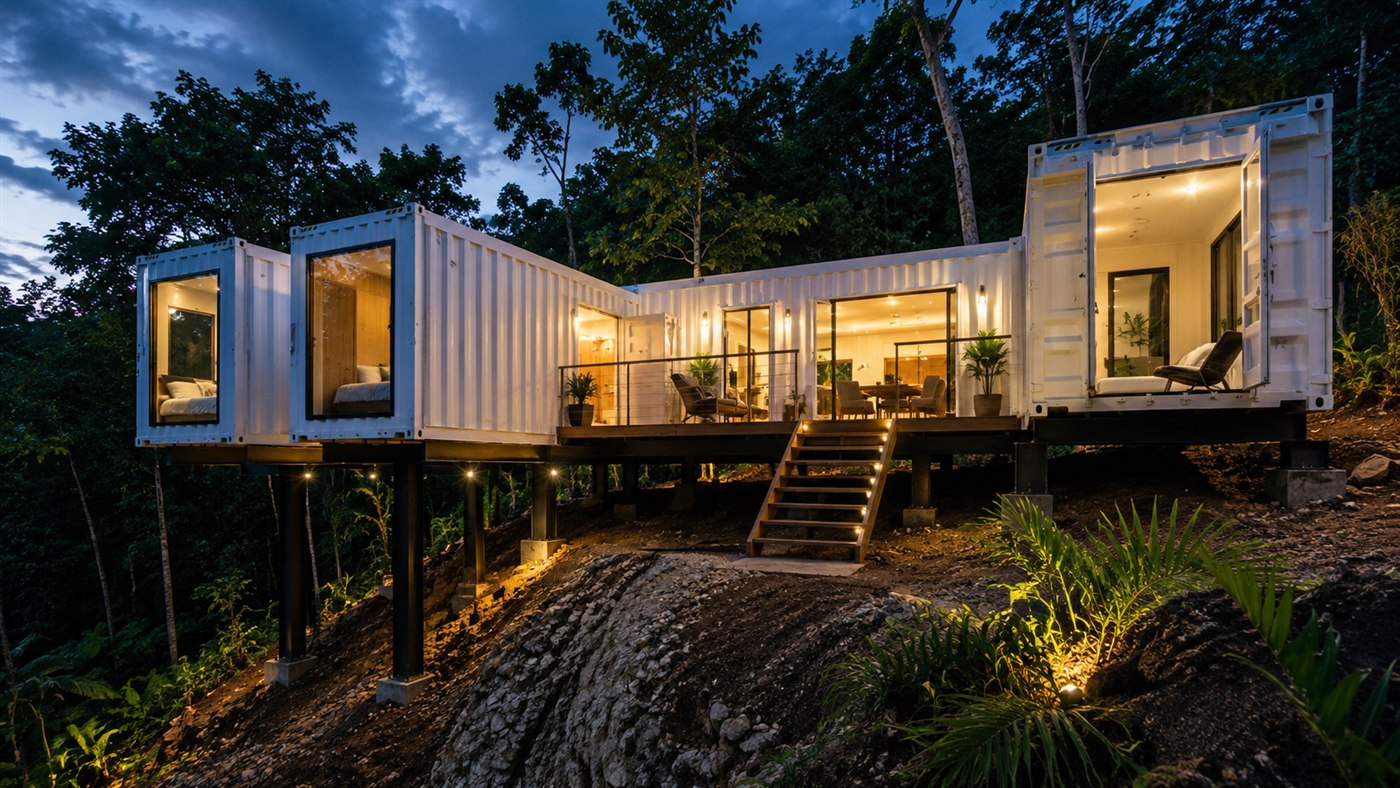
NEWater: how Singapore transformed sewage into award-winning potable water

As documented by the PUB (Singapore’s National Water Agency), the NEWater program treats domestic and industrial wastewater using microfiltration, reverse osmosis, and ultraviolet disinfection to achieve purity standards superior to bottled mineral water.
In fact, NEWater already supplies 40% of all water consumed in Singapore. Consequently, the country has drastically reduced its dependence on water imports from neighboring Malaysia.
In other words, the same water that comes out of a Singaporean’s shower, sink, and toilet is treated and returned to the system as clean potable water — in a closed loop that never wastes a drop.
Moreover, Singapore complements NEWater with three other sources: seawater desalination, rainwater harvesting in 17 reservoirs, and limited imports from Malaysia. In this sense, the country created what it calls the “Four National Taps” — a redundant system that ensures water security even in extreme scenarios.
The shocking numbers of sanitation in Brazil
According to Instituto Trata Brasil, the country loses 40% of treated water due to leaks in the distribution network. Similarly, only 51% of collected sewage undergoes some type of treatment before being returned to the environment.
Especially in the North and Northeast regions, sanitation coverage in Brazil is critical. In Pará, less than 10% of the population has collected sewage. In Alagoas, the rate does not reach 30%.
To give an idea, the Brazilian Northeast — which faces recurrent droughts — wastes more water in leaks than many Middle Eastern countries consume.
Equally alarming is the impact on health: more than 300,000 hospitalizations per year in Brazil are directly linked to diseases caused by a lack of sanitation, according to the Ministry of Health.
In practice, the lack of sanitation in Brazil kills more than many diseases that receive daily headlines in newspapers.
The contrast in numbers: Brazil vs Singapore

The contrast between the two countries is brutal when put into perspective:
- Territorial area: Brazil 8.5 million km² vs Singapore 733 km² — Brazil is 11,600 times larger
- Available natural water: Brazil has 12% of all freshwater on the planet vs Singapore zero natural sources
- Sewage collection: Brazil 55.8% vs Singapore 100%
- Sewage recycling: Brazil ~3% vs Singapore 100%
- Water loss in the network: Brazil 40% vs Singapore 5%
In comparison, Jordan — another water-scarce country — is also investing US$ 6 billion in desalination. However, Singapore’s model is considered more sustainable because it reuses existing water instead of relying exclusively on energy for desalination.
The Sanitation Framework promises universalization by 2033 — but the clock is ticking
Still, Brazil has taken important steps. The Legal Framework for Sanitation (Law 14.026/2020) opened the sector to private concessions and established clear goals: 99% of the population with treated water and 90% with sewage collection and treatment by 2033.
Thus, private companies such as Aegea, Iguá, and BRK have taken over concessions in states like Alagoas, Rio de Janeiro, and Amapá.
On the other hand, the current pace of expansion would need to triple to meet the targets within the deadline. According to the Brazilian Association of Private Concessionaires (ABCON), investments of R$ 700 billion would be needed in 10 years — almost double what was invested in the last decade.
Despite this, optimism exists. In 2025, Brazil recorded the largest volume of investment in sanitation in history: R$ 28 billion in a single year.
What Brazil can learn from an island of 733 km²

According to water resource specialists, the Singaporean model is not impossible to replicate in Brazil — especially in coastal cities and drought-prone regions. However, it requires continuous investment in technology and a cultural shift in how the country treats its waste.
According to USP researchers, cities like Recife, Fortaleza, and Salvador could adopt partial sewage recycling systems for irrigation and industrial use, reducing pressure on increasingly polluted water sources.
The economic impact of a lack of sanitation is also devastating. According to Trata Brasil, Brazil loses R$ 1.45 billion per year in productivity due to workers being absent from work due to diseases linked to inadequate sanitation.
Furthermore, tourism in Brazilian coastal cities is harmed by the pollution of beaches and rivers. Unsuitable bathing conditions deter tourists and reduce revenue for municipalities that depend on the sector.
In Singapore, on the other hand, the NEWater system generates its own revenue by selling treated water to industries that require higher purity than common water — such as chip manufacturers and pharmaceutical companies.
The Singaporean model also includes public education about the water cycle. Schools visit treatment plants, and children learn from an early age that water is a finite resource that must be recycled.
In Brazil, the cultural perception that water is abundant and infinite continues to be an obstacle to water reuse and conservation policies.
According to UN data, Brazil is among the top 10 countries with the highest waste of treated water in the world — alongside nations like Pakistan and Bangladesh.
According to estimates by the Brazilian Association of Sanitary Engineering, universalizing sanitation in Brazil would generate savings of R$ 6.45 for every R$ 1 invested — in health, productivity, and tourism.
On the other hand, Singapore consistently invested 1.5% of its GDP in water infrastructure for over 30 years to reach its current level of total recycling.
Will Brazil — which possesses 12% of the planet’s freshwater — learn from a water-scarce island that had to invent a solution because it simply had no alternative?
Ultimately, the contrast between Brazil and Singapore is not about size or natural wealth. It’s about priority. Singapore treated water as a matter of national survival. Brazil still treats sanitation as a postponable expense. Meanwhile, 100 million Brazilians remain without sewage — in a country that has more water than any other on Earth.