






 Portuguese
  Spanish
  4 min of reading
  0 comments


Research gathered 4,635 images of the short-eared bush dog and showed why the species depends so much on preserved forests
A scientific study on the ghost dog of the Amazon revealed new details about one of the most discreet and rare animals of the forest.
The animal, officially known as the short-eared bush dog, belongs to the species Atelocynus microtis and draws attention precisely because it is extremely difficult to observe in nature.
Between 2001 and 2024, researchers gathered 4,635 images captured by camera traps installed in remote areas of the Amazon.
-
Everyone complains, but everyone stops: Rede Graal charges R$ 20 for a coxinha, earns R$ 2 billion a year, and turned clean bathrooms, bus drivers, and hot bread into a billion-dollar machine on Brazil’s highways.

-
An entire city in Alaska needs to be moved stone by stone due to ice sinking in a mega relocation project that will cost hundreds of millions of dollars.

-
Chile transforms giant mining tires into a new industry in the heart of the Atacama: new plant recycles colossal rubbers discarded by off-road trucks and promises to process 30,000 tons per year in the driest desert on the planet.

-
Mother of 7 children leaves night job in São Paulo, invests only R$ 86 in artisanal ice creams and sees income become household support: business created at the gate reaches R$ 6,000 per month and aims for a physical store.




The survey represents the largest collection of records ever organized on the species and helps explain why this canid received the nickname ghost dog.
According to the study published in the scientific journal Neotropical Biology and Conservation, the animal heavily depends on preserved forests to survive.
23-year study reveals rare routine in the forest
The research was led by biologist Robert Wallace from the Wildlife Conservation Society and gathered information obtained over 23 years.
According to the survey, the team conducted 34 intensive studies in remote areas of Bolivia and Peru.
During this period, researchers identified 594 independent sightings of the ghost dog in deep forest regions.
The use of camera traps was essential to record the species without interfering with its natural behavior.
According to Robert Wallace, remote technology allowed rare sightings to be transformed into a broader, more organized, and precise scientific database.
In this way, an animal once surrounded by mysteries began to have its presence documented much more clearly.
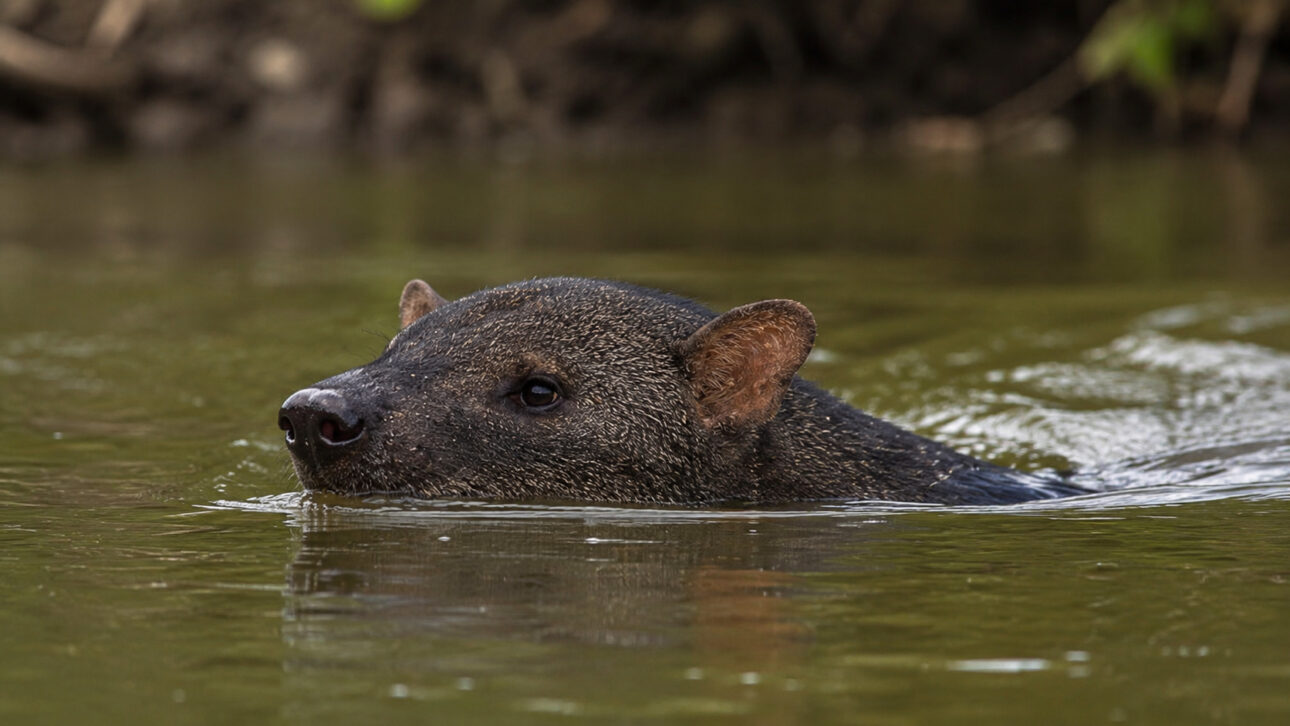
Webbed paws and diurnal habits surprise researchers
The images also confirmed important physical characteristics of the Amazon ghost dog.
Among the most curious details are the partially webbed paws, a rare adaptation among Amazonian canids.
This feature facilitates movement through wet areas, riverbanks, and dense forest sections.
The data also showed that the animal has predominantly diurnal behavior.
According to the research, 72% of the records occurred during the day, which helps to better understand its routine in the jungle.
Researcher Renata Leite Pitman, from Duke University, has been studying the species for 14 years.
According to her, the animal’s extreme shyness and its preference for dense forests explain the historical difficulty of observation by humans.

Preserved forest is crucial for survival
The survival of Atelocynus microtis is directly linked to the maintenance of well-preserved natural areas.
According to the study, the ghost dog depends on terra firme forests and non-flooded areas to maintain viable populations.
The animal avoids degraded locations and regions with constant human presence.
Biologist Hugo Costa, who made a rare recording of the species in the Amazon, emphasizes that the canid tends to stay away from altered environments.
The information was also reported by g1, highlighting the relationship between the species and forest preservation.
Therefore, habitat protection appears as an essential condition for the animal’s continuity in the Amazon.
Protected areas become refuge against threats
The research reinforces the importance of indigenous territories and conservation units for the ghost dog.
These areas function as fundamental refuges, mainly by preserving large continuous blocks of native vegetation.
Regions close to cities, on the other hand, represent additional risks for the species.
Veterinarian Marco Greminger, from the Autonomous University of Beni, warns about diseases transmitted by domestic dogs.
This risk increases when wild animals approach urbanized areas or zones with intense human occupation.
For this reason, the conservation of extensive, connected, and minimally degraded forests becomes even more urgent.
What does the study show about the Amazon?
The study on the ghost dog of the Amazon shows how the forest still harbors species little known to science.
The records also reveal that the survival of these animals depends on preserved, protected environments far from degradation.
The research further demonstrates the importance of technology in monitoring rare species without causing direct impact on the habitat.
Human pressure on natural areas, however, remains a challenge for researchers, communities, and environmental agencies.
The continuity of the short-eared dog in the deep jungle will depend, above all, on the preservation of the Amazon forests.
Do you believe that the protection of indigenous territories and conservation units should be a priority to ensure the survival of rare species like the ghost dog of the Amazon? Share your opinion!






Be the first to react!