






 Portuguese
  Spanish
  3 min of reading
  0 comments


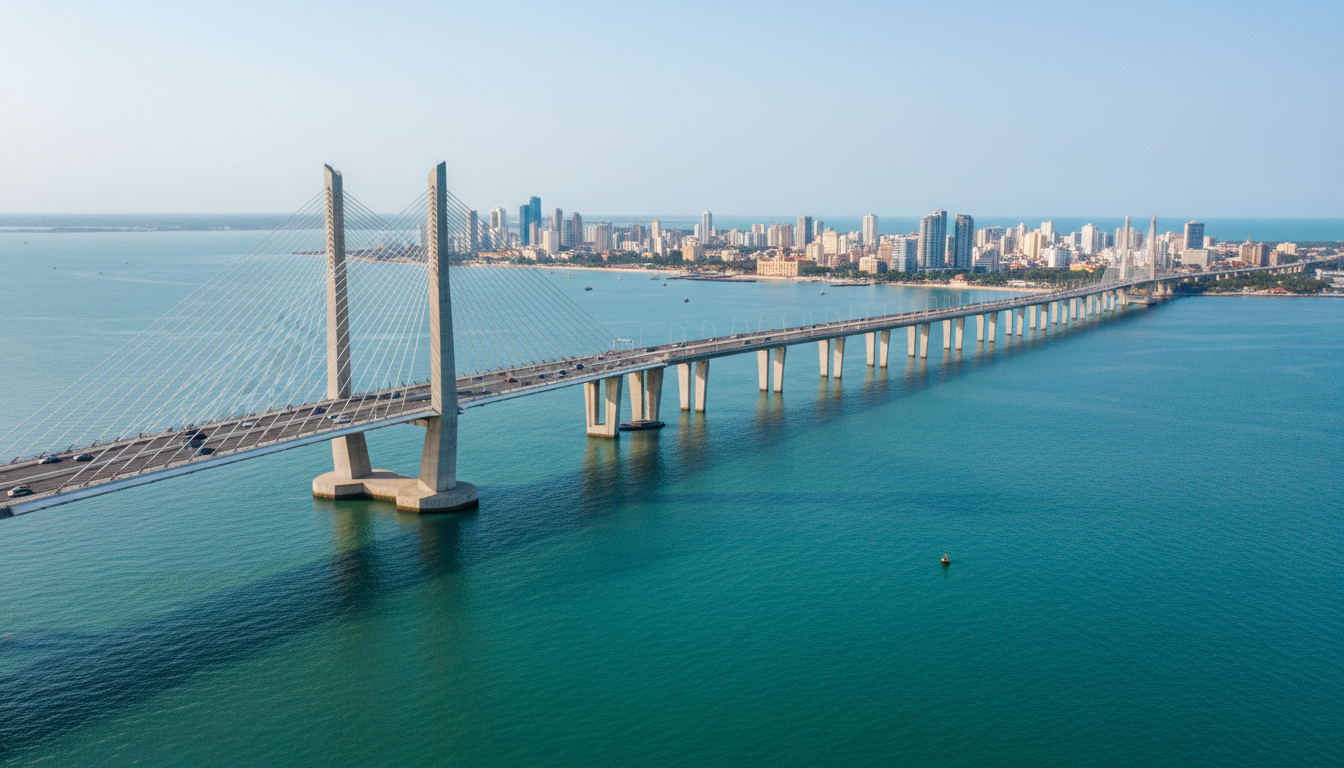
The largest bridge over the sea in Latin America will have a length of 12.4 km over the Bay of All Saints, will cost R$ 10 billion, generate 7 thousand jobs, and will replace the ferry boat that currently takes more than an hour to cross
Bahia is about to receive one of the largest engineering works in the history of Brazil. The Salvador-Itaparica Bridge will be 12.4 kilometers long over the Bay of All Saints.
The total investment is around R$ 10 billion, adjusted from an initial cost of R$ 7.6 billion. The Chinese consortium formed by CCCC and CR20 won the auction in 2019.
The works will officially begin in June 2026. Completion is expected by June 2031, within a timeframe of 60 months.
-
Bolivian Female Construction Workers Form Association to Combat Discrimination and 38% Pay Gap in the Industry

-
Near Amsterdam, residents buy land and discover they must also build streets, manage drainage, handle waste, and grow food on half their plot.
-
Brazil’s WEG to Open New Factory in China by 2027, Expanding Production of Large Rotating Electric Machines and Low to Medium Voltage Motors in Rugao

-
Chinese Shipyard Secures $1 Billion in Orders for Low-Carbon Container Ships Amid Global Fleet Renewal Efforts


When completed, the bridge will benefit up to 10 million people in 250 municipalities. Additionally, it will reduce road distances by 100 kilometers.
Numbers of the Salvador-Itaparica bridge: 144 supports, 938 piles, and a main span of 482 meters
The structure will have 144 supports and 143 spans. A total of 938 large-diameter piles will be driven into rock at depths of 7 to 11 meters each.
The main cable-stayed span will measure 482 meters in length and 85 meters in free height. This dimension allows for the passage of the largest ships in the world for the next 50 years.

The bridge will have three lanes in each direction with a safety barrier. The expected toll is up to R$ 50.
In Salvador, 4 km of new structures will be built between Calçada and Água de Meninos. This includes overpasses, two new tunnels, and six access ramps.
On the Island of Itaparica, an expressway of 22 km will connect Mar Grande to Cacha Pregos. The BA-001 will be duplicated and reconfigured.
Goodbye to the ferry boat: the crossing time of 1 hour will drop to less than 30 minutes
The bridge will replace the ferry boat system that connects Salvador to the island. Currently, the ferry crossing takes more than an hour.

With the bridge, the time will drop to less than 30 minutes by car. Connectivity with federal highways such as BR-101 and BR-116 will improve drastically.
According to G1 Bahia, the government presented the project to the Bahia Legislative Assembly in September 2025.
The project was developed by Maia Melo Engenharia and the State Infrastructure Secretariat (SEINFRA) is the official client.
Economic impact: 7 thousand jobs and a new growth axis for Bahia
The work is expected to generate approximately 7 thousand direct and indirect jobs during the construction phase. Most of the positions will be allocated to local labor.

Other billion-dollar construction megaprojects are underway around the world, but few have such a direct social impact as the Bahia bridge.
Activists warn of possible environmental impacts in the Bay of All Saints. Additionally, the cost has inflated from R$ 7.6 billion to R$ 10 billion.
As reported by Business & Human Rights, debates about costs, deadlines, and tolls continue. However, the bridge promises to transform the mobility of 10 million Brazilians and create a new growth axis for the entire region.


Be the first to react!