Portuguese
  Spanish


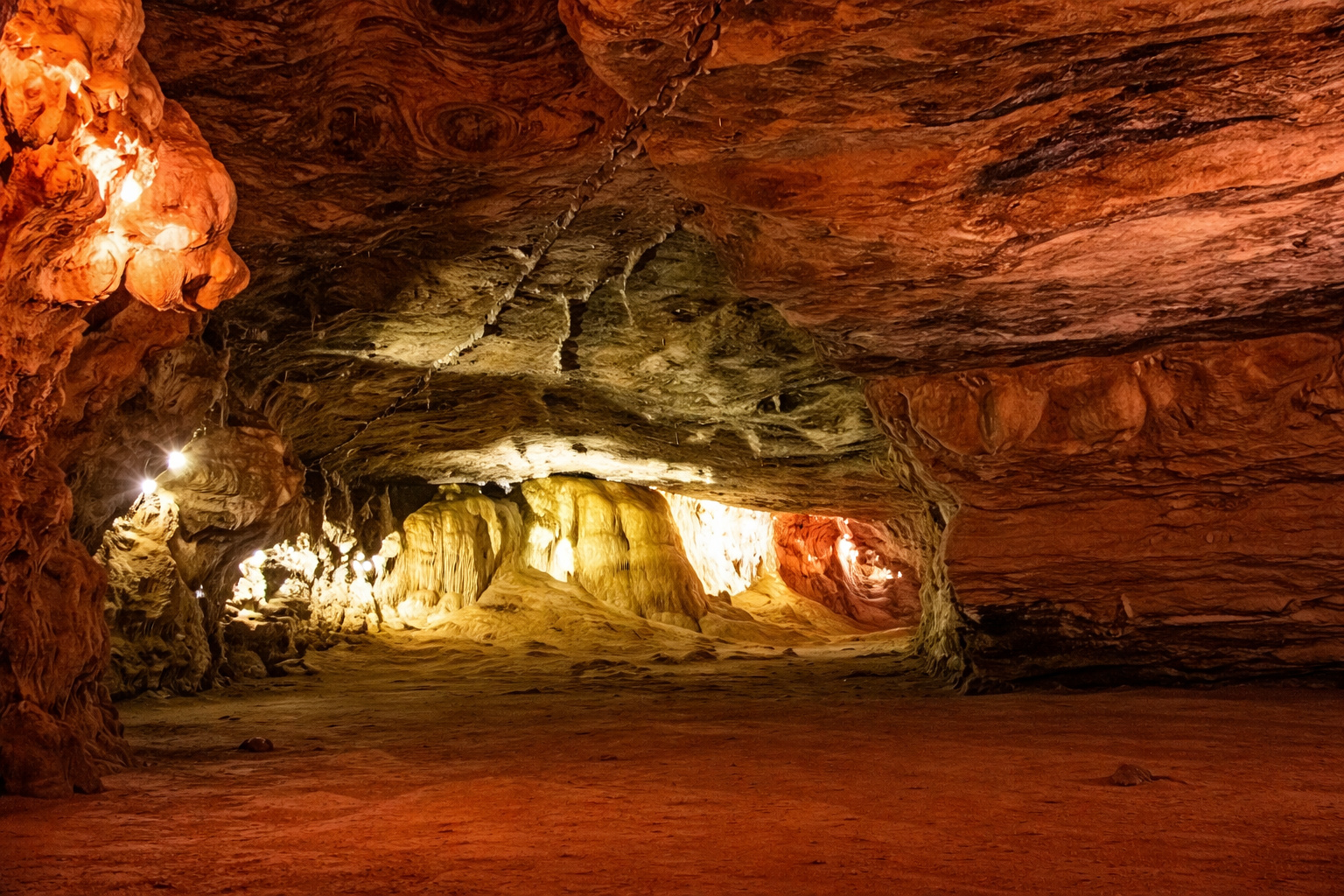

The Maquiné Cave brings together ancient formations, scientific discoveries, and an accessible path that highlights the natural and historical importance of the site
One of the most emblematic natural formations in Minas Gerais combines science, history, and tourism in a single space, attracting visitors interested in understanding geological evolution and the records of the past.
The Maquiné Cave, located in Cordisburgo, features a path of about 650 meters, where limestone formations have been shaped over approximately 600 million years.
The site also has cultural relevance as it is in the hometown of Guimarães Rosa, which reinforces its symbolic value in the Brazilian landscape.
This combination of elements transforms the cave into one of the main points of scientific and tourist interest in the country.
Historical discovery marks the beginning of scientific exploration
The entrance to the cave was identified in 1825 by farmer Joaquim Maria Maquiné, during the search for saltpeter for gunpowder production.
Years later, in 1834, Danish naturalist Peter Wilhelm Lund began excavations at the site, establishing the first systematic scientific research in the region.
Historical records indicate that Lund stayed in the cave for about two years, a period that helped consolidate the space as a reference in paleontology.
From these activities, the cave began to integrate relevant studies on Brazilian prehistoric fauna.
Fossils and traces reveal prehistoric past
The excavations resulted in the discovery of important fossils, such as the saber-toothed tiger and the giant sloth Nothrotherium maquinense, named in reference to the cave.
More than 12,000 fossil pieces were sent to Denmark, where they remain preserved in the collection of Copenhagen, according to historical records.
Additionally, the presence of rock paintings indicates that prehistoric human groups used the site as a shelter.
These elements reinforce the scientific and archaeological importance of the cave in the international context.
-
China Uses 432 Robots to Move a 7,500-Ton Historic Building in Shanghai, Preserving Architecture While Creating Space for Underground Center
-
Dutch Initiative Swaps Cigarette Butts for Food to Clean Streets, Combat Pollution, and Turn Waste into Recycled Furniture

-
Kenyan Company Recycles Over 10 Million Flip-Flops from Indian Ocean Beaches into Elephant and Giraffe Sculptures Sold for Up to $1,200
-
Kenyan Company Recycles Over 10 Million Flip-Flops from Indian Ocean Beaches into Elephant and Giraffe Sculptures Sold for Up to $1,200


The structure of the tour highlights natural formations
The public route covers approximately 650 meters, distributed across seven interconnected halls through narrow passages.
Each hall has been named after the natural shapes of the rocks, making identification easier during the visit.
Among the highlights, the Throne Room features imposing columns, while the Fairy Gallery showcases formations resembling crystals and delicate structures.
The total elevation change of just 18 meters makes the route accessible for visitors of different ages.
Visits are conducted with the guidance of monitors from the Peter Lund State Natural Monument, a conservation unit created in 2005 by the State Institute of Forests (IEF).
Groups are organized at regular intervals, and the route lasts an average of 45 minutes.
The LED lighting has been designed to enhance the natural formations without compromising the internal environmental balance.
Cultural attractions enhance the experience in Cordisburgo
The city of Cordisburgo hosts other attractions that complement the tourist itinerary.
The Guimarães Rosa House Museum, located in the residence where the writer was born in 1908, houses over 700 items, including personal belongings and works.
The Maquiné Cave Museum presents a timeline about Lund and fossil replicas produced by UFMG.
The Great Sertão Portal displays bronze sculptures that pay tribute to the literary universe of the work Grande Sertão: Veredas.
The Stone Zoo features representations of prehistoric animals created by local artists.
Climate and access influence the visit
The internal temperature of the cave remains stable throughout the year, but the external climate influences comfort during the visit.
Cordisburgo experiences hot and rainy summers and dry and mild winters, which can facilitate access during certain periods.
The city is located about 120 km from Belo Horizonte, accessible via BR-040 to MG-231, near Paraopeba.
The final route continues for another 5 km along MG-421, on a paved road, to the entrance of the cave.
The experience inside the Maquiné Cave allows visitors to observe natural formations that reflect millions of years of geological transformation.
At the same time, the surroundings preserve cultural elements that reinforce the historical identity of the region.
This combination highlights how science, nature, and culture connect in a single space.