






 Portuguese
  Spanish
  4 min of reading
  0 comments


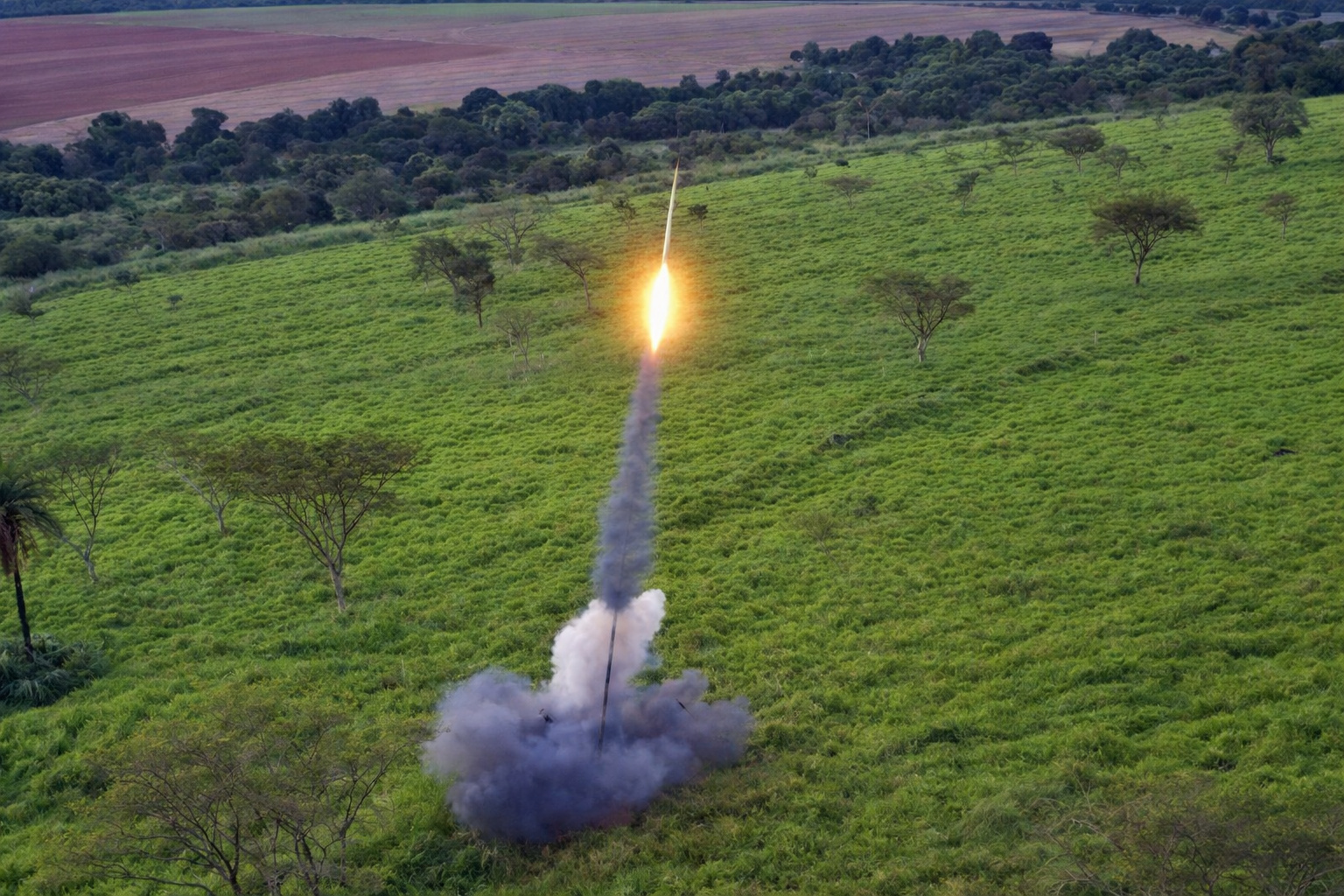
The group of the Polytechnic School of USP launched the Elara II with the Nemesis hybrid engine and transformed the Jupiter Project into one of the strongest stories of university rockets in Brazil.
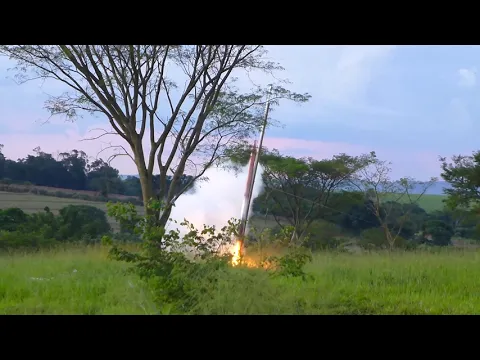
Without a specific aerospace engineering course and without a dedicated laboratory for this type of propulsion, USP students did what few Brazilian university teams have managed so far: they launched the Elara II, a rocket powered by the Nemesis hybrid engine, on April 4, as part of the Jupiter Project, in an operation conducted in Pirassununga with coordination from the Air Force Academy for airspace clearance.

The engine that changes the size of the achievement
What placed this launch on another level was not just the flight, but the type of engine. In practice, hybrid propulsion mixes solid fuel and separate oxidizer, which enhances operational safety and allows for more refined thrust control.
Nasa itself highlights that hybrid systems can be turned on and off by controlling the oxidizer flow, in addition to reducing the risk of premature ignition compared to traditional solid engines.
-
Helicopter Drops 180 Tons of Sand and Gravel on Swedish River to Revive Ecosystem Damaged by Decades of Exploitation

-
Brazilian Company Launches Retro Smartphone with 48 MP Camera, T9 Keyboard, and Privacy Features for Social Media-Free Use

-
Self-Taught Chinese Farmer Builds 5-Ton Submarine from Scrap, Launches It in Anhui River
-
Invisible Induction Technology Enables Wireless Power for Blenders, Coffee Makers, and Air Fryers, Reducing Countertop Cables





Within the Polytechnic School, this gained even more weight because the development was primarily driven by the students themselves, from the project to the operation.
The Polytechnic School stated that the flight consolidated almost ten years of research and engineering capability built by the students, in an environment that does not even have dedicated laboratory infrastructure for hybrid propulsion.
Almost a decade until the fire came to life
The Elara II did not come from nothing. According to the team itself, the story of the Jupiter Project began in 2014, with the first rocket crossing the skies of the United States in 2015.
Between 2015 and 2017, the group participated in all editions of the IREC, and in 2017 launched the Imperius at the Barreira do Inferno Launch Center, in partnership with Minerva Rockets from UFRJ, after a campaign that ended with first place overall at COBRUF.
The trajectory did not stop there. The Jupiter Project stacked results in competitions and increased the complexity of the vehicles over the years.
The Europa, for example, already carried a hybrid engine at LASC 2020, while the Juno II became a three-time champion of the Latin American competition in 2022 and also set national records for apogee and speed within Brazilian model rocketry.
The flight was below expected, but delivered what mattered most
The launch campaign began on the night of April 3rd and spanned more than 12 hours of operation during the Easter holiday.
The schedule faced pressure mainly during the oxidizer tank refueling stage, which required successive interventions.
When the Elara II took off at 6:06 PM, the oxidizer level was below the planned level, which affected the expected flight performance, with a lower altitude than anticipated.
Even so, what needed to work did. The recovery system was activated, the rocket returned to the ground with minimal damage, and the mission fulfilled precisely the role that is most important in projects of this scale: integrating hybrid propulsion, aerodynamic braking, parachute deployment, structural integrity of the airframe, and operational training of the team in a real campaign.
Project Jupiter now aims for Texas
The launch of the Elara II pushes the team towards the next leap. The Polytechnic School reported that Project Jupiter is already preparing to compete in the IREC in Texas in June, representing Brazil once again in the so-called “rocket world championship.”
After years of attempts, prototypes, aborts, revisions, and technical evolution, the team enters this new phase with something much stronger than words: an effectively launched hybrid engine and a real operation set up by students.
At USP, Project Jupiter has ceased to be just a promising rocket team. With Nêmesis in flight, it has become concrete proof that high-level aerospace technology can also emerge from a Brazilian student group willing to learn, test, fail, correct, and return to base with more ambition than before.
Comment: do you believe that Project Jupiter can become one of the greatest university references in aerospace technology in Brazil? Share this article with those who follow innovation, engineering, and rockets.





Be the first to react!