






 Portuguese
  Spanish


The hydraulic ram uses the force of the water’s own fall to push part of it upwards, without a motor or electricity. Installed in the rural area of Santa Catarina, the device takes less than an hour to assemble and helps family farmers irrigate gardens on steep terrain.
A simple device with no electricity cost has been helping farmers carry water uphill in the rural area of Fraiburgo, in the Plateau of Santa Catarina. Known as a hydraulic ram, the device works solely with the force of the water’s own impact descending from a higher point, and the one-inch model can pump the liquid up to 30 meters high and 300 meters away, according to a technician from Epagri, the state’s rural research and extension company, as reported in a feature on the subject.
According to the Vale Agrícola report, the technology was installed on the property of farmer Valdemar, a resident of a region inhabited by families descended from the Contestado War. He faced difficulty irrigating the garden, as the lagoon from which he could draw water is well below the planting area. The hydraulic ram solved the problem without a motor or electricity bill, in an installation that, according to the report, takes less than an hour to complete.
How the simple equipment that carries water upwards works
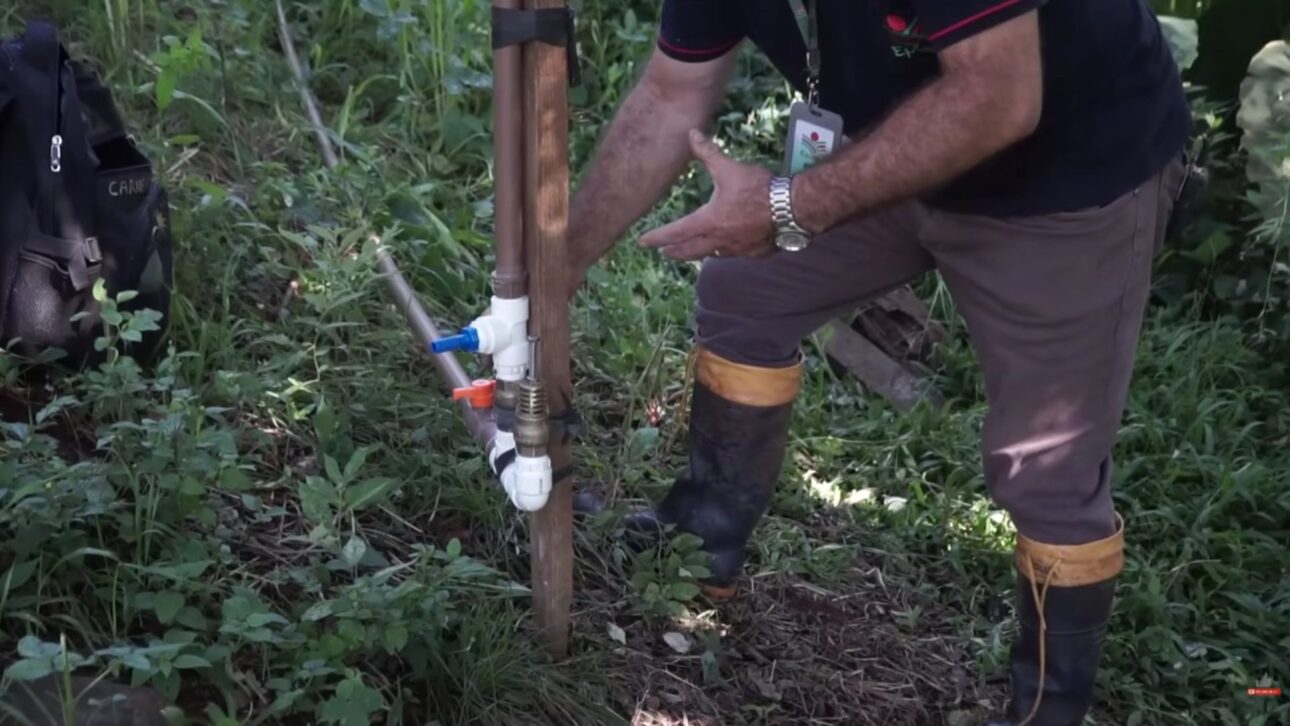
According to the Epagri technician interviewed in the report, there needs to be a drop that generates enough pressure to pump the water to a level above the point of capture.
-
Brazilian Engineers Lead $200 Million Project to Bring Water from São Francisco River to Transform Supply in Northeastern Cities

-
Largest Ocean Tank in the Americas Opens in Rio to Test Offshore Platforms, Ships, and Submarine Robots
-
Indian Girl, 13, Wins Google Prize for Low-Cost Water Purifier Made from Agricultural Waste
-
Brazilian University Tests Recycled Plastic Component for Homes, Aiming for More Sustainable Single-Family Housing Construction


In the case shown, the piping that brings the water consists of three pipe bars, totaling 18 meters, with about a 3-meter drop between the capture point and the device, which he describes as sufficient to propel the liquid.
The heart of the system is a valve that opens and closes repeatedly, generating the effect known as water hammer.
According to the technical explanation of the material, when the water passes, the valve opens, and the weight of the flow pushes a spring that locks the piece.
With each lock, a small portion of water is propelled through the piping to the destination. It is this open and close mechanism that produces the characteristic sound of the equipment and that, with each beat, sends what the technician calls a gulp of water to the arrival point.
Step-by-step assembly on the property
According to the report, from the capture to the ram, you should always use a rigid pipe of the same gauge as the device, a rule that applies to any size of ram, whether half, three-quarters, or one inch.
What changes from one model to another is the outlet, which defines the reach of each installation.
A detail highlighted by the technician is the need to fix the device with rubber, not rigidly.
According to the material, with each stroke, the ram experiences an internal pressure surge and moves back and forth.
If it is fixed without any slack, it can break or crack at some point, and therefore the ideal is to secure it with two rubbers, which absorb this movement without damaging the equipment.
The installation should also be leveled horizontally and vertically so that the valves wear evenly.
Technical points mentioned in the report for the one-inch model
Used slope: about 3 meters of drop between the capture and the device
Reported range: up to 30 meters high and 300 meters distance, according to the Epagri technician
Capture piping: rigid pipe, always the same gauge as the ram
Fixation: with two rubbers, to absorb the stroke without breaking
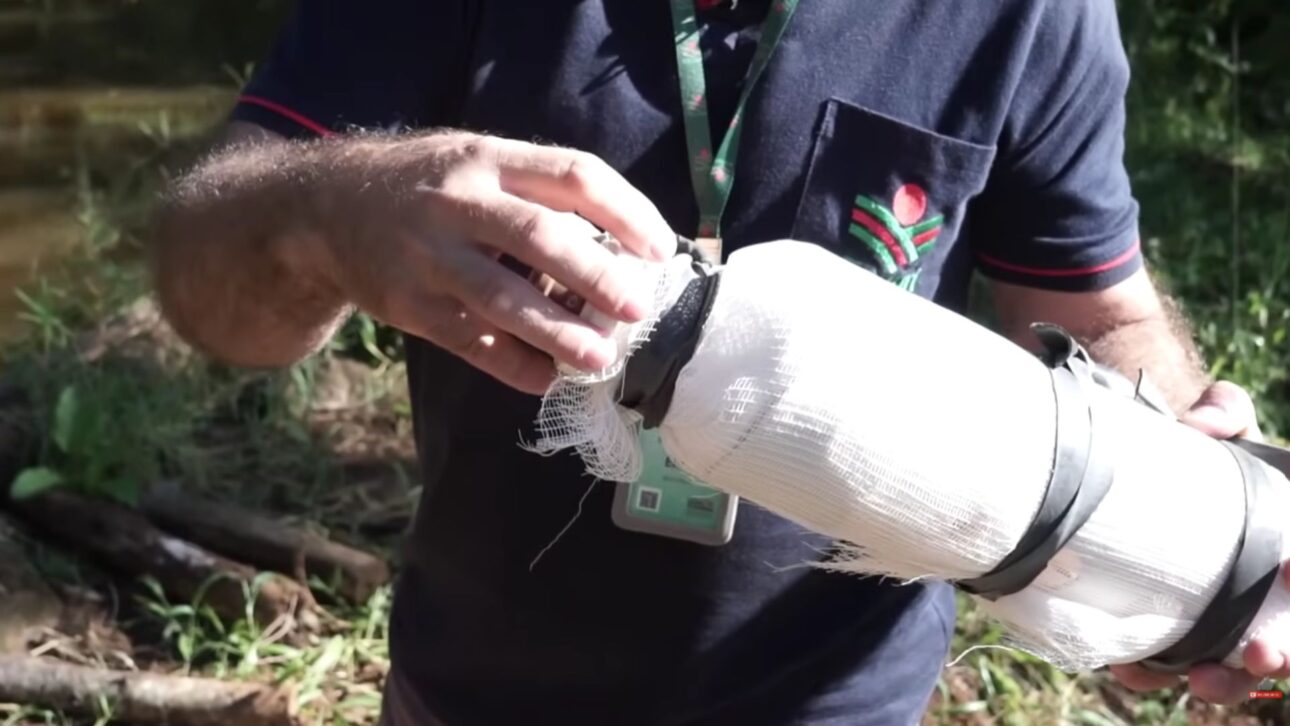
Filter: perforated pipe covered with mesh, to prevent leaves and debris from jamming the system
Operating rhythm: between 30 and 50 beats per minute, depending on the adjustment
The filter and adjustment that keep the system running
As the water is drawn from a pond with leaves and dirt, the system requires a simple filter to prevent jamming.
According to the material, just a piece of 100-millimeter pipe, fully perforated, about 25 centimeters long, covered with mesh and tied to prevent debris entry, is sufficient.
This precaution is necessary because, as the technician explains, if a leaf or speck enters, the ram can jam and stop working.
The final adjustment is what sets the device into working rhythm, following a pattern of beats per minute.
According to the report, the normal rhythm is between 30 and 50 beats per minute, and in the demonstration, 48 beats were counted in the measured interval, considered a good value.
An advantage highlighted is that once adjusted, the system maintains the setting, so if nothing is changed in the capture, distance, or height, simply reopening the valve after days of inactivity will allow it to operate as before.
The flow and uses in family farming


In the demonstration, the report measured the flow obtained with the equipment, albeit partially.
According to the material, about 2.1 liters per minute were recorded, which equates to approximately 120 liters per hour.
At this rate, a 500-liter tank would take just over four hours to fill, all without any energy cost, an important gain for those who need to irrigate without easy access to the electrical grid.
The hydraulic ram can serve various purposes beyond irrigation, as pointed out in the report.
Among the uses mentioned are the delivery of potable water, oxygenation of fish farming ponds, and watering animals such as cattle, pigs, and chickens.
For the farmer of the property, the solution represents the possibility of watering vegetables and increasing production, which he describes as a significant gain for the family’s income.
An ancient technology with lasting results
The report also shows a second case, in a neighboring municipality, which reinforces the system’s durability.
On Gerson’s property, described as a seed guardian, there is one of the first hydraulic rams in the state, installed over 14 years ago.
According to the account, after an initial period of testing and adjustments, the equipment began to function reliably, with one of the configurations reaching a reported flow rate of 368 liters per hour.
The material itself makes a point of keeping expectations realistic about the technology’s reach.
According to the recorded statements, the hydraulic ram is not presented as a miraculous solution, but as a simple, inexpensive, and good-flow equipment for small properties, replacing a motor or an electric pump using only clean energy.
The system, according to the report, has already been taken to dozens of countries and has received awards related to ecology and sustainability.
The hydraulic ram installed in Fraiburgo shows how a simple piece of equipment can solve a concrete problem of family farming without relying on electricity.
Powered only by the force of the water itself, it carries the liquid uphill continuously and cheaply, helping farmers irrigate gardens and take care of livestock on land where water is at lower points. It is an old technology that continues to solve, with simplicity, everyday challenges in the field.
And you, were you already familiar with the hydraulic ram or have you seen one working on a rural property? Comment if you think this type of technology can help more farmers in Brazil, if you have questions about the installation, and what other uses you imagine for a system that moves water without using electricity. The conversation is open to all those interested in rural life, agriculture, and sustainable solutions.


