Portuguese
  Spanish


The research simulated a thousand years of seismic history and concluded that San Andreas and San Jacinto accumulate high tension simultaneously. The data concerns scientists due to the history of combined ruptures, but the authors themselves emphasize that the work does not predict when an earthquake might occur.
A new study indicates that the two main faults in Southern California are, for the first time in about a thousand years, accumulating maximum tectonic tension simultaneously. The conclusion comes from research led by Dr. Liliane Burkhard from the University of Bern, Switzerland, and was released in June 2026, according to material published by the site Active NorCal. The work points out that the San Andreas and San Jacinto fault systems have reached their highest tension levels throughout the simulation, but it is important to highlight from the start that the study does not establish any date for a potential earthquake.
According to the publication, the researchers built a model based on physical principles that simulated a millennium of seismic history along these two faults. The results, published in the scientific journal Journal of Geophysical Research: Solid Earth, show that the tension in both systems reached and, in some cases, exceeded the highest levels recorded throughout the thousand-year simulation. What draws the attention of scientists, however, is not just the amount of accumulated tension, but the fact that both faults are at this high level simultaneously.
What the University of Bern study really shows
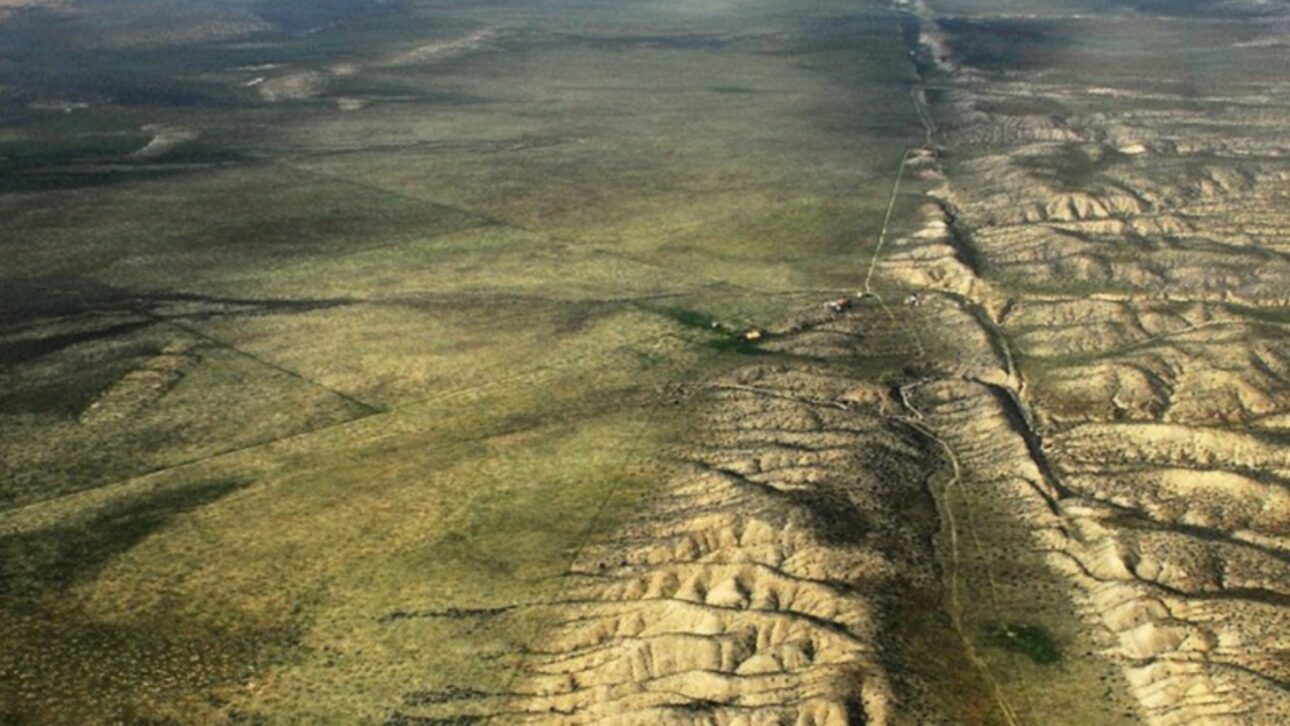
According to the material, models like this aim to reconstruct how tension accumulated over the centuries, and the result indicated that San Andreas and San Jacinto are reaching similar and high levels at the same time.
-
Yellow vs. White Fat: The Little-Known Difference That Can Impact the Quality and Flavor of Your Barbecue

-
60-Year-Old Kurt Kromm Fired Over $1.95 Cookie After 11 Years at Ford, Proves Payment and Lands Better Job

-
Einstein’s Lasting Advice: “Strive to Be a Person of Value, Not Just Success” Inspires Many Seeking Life’s Meaning
-
Man Spends Weeks Clearing Overgrown Land, Faces Equipment Failures, and His Story on Scott Harrison’s Channel Reaches 94,000 Views





This joint accumulation is what differentiates the current scenario from most of the millennium analyzed, in which the faults were not always tensioned in parallel.
It is essential to understand what the model represents and what it does not do.
According to the publication itself, it is a physics-based simulation that estimates the stress state of the faults, and not an earthquake prediction.
The study does not say when a tremor may occur, nor does it claim that it is imminent.
What the researchers argue is that the system would be critically overloaded, an assessment of the current state of the faults, without any associated timeline.
Why the meeting of the faults in Cajon Pass is concerning
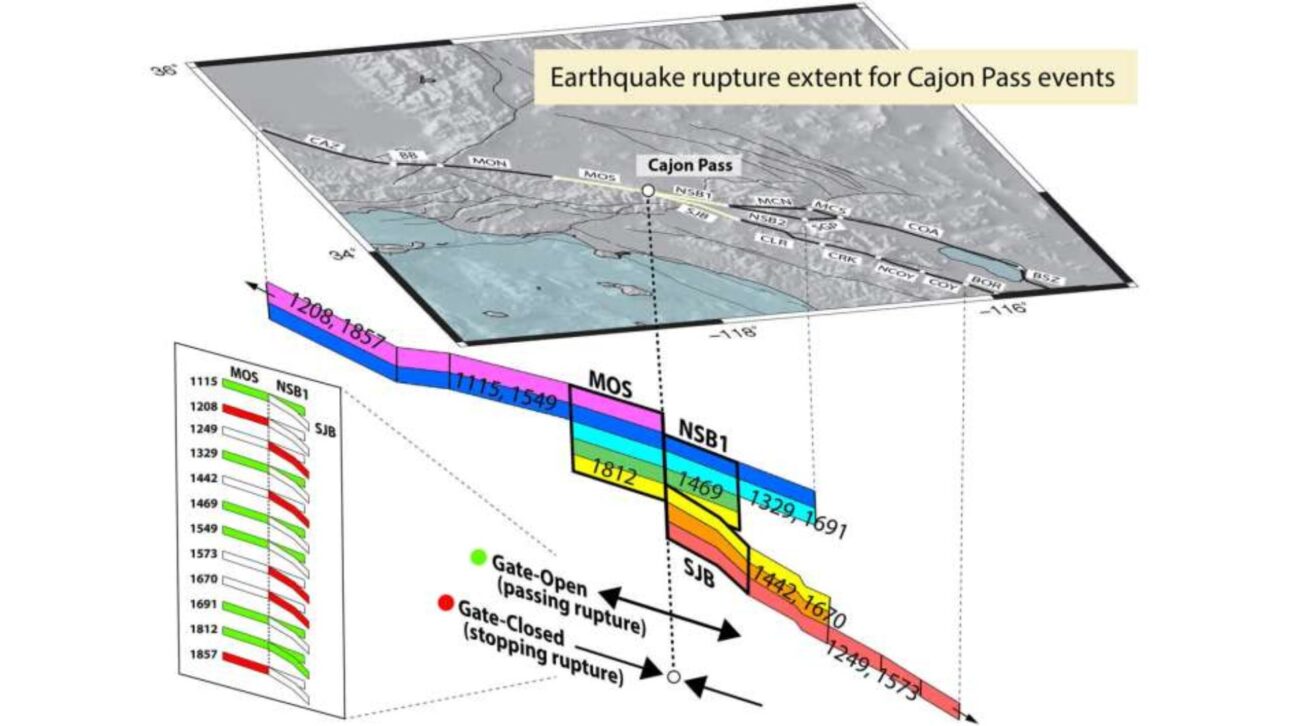
According to the material, when the two systems are under stress together, the conditions favor what researchers call a gate-opening event in Cajon Pass, a tectonic junction northeast of Los Angeles, where the two faults meet.
This is a sensitive point precisely because it is where the two systems converge.
The concept of gate-opening describes a chain effect between the faults.
According to the publication, this means that a rupture initiated in one fault could extend to the other, producing a significantly larger earthquake than a tremor confined to a single system.
It is this possibility of combined rupture, and not just any earthquake, that makes the scenario of simultaneous stress a relevant object of study for scientists.
What the seismic history of the region teaches
Records of major past earthquakes help to contextualize the model’s finding.
According to the material, the last major earthquake in the region was the Fort Tejon earthquake in 1857, with a magnitude of 7.9, one of the largest ever recorded in California.
That tremor, however, stopped at Cajon Pass, meaning it did not propagate from one fault system to the other, remaining contained in its extension.
An earlier episode, however, followed precisely the path that concerns researchers.
According to the publication, the Wrightwood earthquake in 1812 ruptured the fault at the junction between the two systems, in the type of joint rupture associated with higher magnitude tremors.
According to the study, the current tension conditions resemble more the scenario that preceded this combined rupture, which explains the scientific interest in the alignment observed today.
The cited areas and the size of the uncertainty
The study points out which regions would be within the area of influence of these fault systems.
According to the publication, the potentially affected region includes Greater Los Angeles, as well as San Bernardino, Riverside, and the Coachella Valley, densely populated areas of Southern California.
Therefore, the topic draws attention among residents and authorities in one of the highest seismic risk zones in the United States.
Even so, it is essential to keep the reading of the data within the limits of what science states.
The research itself, by not establishing a date, acknowledges the inherent uncertainty in the behavior of faults, which can remain under high tension for long periods before any rupture.
In a region that has known seismic risk for generations, the study’s contribution is to refine the understanding of the state of the faults, not to announce an imminent event.
The University of Bern’s study on Southern California’s faults offers a detailed picture of a tectonic system under historically high tension, with the two main systems aligned for the first time in about a thousand years.
The finding is scientifically important and deserves attention, especially due to its similarity to scenarios that, in the past, preceded joint ruptures.
At the same time, the absence of any date prediction reinforces that this is a risk assessment, not an imminent earthquake warning.
And you, what do you think of this type of research that measures the accumulated tension in geological faults? Comment if you were already familiar with the functioning of the San Andreas and San Jacinto faults, how you assess the challenge of living with seismic risk in large cities, and the importance of such studies for prevention. The conversation is open to all interested in science, geology, and disaster prevention.