Portuguese
  Spanish


Luísa Matsushita, known as Lovefoxxx, changed her own routine by swapping urban life for a sustainable experience in Garopaba, where she began testing rainwater harvesting, composting, a dry toilet, and food cultivation in a minimal space.
She traded everything for 12 m².
Luísa Matsushita, known as Lovefoxxx and lead singer of Cansei de Ser Sexy, left behind the urban routine in São Paulo to live a radical experience in Garopaba, on the coast of Santa Catarina. According to Vogue, she built with her own hands a small ecological shelter measuring 13 by 10 feet, equivalent to about 12 m².
The contrast is striking because the change did not come from an anonymous person fleeing the city, but from a Brazilian artist who had been through tours, international stages, and major urban centers. Folha de S.Paulo reported that she sold a 98 m² apartment in Vila Buarque and moved, in mid-2017, to an area of dirt roads in Garopaba.
-
Women Who Faced Death Head-On Break Taboos and Uncover Forgotten Funeral Rituals

-
Elderly Man in His 70s Spends Nearly 30 Years Digging 3 km Canal to Transform Arid Land into Farmland in Rural India

-
Submerged Town Reemerges in São Paulo as Reservoir Levels Drop, Revealing Ruins and Memories of Displaced Families
-
In Northeastern Brazil, 1,200 Residents Face a Silent Nightmare as Giant Sinkholes Threaten Entire Neighborhoods
The 98 m² apartment made way for a 12 m² shack
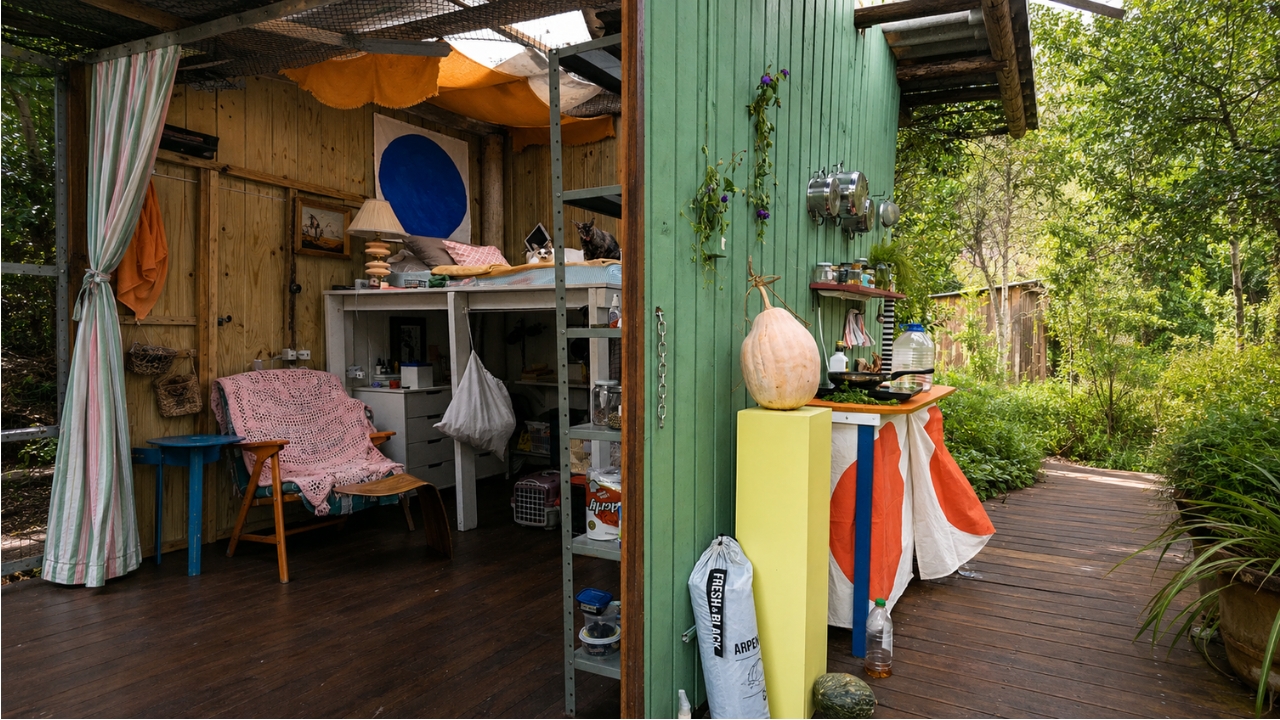
The turnaround began before the definitive move. In an account to Gama Revista, Luísa said that after experiences with bioarchitecture, she returned to the apartment in São Paulo and realized she didn’t need all that space.
Folha de S.Paulo highlighted a detail that helps to understand the discomfort: she began to rethink urban life upon realizing she could spend up to R$ 2,000 a year just on organic kale. The calculation became a symbol of an expensive routine, distant from producing her own food and dependent on constant consumption.
In Garopaba, the new space was much smaller. Vogue described the place as a small shed converted into a studio and living space. Meanwhile, Instituto Claro reported that Luísa referred to the structure as a “shack,” a reference to a construction shack.
The eco-shack had a dry toilet, cistern, and outdoor shower
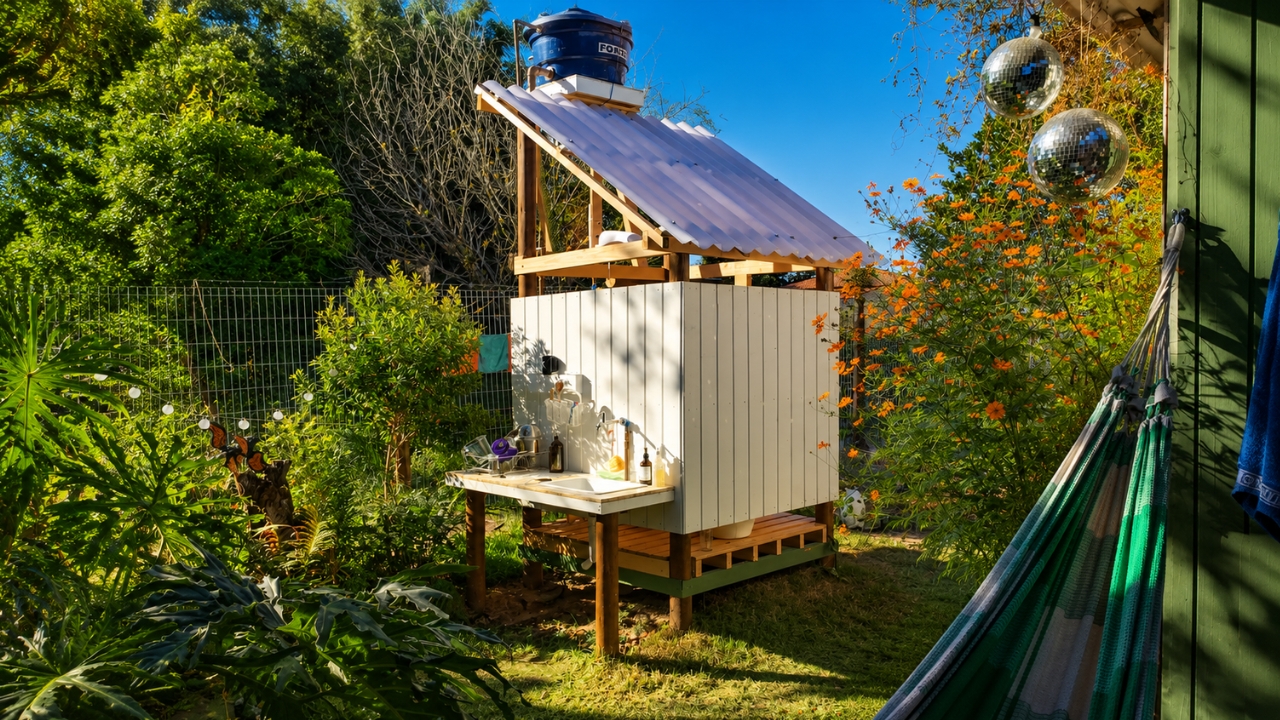
The shelter was not just small. It was designed to reduce waste and test a more autonomous routine. According to Instituto Claro, the space was about 12 m², with a 4 m by 4 m deck and an external bathroom of 1.5 m by 1.5 m.
The water system also followed this logic. Luísa stated to Instituto Claro that she collected rainwater in a thousand-liter cistern. The same source reported that she used about 5 liters for bathing and reused this water to water plants.
The dry toilet was another central point of the project. The model used a bucket, sawdust, and a composter. According to Instituto Claro, the waste was taken to a composter with three 1 m by 1 m cabins, where the material decomposed until it turned into fertilizer.
Sustainable life was not sold as a perfect fantasy
Despite the visual appeal of the story, Luísa did not present the change as a simple escape to paradise. In a statement to Gama Revista, she reported depression, fear, loneliness, and difficulty in forming bonds upon arriving in Santa Catarina.
Vogue also highlighted that one of the challenges was the lack of familiar faces and building new friendships in adult life. Gradually, the routine began to include yoga, surfing, planting, seed care, and vegan eating, according to the artist herself reported to Gama Revista.
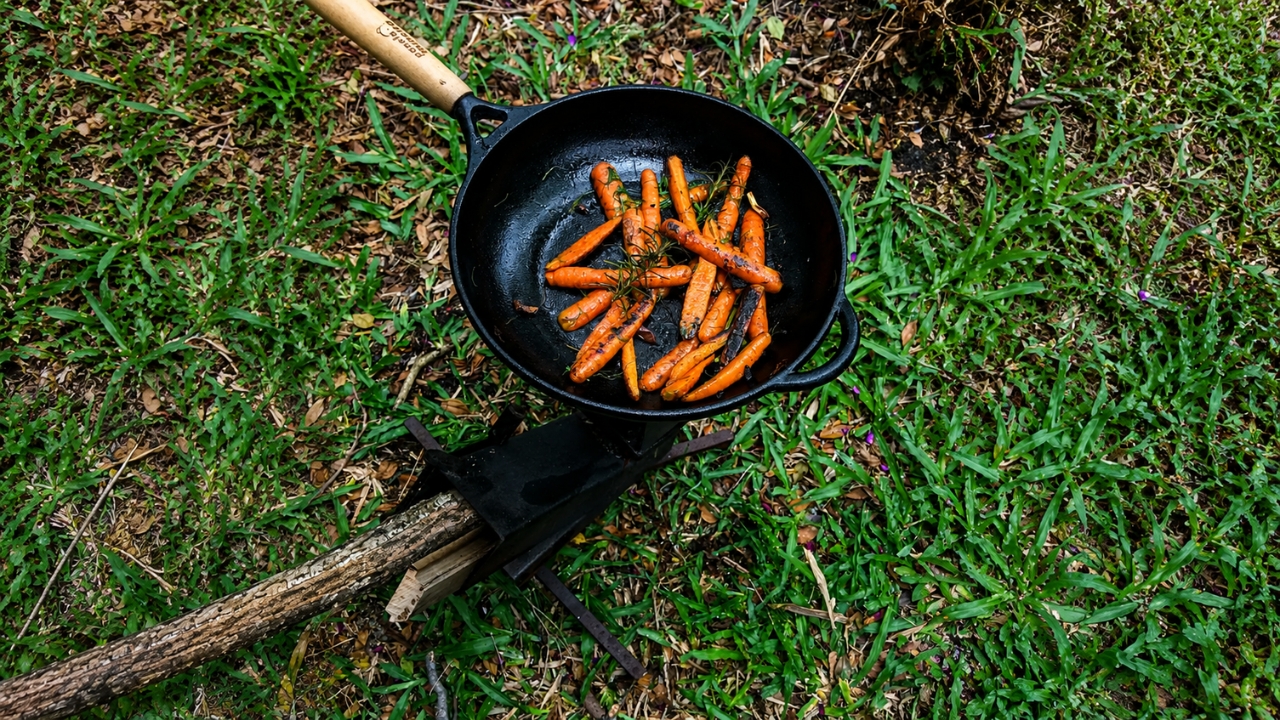
UOL Ecoa added that the land began to gather crops such as banana, cassava, yam, avocado, lemon, corn, kale, tomato, pumpkin, and beans. Vogue also described the area as an agroforest, with food growing together to regenerate the soil.
From CSS vocalist to visual artist linked to bioconstruction
The change dialogues with a broader artistic trajectory. Luísa studied at The Earthship Biotecture Academy in New Mexico, according to Gama Revista, and also participated as a volunteer in a sustainable construction in northern Argentina.
The Galeria Luisa Strina, when presenting her exhibition “If it’s not to cry, I don’t even leave the house”, related her visual production to experiences with bioconstruction in Santa Catarina. The piauí magazine, in 2025, also recorded her phase more dedicated to painting and visual arts.
Therefore, the eco-shack in Garopaba is not just a small house. It is the visible chapter of a change in scale: fewer square meters, lower bills, less conventional structure, and more attempt to transform housing, art, and daily life into the same experience.