






 Portuguese
  Spanish


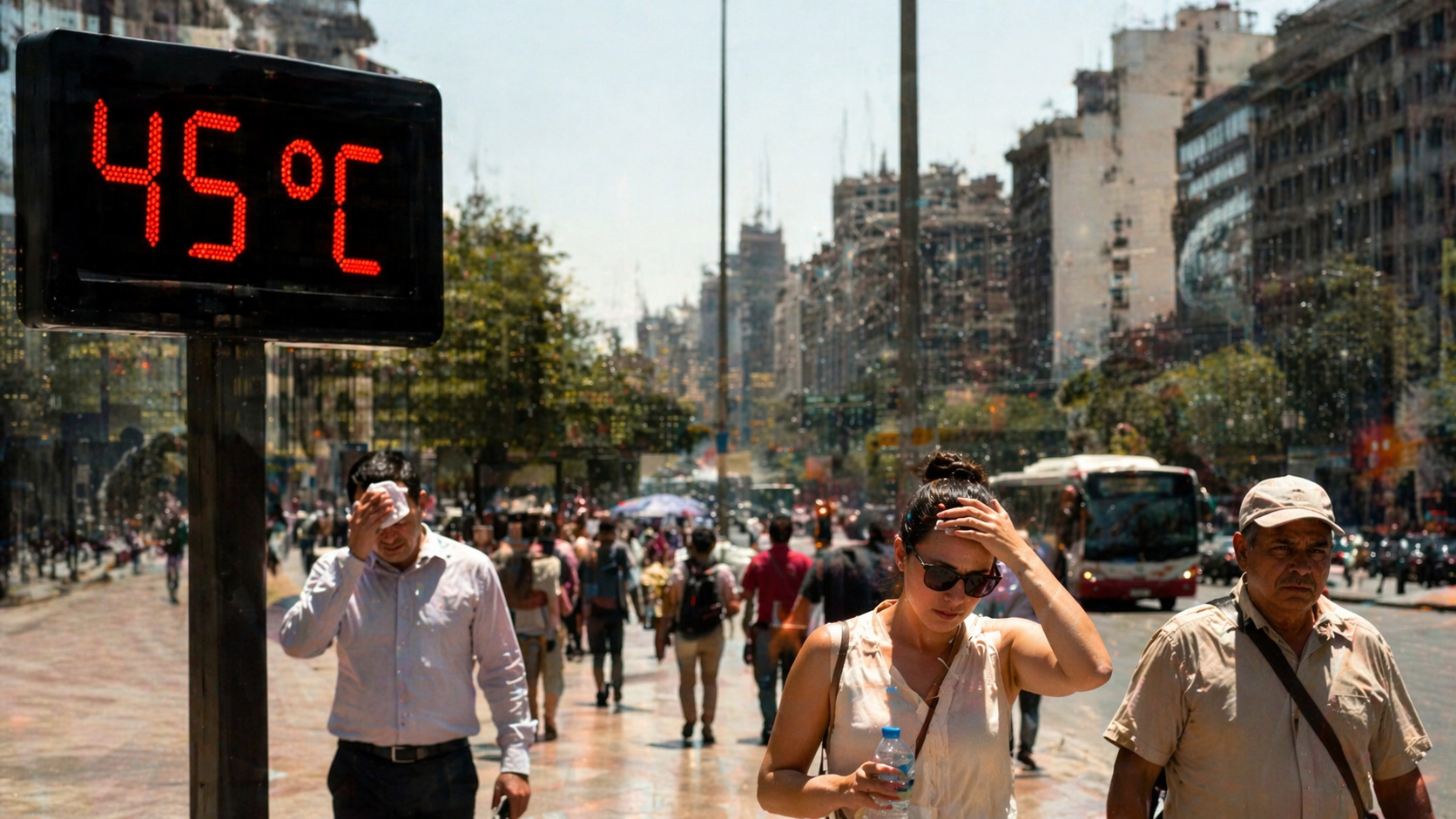

WMO warns that heat of up to 50°C can become more frequent in 2026, with risks to health, energy, and cities unprepared for hot nights.
In 2025, the World Meteorological Organization published a new global framework for extreme heat governance, accompanied by direct warnings about the intensification of this phenomenon on a global scale. According to the WMO Secretary-General, Celeste Saulo, temperatures above 40°C and up to 50°C have ceased to be rare events in various regions of the planet, signaling a structural change in climate behavior.
This warning gains even more weight as we enter 2026, a year that already appears in global forecasts as part of a sequence of periods with elevated temperatures. The WMO does not treat heat merely as a climatic event, but as a systemic risk that affects public health, urban infrastructure, productivity, and energy security.
The main concern is not only with temperature peaks but with the duration and repetition of events, which can transform isolated episodes into prolonged crises.
-
China Develops Custom 140-Ton Electric Mining Truck with 770 kWh Swappable Battery, Deploys 290 Units in Xinjiang’s Largest Zinc Mine

-
Meta to Launch Arena, a New Prediction App Targeting 3.56 Billion Users, Competing with Polymarket and Kalshi

-
Scientist Challenges Famous Human Evolution Theory, Argues Homo Sapiens Evolved Gradually Over Thousands of Years
-
15-Year-Old American Builds Ocean Generator with PVC Pipe and 3D-Printed Propeller for $12, Wins National Prize, Presents at White House, and Makes Forbes 30 Under 30 List




Temperatures between 40°C and 50°C become part of the new pattern of extremes in various regions of the planet
Historically, temperatures above 40°C were considered exceptional events, restricted to desert regions or isolated episodes. However, according to the WMO, this scenario has changed.


Today, these levels of heat are being recorded more frequently in different parts of the world, including urbanized regions and areas that had no history of such intense extremes.
The most critical data is the presence of peaks near or above 50°C in certain regions during extreme events, which represents a dangerous physiological limit for the human body.
This new climate pattern increases the likelihood of more severe and widespread heatwaves, affecting different continents simultaneously.
Prolonged heatwaves increase risk of collapse in health systems and emergency services with heat of up to 50°C
The WMO highlights that extreme heat is one of the deadliest climate threats, although often invisible. Unlike natural disasters such as floods or hurricanes, heat causes progressive impacts, primarily affecting vulnerable populations.

Hospitals and emergency services are directly pressured during prolonged heatwaves, with an increase in cases of dehydration, heatstroke, and worsening of cardiovascular and respiratory diseases.
The risk intensifies when:
- Temperatures remain high for several consecutive days
- Nights do not provide thermal relief
- The population does not have adequate access to cooling
This scenario can lead to a significant increase in mortality, especially among the elderly, children, and people with chronic illnesses.
Hot nights become a critical factor and hinder human body recovery
One of the most concerning points highlighted by the WMO is the increase in minimum temperatures during the night. Under normal conditions, the human body recovers from heat during the nighttime, when ambient temperature tends to drop.
However, in scenarios of prolonged extreme heat, nights remain warm, preventing this physiological recovery process.
This phenomenon is considered one of the main risk factors in heatwaves because:
- It increases accumulated thermal stress
- It reduces sleep quality
- It compromises the body’s ability to regulate temperature
Without nighttime relief, the impact of heat ceases to be sporadic and becomes continuous, significantly raising health risks.
Electric grids face overload with increased demand for cooling
Another direct effect of extreme heat is the pressure on energy systems. The rise in temperatures leads to a significant increase in the use of air conditioning, fans, and cooling systems.
This simultaneous increase in demand can overload electrical networks, especially in regions with limited infrastructure or already operating close to capacity. In extreme cases, this can result in:
- Power outages
- Supply interruptions
- Compromised essential services
The situation becomes even more critical when it occurs in parallel with high temperatures, creating a scenario of urban vulnerability.
Workers exposed to heat face direct health and productivity risks
The WMO also warns about the impact of heat on workers, especially those who work outdoors or in environments without adequate air conditioning.

Sectors such as construction, agriculture, logistics, and industry are among the most vulnerable, with workers exposed to intense heat conditions for long periods.
The effects include:
- Reduced productivity
- Increased risk of accidents
- Heat-related health problems
On a global scale, this impact is already being treated as a significant economic issue, affecting production chains and the performance of essential activities.
Cities without thermal planning face amplified risk with urban heat island effect
Urban environments are particularly vulnerable to extreme heat due to the so-called heat island effect. Materials such as concrete and asphalt absorb and retain heat, raising local temperatures compared to rural areas.
This phenomenon can further intensify the heat waves predicted for 2026, especially in cities with little vegetation, high population density, and low natural ventilation. Additionally, urban areas concentrate larger populations, which amplifies the social impact of extreme heat.
Extreme heat is already treated as a global threat with wide economic and social impacts
The WMO classifies extreme heat as one of the most dangerous climate threats today, with impacts that go beyond health.
The phenomenon directly affects the economy, infrastructure, and quality of life, creating challenges for governments and urban systems.
Among the observed impacts are:
- Loss of productivity
- Increased energy costs
- Pressure on health systems
- Risks to food security
These factors make extreme heat a complex problem that requires planning and coordinated response.
2026 enters the radar as a year of high risk within a global warming trend
The WMO’s warning for 2026 should be interpreted within a broader context of global warming. In recent years, the planet has consistently recorded high temperatures, increasing the likelihood of extreme events.
This recent history reinforces the risk scenario for 2026, with a greater chance of more frequent and intense heat waves. Although climate forecasts do not determine specific events, the global pattern points to an increasingly favorable environment for extreme heat.
What do you think about the risk of extreme heat becoming part of the global routine in the coming years
The warning from the World Meteorological Organization places extreme heat as one of the main current climate challenges. More than isolated episodes, the phenomenon is now seen as a trend with a direct impact on everyday life.
In light of this scenario, the central question is straightforward: is the world prepared to face a future where extreme temperatures and prolonged heat waves become increasingly frequent?







