






 Portuguese
  Spanish


Tiny Hope Project plans 40 microhomes in St. Thomas Elgin, bets on affordable housing and community programs to tackle housing crisis, after volunteers completed eight units in 72 hours, prioritizing women, youth, and families on local housing and homeless lists in Canada by 2026 with planned continuous social support.
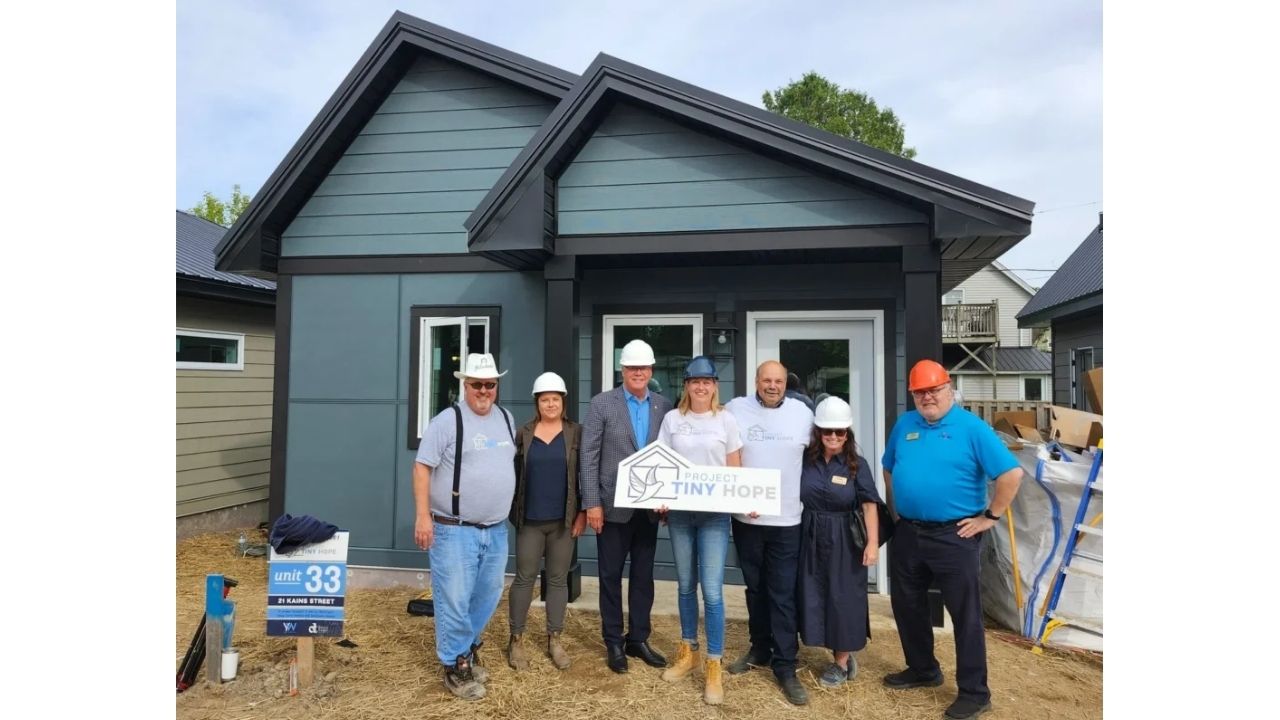
The microhomes of the Tiny Hope Project emerged in St. Thomas Elgin, Canada, as an affordable housing response to the housing crisis affecting families, women, and youth in vulnerable situations. The initiative is led by YWCA St. Thomas-Elgin, in partnership with Sanctuary Homes and Doug Tarry Homes Ltd.
The project gained prominence after volunteers and builders completed eight microhomes in just 72 hours, in September 2024. According to YWCA Canada, the goal is to reach 40 new homes by the summer of 2026, prioritizing people registered on local housing and homeless lists.
Housing crisis affects youth and families in St. Thomas Elgin
The situation in St. Thomas Elgin helps explain why the project drew attention. According to YWCA Canada, one in five people lives in poverty in the region, and about 100 youth are homeless on any given night.
-
45-year-old Brazilian mother of 9 and grandmother of 12 receives 27 m² house made from recycled plastic, built in 15 hours with interlocking blocks and a recycled roof.

-
Ireland Installs 654 Modular Homes to Shelter 2,640 Ukrainian War Refugees, Offering a 60-Year Guarantee and a Model for Future Housing Crises
-
Sagrada Família Becomes World’s Tallest Church at 172.5 Meters, Surpassing German Church with Gaudí’s Design

-
Inspired by São Paulo’s Vila Reencontro, Rio Grande do Sul invests $8 million to provide 18 m² micro-homes for homeless families in four cities, offering amenities and up to two years of housing.




This data makes the construction of the microhomes more than just an architectural curiosity. The central problem is the lack of affordable housing in a community pressured by the cost of living, the limited housing stock, and the difficulty for families to maintain a roof over their heads.
In this context, the mayor of St. Thomas set the goal of building 2,000 homes by 2026. YWCA St. Thomas-Elgin responded by creating the Tiny Hope Project, focused on affordable housing with community support.
The proposal primarily targets women, young people, and families headed by women. This focus is important because it shows that the project aims not just to build small houses, but to address groups facing specific barriers to accessing housing.
Eight houses were built in just 72 hours
The most striking milestone occurred in September 2024, when Doug Tarry Homes led a three-day rapid construction. In 72 hours, builders and volunteers completed eight micro-houses on site.
With this advancement, the site now has nine completed houses, including a bungalow whose construction had begun a month earlier. The speed of the construction became a symbol of community mobilization in the face of a crisis that does not wait for slow solutions.
The idea was not to present the units as makeshift. On the contrary, the project was structured to create affordable housing, with planning, partnerships, and connection to support services.
This combination of rapid construction and social purpose explains the appeal of the agenda. While many cities discuss how to tackle the lack of affordable rent, St. Thomas Elgin demonstrated a practical attempt to transform land, volunteer labor, and local partnership into new housing.
Project plans 40 affordable homes by 2026
The goal of the Tiny Hope Project is to build 40 new homes by the summer of 2026. The homes will be allocated to people on local housing and homeless lists from St. Thomas and the YWCA itself.
Each residence should have one to three bedrooms, a full kitchen, laundry room, and living room. This differentiates the micro-houses from minimal emergency structures, as the proposal is to offer functional space for real family routines.
The project also plans a YWCA Program House, aimed at community activities and resident support. This point broadens the initiative’s reach, connecting housing, community living, and social support.
In practice, the micro-houses are part of a planned community. The intention is for the site to be not just a set of compact units, but a space where young people, adults, and families can live, grow, and form bonds. This affordable housing is presented by the project as a starting point for stability.
Families headed by women are at the center of the initiative
The priority for families headed by women gives the project a more defined social focus. In many contexts, women responsible for household support face greater pressure when rent, food, transportation, and family care accumulate in the budget.
By directing affordable housing to this audience, the Tiny Hope Project attempts to tackle one of the most sensitive aspects of the housing crisis. When a family loses stable housing, the impacts reach school, work, health, and emotional security.
YWCA St. Thomas-Elgin also works with vulnerable youth and families. Therefore, the initiative connects to the organization’s historical role in supporting women and communities.
This focus strengthens the public relevance of the project. The microhomes appear not only as a trend in compact architecture but as a tool for social protection for people who were already on the brink of housing insecurity.
Small housing, but with everyday life structure
The detail that the units will have a full kitchen, laundry, and living room is central to understanding the proposal. A small house can be efficient, but it needs to meet basic needs without turning the routine into permanent improvisation.
With one to three bedrooms, the units also aim to accommodate different family configurations. This flexibility is important in a project that intends to serve young people, adults, and families, not just individual residents.
The presence of community programs also helps to avoid isolation. In affordable housing projects, collective support can be as important as the physical construction.
Therefore, the Tiny Hope Project combines housing and community. The house offers stability; the programs help create connection, guidance, and support so that residents can rebuild paths with more security.
Campaign seeks to furnish future units
In addition to construction, YWCA St. Thomas-Elgin launched the campaign “Furnishing the Future – Adopt a Home.” The goal is to ensure essential furniture and appliances to transform the 40 planned units into homes ready to receive residents.
This detail shows that delivering the structure does not end the challenge. A house without furniture, appliances, and basic items can still leave families in a difficult adaptation situation.
The campaign attempts to fill this gap between construction and real use. For those coming off a housing list or from homelessness, having a ready home can represent a less harsh transition.
The project, therefore, involves complementary stages: building, furnishing, supporting, and integrating. Each phase influences the ability to transform a compact unit into stable housing.
Microhomes become a possible response, but not a unique solution
The case of St. Thomas Elgin shows how microhouses can function as part of a response to the housing crisis. They allow for faster construction, occupy specific areas, and create smaller units aimed at audiences with urgent needs.
But the topic itself requires caution. Microhouses do not replace broad policies on housing, affordable rent, income, employment, and urban planning. They can alleviate part of the problem, as long as they are connected to social support and responsible management.
The strength of the Tiny Hope Project lies precisely in the combination of community partnership, rapid construction, and focus on vulnerable families. The project does not sell the idea that small houses solve everything, but it shows a concrete way to act in the face of homelessness.
In a region where 100 young people sleep without a home on any given night, waiting only for traditional solutions can leave many people without an answer. The Canadian experience places this urgency at the center of the debate.
72 hours show community strength, but the challenge remains greater
The Tiny Hope Project impresses because volunteers and builders erected eight microhouses in 72 hours, within a larger goal of 40 affordable homes by 2026. In St. Thomas Elgin, the initiative attempts to respond to a housing crisis affecting young people, women, and entire families.
The rapid construction shows the power of local mobilization, but also reveals the size of the problem. Affordable housing requires homes, support, furniture, services, and continuity. Do you think microhouse projects could also work in Brazilian cities, or would they be just a small response to a much larger crisis? Leave your opinion in the comments.





Be the first to react!