






 Portuguese
  Spanish
  5 min of reading
  0 comments


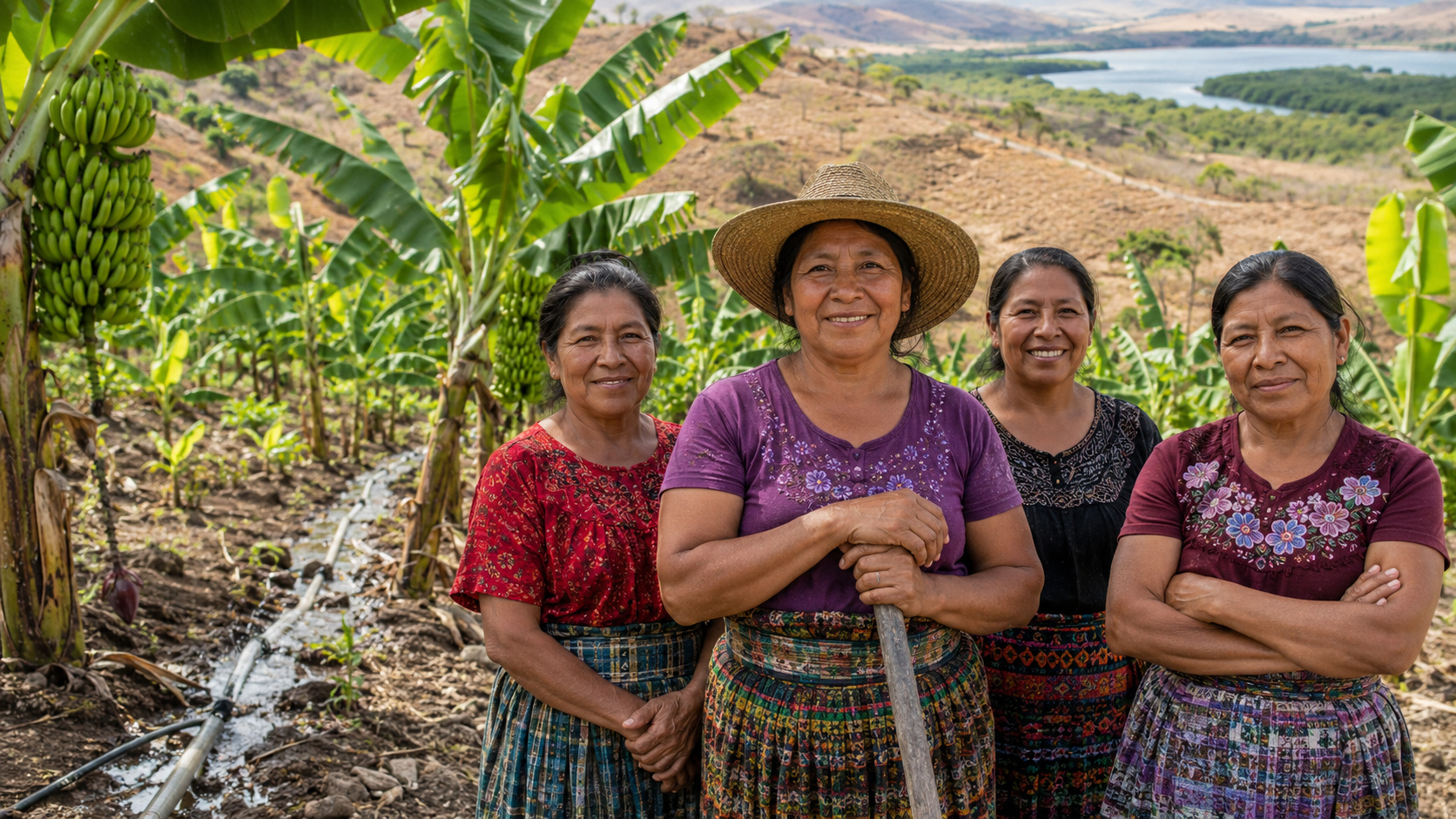
Project strengthened plantain production and showed how permanent irrigation can support income and environmental conservation
In the dry corridor of Guatemala, women from AGRIDESEM installed a permanent irrigation system, strengthened the production of plantain, and created their own brand Doña Platanita. The story links agricultural income, constant water, and mangrove protection in a region where production depends on facing the dry climate.
The information was released by World Bank, an international financial institution focused on global development, on March 3, 2026. The association received technical and financial support to improve the crop, advance the collection center, and add more value to the product before sale.
The initiative took place in the community of La Bendición, in the municipality of Champerico, department of Retalhuleu. The case shows a practical solution for small producers: better irrigation, organizing production, and trying to sell with their own identity, instead of relying solely on cheap raw material.
-
Two helicopters, 41 people, and over 38 tons of bait were mobilized on a remote Pacific atoll to eliminate rats; five years later, native trees grew by 5,000%, seabirds gained habitat, and the rainforest began to regenerate.

-
Florida dumped 2 million tires into the ocean near Fort Lauderdale to create an artificial reef, but hurricanes scattered the rubber across the seabed, and cleanup efforts initiated decades later are still trying to correct the environmental disaster without a guarantee of full coral recovery.
-
Google employee lived in a 12 m² truck in the company parking lot, used the campus facilities, and exposed the burden of rent in Silicon Valley.

-
To escape one of the most dangerous seas in Europe, Norway is advancing with a giant tunnel that will allow ships to pass through a mountain, avoiding storms, unpredictable waves, and a route that has frightened sailors for generations.




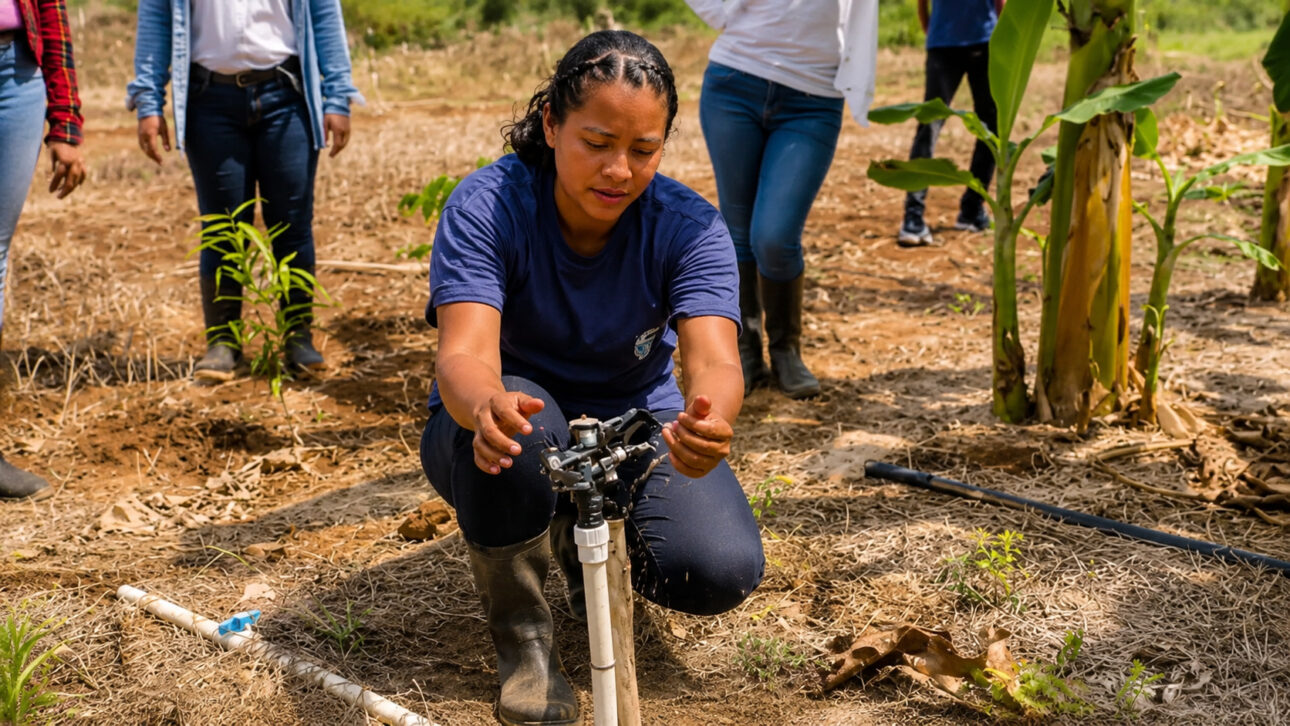
The permanent irrigation that changed the aspect of the crop in the dry corridor
AGRIDESEM operates in an area marked by drought. In this type of territory, water is not just a detail of production. It determines if the plant grows strong, if the harvest has a chance to improve, and if the family can maintain income in the field.


The permanent irrigation system was identified as a central part of the project. Permanent irrigation means bringing water more consistently to the crop, without relying solely on rain. For those who plant in dry regions, this changes the routine and reduces some of the uncertainty.
The women reported that the plantation started to look greener, with stronger stems and leaves, due to the constant moisture.
On March 3, 2026, the production occupied 1 hectare with approximately 2,500 plants. The number shows that the action has a community scale and should not be treated as a solution for all agriculture in Guatemala.
Doña Platanita gives a proper name to the plantain sold by women
Besides water in the fields, the project also included the design and registration of the brand Doña Platanita. The brand began to identify the plantain sold by the women who are part of AGRIDESEM.
For the small producer, selling with their own brand can make a difference. The brand helps the buyer recognize the origin of the product, gives identity to the work, and can support the search for better value in commercialization.
In Brazil, this reminds us of the challenge faced by many cooperatives, rural associations, and families who produce well but sell without a name, strong packaging, and consumer recognition. When the product gains identity, it ceases to be just another agricultural load in the market.
The brand does not guarantee higher income on its own. Even so, it creates a base to diversify sales, improve presentation, and move production away from the logic of selling only raw material without distinction.
The collection center also became part of the strategy to sell under better conditions
Support for the group also advanced with the renovation of the collection center. This space serves to gather production before sale. In simple terms, it is the place where the product can be organized, stored, and prepared to reach the buyer.
The improvement of the collection center was presented as a step to preserve the plantain in better conditions in the future. This matters because agricultural products lose value when they arrive poorly cared for, damaged, or disorganized.
For women farmers, this type of structure can relieve part of the daily pressure. The fields need water, but sales also depend on logistics, care, and presentation.
This point resonates with the Brazilian reality. In many regions, small producers face drought, distance, lack of infrastructure, and difficulty selling beyond cheap intermediation.
The mangrove was included because it protects water, fishing, and soil balance
The story of AGRIDESEM was not limited to the fields. The women connected agricultural production to the protection of the mangrove, an ecosystem formed in wet areas near the meeting of fresh and saltwater.
World Bank, an international financial institution focused on global development, presented the key numbers of the environmental action: the organization supports the conservation and restoration of 20 hectares of mangrove, 10 hectares of natural forest, and 13.5 hectares of energy forests.
The mangrove helps protect water, soil, fishing, and biodiversity. For rural communities, this is not just a distant environmental issue. It is part of food security because fish and other resources depend on this balance.
Women of AGRIDESEM linked agricultural production, income, and community organization
AGRIDESEM is led by Yuri Pérez Escobedo, president of the association, and María Feliciana Velásquez, vice president. They appear as a central part of the organization that strengthened plantain production in the community of La Bendición.
María Feliciana Velásquez summarized the initiative’s meaning in a statement that goes beyond farming: “We are not just planting plantains, but building empowerment, resilience, and hope.
The phrase shows that the plantation also became a symbol of autonomy. It’s not just about harvesting plantains. It’s about organized women, with water in the fields, their own brand, and participation in territory protection.
This type of experience tends to attract attention because it brings together themes that seem separate: income, dry climate, food production, local brand, and environment. In practice, all these points meet in the same place, the lives of those who plant and need to sell.
The case of Guatemala connects with Brazilian family farming
The story recalls familiar problems in the field. Many families produce in dry areas, depend on irregular rainfall, and face difficulty adding value to what they sell.
The experience of AGRIDESEM shows that constant water can help the crops, but also makes it clear that irrigation alone does not solve everything. The project involved a collection center, its own brand, and environmental care, always on a local scale.
There is also a simple lesson about conservation. Protecting mangroves, forests, and soil may seem distant from agricultural income, but the water source, fishing, and territory balance directly influence the lives of communities.
The necessary caution is not to turn the case into a promise. The initiative strengthened the association’s plantain production, but it does not mean that any community can replicate the same model without support, organization, and local conditions.
The story of the women of AGRIDESEM shows a concrete response to a common problem: producing in a dry area, selling with more value, and taking care of the environment that sustains their own income. Permanent irrigation made the plantation stronger, while the brand Doña Platanita gave identity to the product.
In the end, the case draws attention because it combines rural work, female organization, and mangrove conservation without selling a magical solution. Comment on what you thought of this experience and share the publication with those who follow family farming, cooperatives, and the environment.





Be the first to react!