






 Portuguese
  Spanish


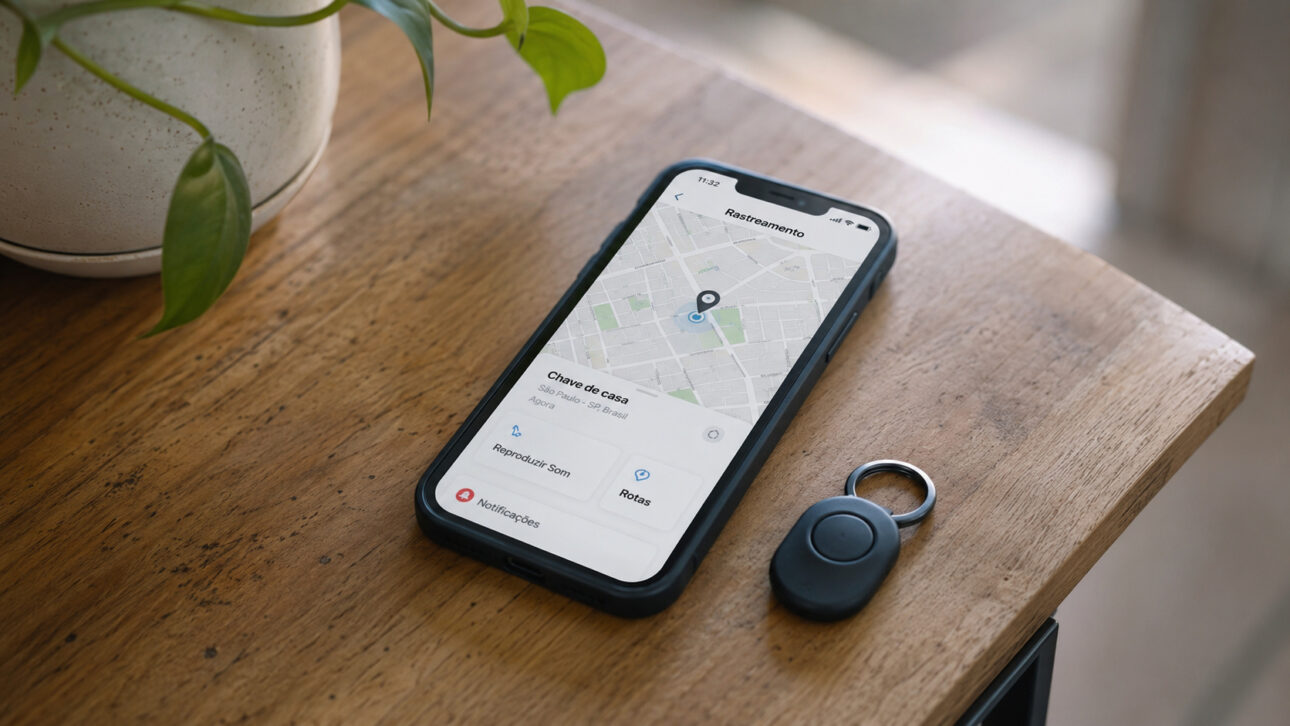
Small devices sold for less than R$ 100 allow tracking the location of victims without consent and raise an alert about stalking and privacy invasion.
A silent form of stalking against women has started to concern public security authorities in São Paulo.
The practice was revealed in a report by Folha de S.Paulo. According to the São Paulo Public Security Secretariat, the conduct may constitute a stalking crime.
-
Brazilian Researcher Develops Protein Supplement from Tilapia Waste, Combining Innovation and Sustainability with Economic Potential

-
Near a $750 million AI data center in Brazil, a resident’s well runs dry, leaving her unable to afford the $25,000 needed for repairs.

-
16-Year-Old from Brazil’s Sertão Wins Young Scientist Award for AI Predicting Rainfall with 94.5% Accuracy to Aid Farmers
-
Netherlands Reports First Child Euthanasia Case Since Rule Expansion for Minors


The discreet size of the devices allows the victims’ routines to be monitored without the surveillance being noticed.
Small devices allow real-time tracking
The tags are similar in size to a coin and can be easily found on the market.
Some models cost less than R$ 100, a factor that increases access to this type of technology.
These devices were developed to locate objects. However, clandestine use can turn them into instruments of control and stalking.
The reports share some common characteristics:
- small and almost imperceptible devices;
- hidden in vehicles and personal items;
- real-time location tracking;
- prices below R$ 100;
- monitoring conducted without consent.
The victim can thus have their movements tracked during daily activities without finding obvious signs of the tracking.

Tags are hidden even in children’s items
Reports indicate that men have placed trackers in vehicles, bags, backpacks, and belongings used by children.
The perpetrator can, with this resource, observe the woman’s movements without needing to remain physically close to her.
The use of children’s objects can also make it difficult to identify the hidden device.
In this context, technology ceases to be just a location tool and starts functioning as a silent surveillance mechanism.
No specific official survey on occurrences involving hidden tags has been released so far.
The episodes, according to authorities, can be recorded and investigated as stalking cases.
Use of hidden tags may constitute the crime of stalking
The Public Security Department states that the practice can be framed under Article 147-A of the Penal Code.
The rule was created by Law No. 14,132, sanctioned on March 31, 2021, which formally criminalized stalking in Brazil.
Stalking occurs when a person repeatedly pursues another, as established by legislation.
The conduct may involve threats to physical or psychological integrity, restriction of freedom, and invasion of privacy.
The recurring monitoring of a woman through hidden tags can, therefore, be analyzed within these circumstances.
The penalty provided is six months to two years of imprisonment, in addition to a fine.
The punishment can be increased when the crime is committed against a woman.
Reports of stalking increase in São Paulo police station
Data from the Public Security Secretariat indicates an increase in stalking reports at the 1st Women’s Defense Police Station.
The unit is located in Cambuci, the central region of the São Paulo capital.
The increase was recorded in the first quarter of 2026, compared to the same previous period.
São Paulo currently has a network of 144 Women’s Defense Police Stations and 220 specialized rooms.
The Lilac Booth, installed at the Military Police Operations Center, also integrates support initiatives and has already conducted thousands of services.
SP Mulher Segura app gathers more than 61,000 users
The SP Mulher Segura app offers resources aimed at protecting women in the state.
The platform allows monitoring of protective measures and provides a panic button.
More than 61,000 active users are registered on the tool, according to the presented data.
Many stalking episodes, despite the available structure, are not formally reported.
The lack of records makes it difficult to measure the real extent of the problem.
The main warning involves the clandestine use of simple and accessible technologies to monitor women without authorization.
The discretion of the tags makes the practice especially difficult to notice in daily life.
Accessible technology increases the challenge for authorities
The low cost and small size of trackers show how a common tool can be diverted from its original purpose.
The ease of concealment allows these devices to remain hidden in objects used daily by the victims.
Addressing this type of stalking depends on identifying cases and formalizing complaints.
Do you believe manufacturers should increase security alerts to make clandestine use of these tags more difficult? Leave your opinion.


