





 Portuguese
  English
  Spanish
  5 min of reading
  0 comments


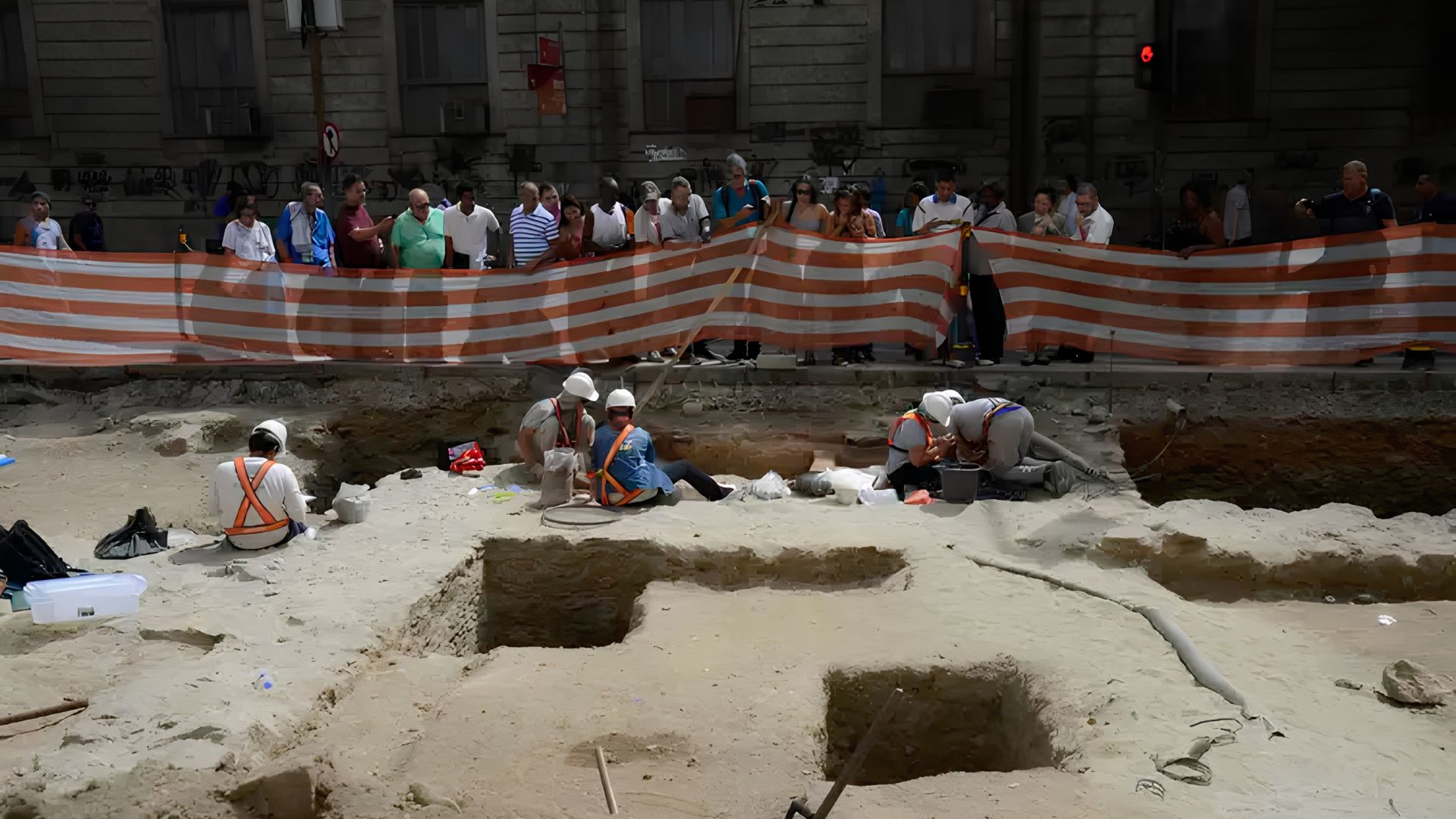
VLT works in downtown Rio revealed 15 skeletons, foundations, and objects from the old Church of São Joaquim, built in 1758 and demolished in 1904.
In 2018, an urban mobility project in downtown Rio de Janeiro ended up bringing to light a forgotten part of the city’s history. According to CCPAR, during the implementation of VLT Line 3 on Avenida Marechal Floriano, teams found foundations, fragments, objects, and 15 skeletons at the site where the old Church of São Joaquim once stood.
The discovery turned the expansion of rail transport into an archaeological excavation in the heart of the capital. According to CCPAR, the archaeological work carried out on the Rio City Hall projects, under the supervision of Iphan, revealed not only the location of the old church but also a cemetery linked to the Catholic elite. Meanwhile, Rio Memórias recalls that the Church of São Joaquim was built in 1758 and demolished in 1904, during the urban reform led by Pereira Passos.
VLT Line 3 found a buried church under Avenida Marechal Floriano
According to CCPAR, the excavations of VLT Line 3 revealed structures directly linked to the old temple, including foundations, construction fragments, and objects associated with the religious space. The discovery attracted attention because it was not just isolated pieces but material evidence capable of delineating the area occupied by the vanished church.
-
It seems like a child’s math problem, but many get it wrong: a challenge with only three operations leads thousands to the wrong answer by ignoring a basic rule learned in school.

-
Not even Generation Z is putting up with itself: a 23-year-old recruiter exposes a job interview that went viral with over 300,000 likes after a candidate joined via cell phone, treated the conversation as “not so serious,” and assumed immediate hiring.
-
Government wants to allow buying and selling of cars in Brazil directly through apps and eliminate notary and in-person inspections; measure could transform more than 10 million annual used vehicle transactions.
-
Nubank customers fear losing money after an out-of-court liquidation notice by the Central Bank, but the bank admits operational error, keeps licenses active, and the Central Bank denies intervention.


Rio Memórias reports that the remains were found in an area near the junction of Avenida Passos with Avenida Marechal Floriano, a point where the old Rua Estreita de São Joaquim was transformed by the urban reform of the early 20th century. This gives a sense of how much the current landscape of the downtown area was built over erased layers of the colonial and imperial city.
More than interrupting a project, the discovery brought back into circulation a part of Rio’s urban memory that had been buried for over a century. What seemed like just another section of track being implemented ended up revealing one of the most important vanished religious spaces in that historic region.
The 15 skeletons were linked to the old cemetery of the Church of São Joaquim
The most impactful finding of the discovery was the presence of 15 skeletons. According to CCPAR, it was common practice during that period for churches to maintain burial areas attached, and the site identified in the works was associated precisely with the cemetery of the Catholic elite linked to the Church of São Joaquim.
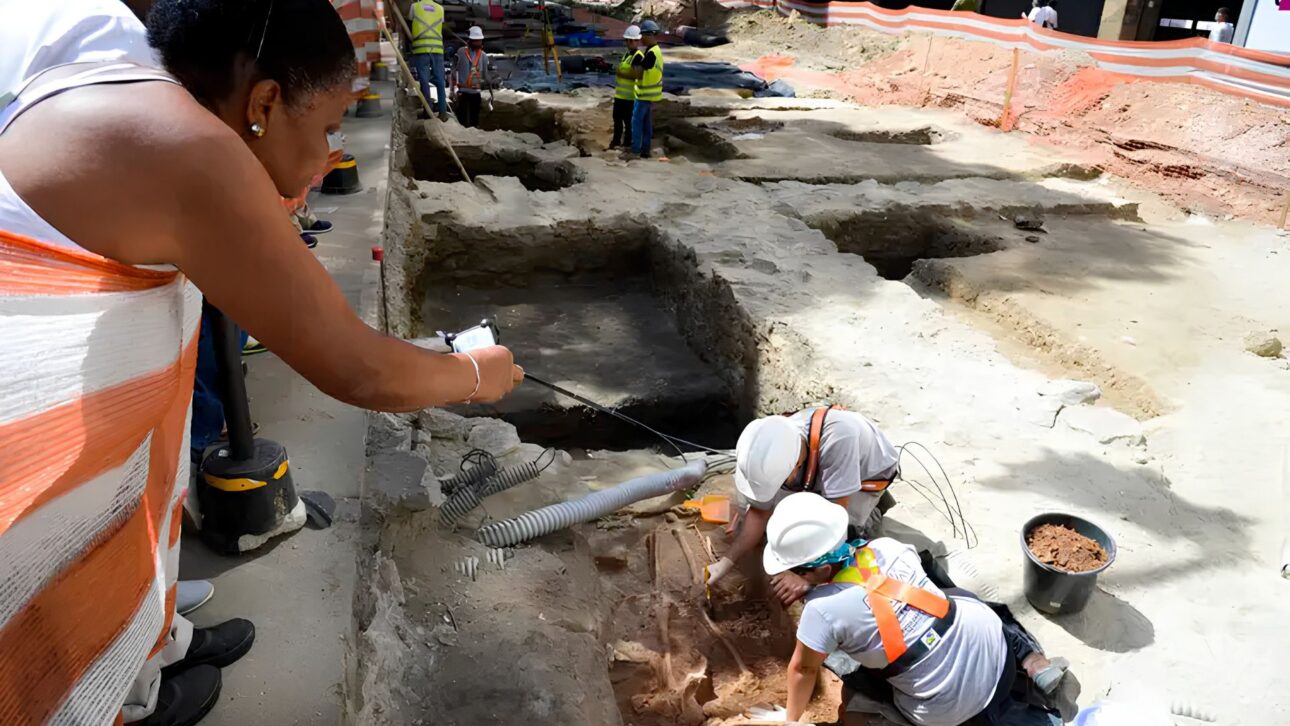
Rio Memórias emphasizes that, in addition to the church structures, archaeologists found ceramics and human remains, evidence that the religious space also served a funerary function.
This helps explain why the underground of the region holds not only architectural remains but also direct traces of social and religious practices of 18th and 19th-century Rio de Janeiro.
This type of discovery has great historical significance because it reveals how the city’s occupation mixed faith, power, social prestige, and burials in areas now completely integrated into contemporary urban traffic and infrastructure.
Church of São Joaquim was built in 1758 and demolished in 1904 during the Carioca teardown
According to CCPAR, the Church of São Joaquim was built in 1758, next to a seminary, in an area that would later house the Colégio Pedro II. In 1817, with the presence of the Portuguese royal family in Rio, the temple came to be considered the official chapel of the battalions.
The end of the church came in 1904, when Mayor Francisco Pereira Passos included its demolition in the process of widening the old street in the region. Rio Memórias directly relates the destruction of the temple to the so-called bota-abaixo, the major urban reform carried out between 1903 and 1906, inspired by the remodeling of Paris.
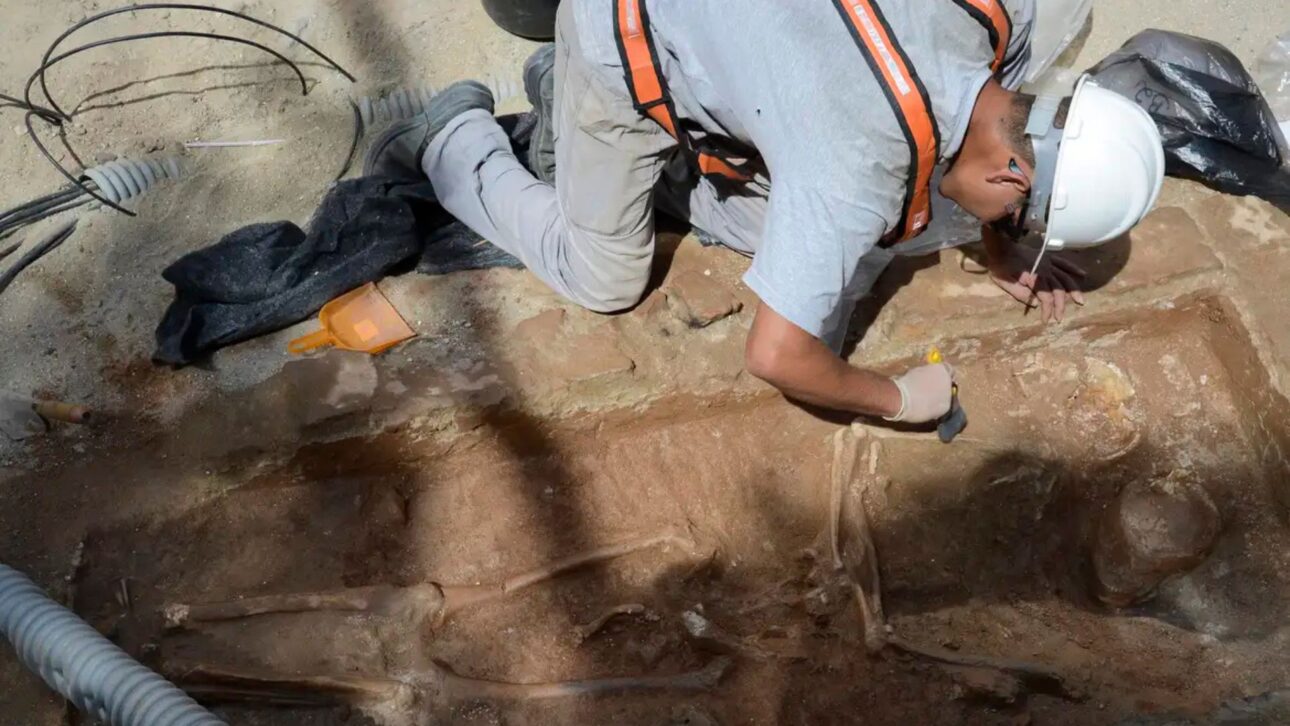
The history of the church shows that the reforms that modernized Rio also erased religious buildings, colonial structures, and memory spaces that remained invisible for more than a century until they resurfaced due to a transportation project.
Foundations, objects, and ceramics helped reconstruct the vanished space
According to CCPAR, besides the skeletons, the teams found fragments, containers, ceramics, and foundations that helped define the area occupied by the old church. The company also reported that archaeologists used foundation mirroring techniques to estimate the approximate dimensions of the construction.
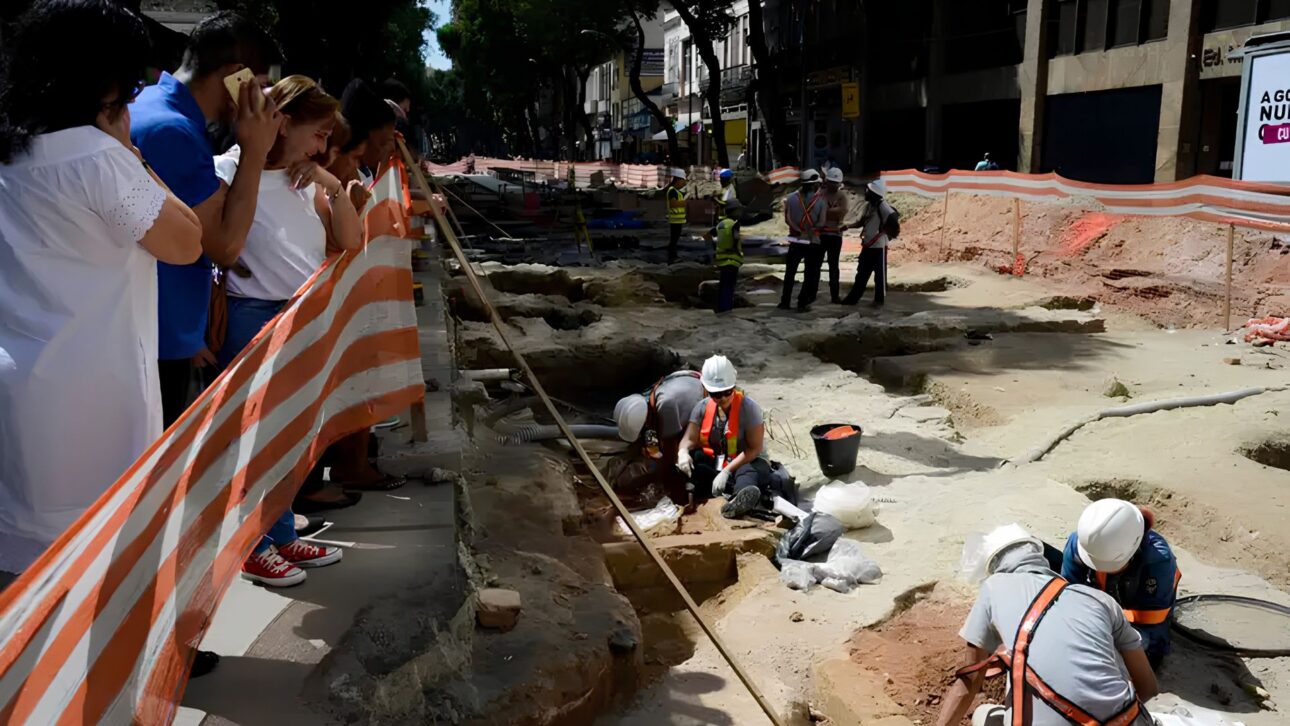
These materials are important because they allow for a more complete reading of the archaeological site. It’s not just about confirming that the church was there, but about reconstructing how that space functioned, what objects circulated in it, and how urban occupation was transformed over time.
When a contemporary project reveals foundations, buried walls, ceramics, and funerary areas, it ceases to be just an infrastructure intervention and also serves as an excavation of the city’s own historical formation.
The VLT project showed how modern Rio was built over erased layers
The rediscovery of the Church of São Joaquim summarizes an old tension in large Brazilian cities. To open avenues, reorganize flows, and modernize urban centers, many historical spaces were demolished, covered, and forgotten.
In Rio’s case, the Pereira Passos reform physically eliminated the church in 1904. More than a century later, the VLT project exposed part of this buried history.

Rio Memórias highlights that the traces left by the church remind us that urban reforms erased not only houses and tenements but also buildings of singular relevance to the city’s memory.
The rediscovery underground of Avenida Marechal Floriano reinforces how modern Rio was built upon successive layers of destruction, reorganization, and forgetfulness.
In the end, the implementation of the VLT did more than just expand mobility. It showed that beneath the asphalt of downtown Rio, there are still churches, cemeteries, colonial structures, and entire chapters of the city waiting to reappear.


Be the first to react!