Portuguese
  Spanish


Stone paving found during works in the Central Quadrilateral, in the Historic Center of Porto Alegre, was used between 1912 and 1928 and remains visible on Doutor Flores street. Preserved by the city hall, the find received heritage plaques and became an open archaeological site of the capital of Rio Grande do Sul in an urban public space.
The stone paving found on Doutor Flores street, in the Historic Center of Porto Alegre, became a signposted archaeological site in an open space this Monday, March 9, 2026. The discovery occurred during revitalization works of the Central Quadrilateral, according to the Porto Alegre City Hall.
According to the Porto Alegre City Hall and a report published by Terra, the find involves teams linked to municipal public works, the Municipal Secretariat of Works and Infrastructure, Dmae, and the consultancy Arqueo-Tri. The structure, used between 1912 and 1928, was preserved in its original location, in front of number 76 of the street, with explanatory plaques for residents and visitors.
Old paving appeared during works in the Historic Center
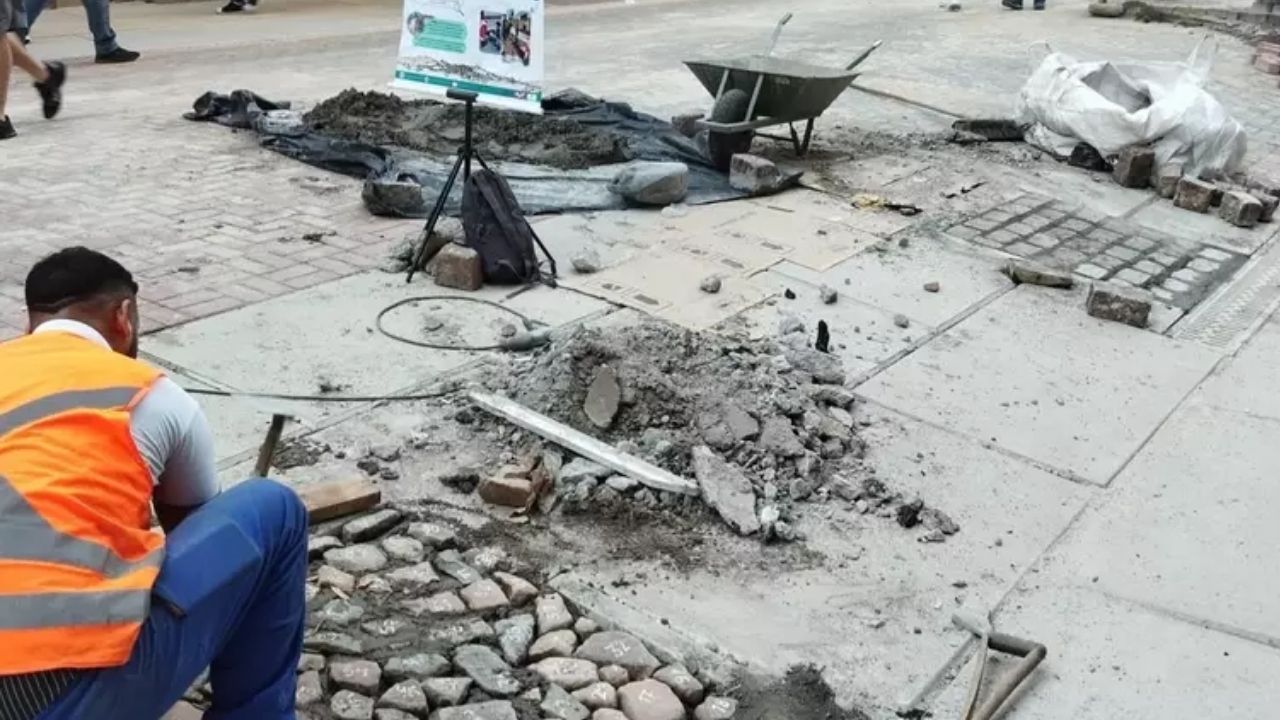
The discovery occurred during the first stage of the revitalization works of the nine streets that make up the Central Quadrilateral, in the Historic Center of Porto Alegre. While teams worked on Doutor Flores street, remnants of an old stone paving were identified.
-
Cold War Secret Plane Lost Engine Mid-Flight, Forcing Six to Parachute in Darkness; Wreckage Remains in Death Valley Mountains 73 Years Later

-
Opened in 1980, Shopping Recife was Pernambuco’s first mall and helped transform Boa Viagem into a bustling and sought-after district in southern Recife.
-
Tired of Monthly Water Supply, South African Villagers in Limpopo Connect Mountain Spring to Taps, Bringing Water to 5,000 People with $700 Initiative

-
Rare Case of Neurocysticercosis in Spain: 60-Year-Old Man’s Suspected Brain Cancer Turns Out to Be Tapeworm Cysts, Avoiding Invasive Cancer Treatments




What seemed like just another urban intervention ended up revealing a preserved layer of the city’s history. The structure found refers to the period when the capital of Rio Grande do Sul was undergoing significant changes in its urban configuration.
According to the Municipal Secretariat of Works and Infrastructure, the pavement was used between 1912 and 1928. The information helps to situate the find at the beginning of the 20th century, when Porto Alegre was undergoing modernizations in public infrastructure.
Part of the pavement remained at the same point of discovery. As a result, those who pass by Doutor Flores Street can observe remnants of the old pavement structures, now integrated into the heritage signage.
Doutor Flores Street gained the first open signposted archaeological site
Porto Alegre now has the first signposted archaeological site in an open space in the city. The structure was preserved in front of number 76 Doutor Flores Street, in the Historic Center.
Two heritage signage plaques were installed at the site. They provide information about the archaeological discovery and the urban configuration of the capital of Rio Grande do Sul in the early 20th century.
The decision to keep part of the pavement visible transforms an urban work into a point of public memory. Instead of removing or completely hiding the find, the city council chose to incorporate it into the city’s space.
The open archaeological site allows residents, workers in the area, and visitors to have direct contact with a fragment of the urban past. The street ceases to be just a passage and also functions as a space for historical reading.
Structure was used between 1912 and 1928
The regular cobblestone pavement and irregular pavement were identified during archaeological monitoring. The initial discovery occurred in August 2023, during the replacement of water networks by the Municipal Water and Sewage Department.
According to Arqueo-Tri, the pavement was in use on Doutor Flores Street between 1912 and 1928. This interval shows that the structure was part of a specific phase of urbanization in Porto Alegre.
The early 20th century was marked by infrastructure works and urban reorganization in several Brazilian capitals. In the case of Doutor Flores Street, the pavement found helps to understand how the city structured its roads during that period.
The preservation of the material on site enhances the value of the find. It is not just about recording the existence of the pavement, but allowing part of it to remain visible at the point where it was found.
Heritage plaques explain the find to the public
The plaques installed on Doutor Flores Street were created to contextualize the discovery. They explain what was found, the period the pavement was used, and why the find is relevant to urban history.
The heritage signage totem was developed by the archaeology consultancy Arqueo-Tri. The illustrations are by visual artist Ana Luiza Koehler, according to the Porto Alegre City Hall.
This type of signage brings archaeology closer to people’s daily lives. Instead of restricting technical knowledge to reports or institutional archives, the content is accessed directly on the street.
The municipal secretary André Flores stated that the city now has the first properly signposted archaeological site on one of the main streets of the Historic Center. According to him, the history of the city’s construction remains preserved and belongs to everyone.
Archaeological monitoring prevented the discovery from going unnoticed
The identification of the pavement occurred because there was archaeological monitoring during infrastructure interventions. This monitoring is essential in old areas, where water, sewage, pavement, or revitalization works can reach historical layers.
In the case of Doutor Flores street, the find appeared during the replacement of Dmae’s water networks. Upon recognizing the material’s relevance, part of the structure was preserved and received a proposal for signage.
Without this technical care, important fragments of urban history could disappear under new layers of construction. The presence of archaeology in the process allowed the find to be transformed into visible heritage.
The archaeologist Marcelo Lazarrotti, from Arqueo-Tri, highlighted that the relevance of the discovery was promptly recognized by Smoi. According to him, the support for the implementation of signage allowed citizens to access this historical legacy.
Works in the Central Quadrilateral revealed a hidden layer of the city
The Central Quadrilateral brings together nine streets of Porto Alegre’s Historic Center in a revitalization process. The discovery shows that urban interventions can reveal preserved elements below the ground, especially in old regions.
Doutor Flores street, now marked by intense pedestrian traffic, commerce, and services, holds traces of another phase of the capital. The found pavement shows that the current city was built on successive layers of infrastructure.
This type of find helps bring the population closer to the concrete history of urban spaces. Memory is no longer just in buildings, monuments, and documents, but also on the streets’ ground.
By preserving part of the pavement, the city hall creates a direct link between contemporary Porto Alegre and the city of the early 20th century. The location serves as a reminder that each construction may hide material records of other eras.
Urban heritage gains presence in daily life
The transformation of the old pavement into an open archaeological site broadens the way the city relates to its heritage. Instead of relying solely on museums or historical buildings, memory becomes visible in public space.
The strength of the discovery lies precisely in its simplicity: stones used in urban daily life for over a century now tell a story. They show how the city was organized, circulated, and invested in infrastructure.
For residents and visitors, the marked point can serve as an invitation to observe. Doutor Flores Street ceases to be perceived only by the current flow and gains a layer of historical significance.
The initiative also reinforces the importance of integrating urban works, archaeology, and heritage education. When these areas work together, the modernization of the city does not need to erase the traces of the past.
Preserved paving shows that the city is also underfoot
The preserved paving on Doutor Flores Street reveals a discreet but important part of Porto Alegre’s history. Used between 1912 and 1928, the pavement now reappears as a witness to the urban formation of the capital of Rio Grande do Sul.
The discovery shows that heritage is not only in facades, mansions, or large monuments. Sometimes, the memory of the city is on the ground, hidden under layers of asphalt, works, and routine.
With heritage plaques, illustrations, and visible structure in the public space, Porto Alegre’s first open marked archaeological site transforms an excavation into an opportunity for collective learning.
And you, do you think that other works in historical centers should preserve such discoveries on site, so that residents and visitors can see history up close? Leave your opinion in the comments.