Portuguese
  Spanish


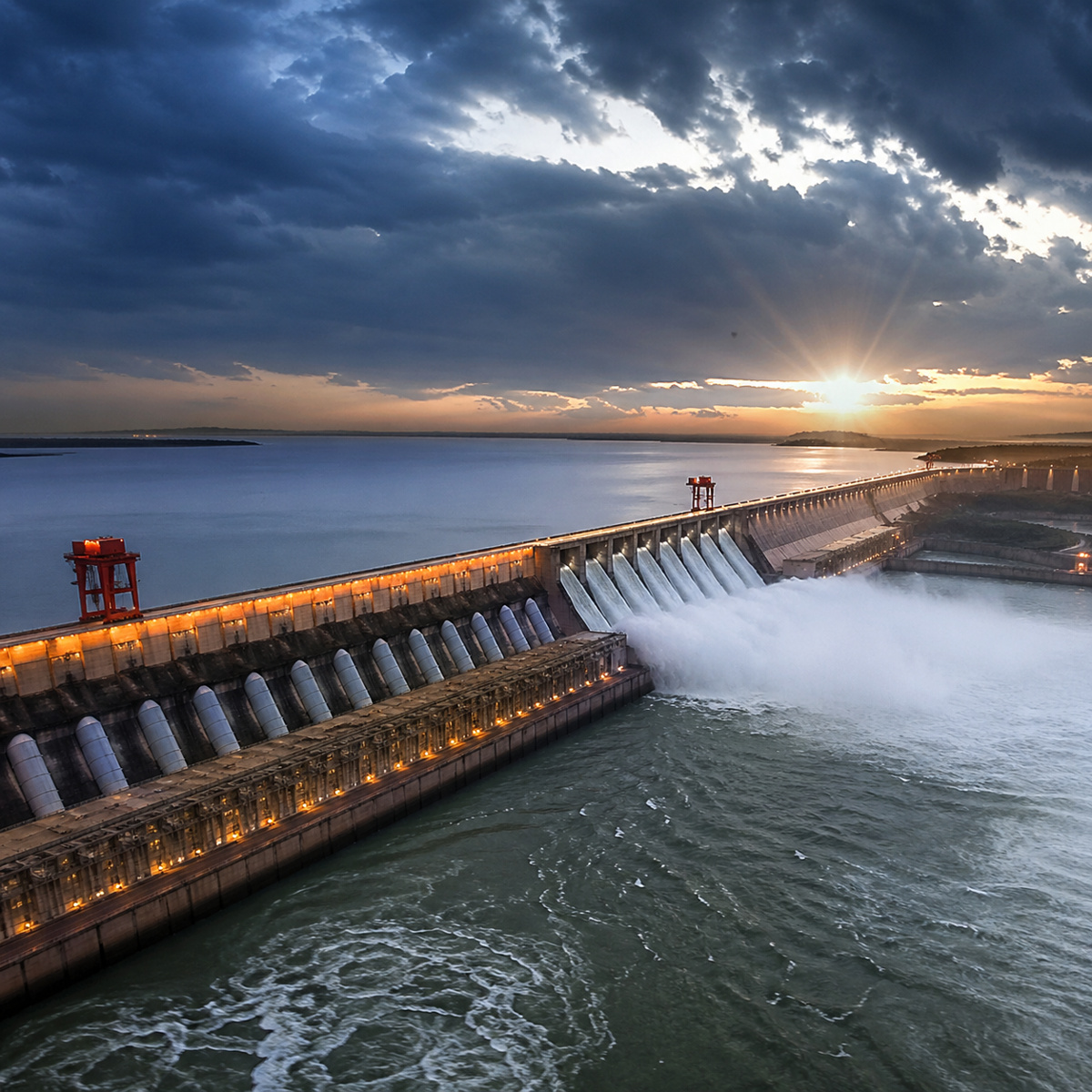

Ranking reveals the world’s largest hydroelectric plants, highlights Brazilian power plants, and shows the role of clean energy in the future of global energy.
Global energy is experiencing a decisive moment, with countries seeking more sustainable sources to ensure supply and reduce emissions. In this context, the world’s largest hydroelectric plants play a central role. They not only produce electricity on a large scale but also directly influence the economic and social development of various regions.
One striking point in this scenario is Brazil’s presence. The country appears strongly in this ranking, with important Brazilian power plants among the largest in the world. This reinforces the national relevance in generating clean energy, especially at a time when energy transition has become a global priority.
The largest hydroelectric plants and the foundation of global renewable energy
The largest hydroelectric plants are responsible for a significant portion of global energy, being today the main renewable source in terms of generation volume. They use the force of rivers to produce electricity continuously and relatively stably.
-
Woman Turns Shipping Container into Home, Embraces Rural Life to Cut Monthly Expenses to Just Over $330

-
France Revamps 530 Social Housing Units with Large Balconies and Glass Facades Without Demolishing Existing Buildings

-
Facing high rent, couple transforms parents’ garage into a fully functional apartment, creating a complete home at a fraction of the market cost.
-
MIT Scientists Develop Method to Transform CO₂ into a Construction Ally, Boosting Cement Strength by 13% in 24 Hours for More Sustainable Infrastructure



In addition to energy production, these plants perform strategic functions that go far beyond electricity:
- Flood control
- Support for agricultural irrigation
- Water supply for cities
- Stimulus for regional development
Hydroelectricity, considered an important source of clean energy, continues to be essential for countries with large water availability, such as Brazil and China.


Global clean energy giants dominate the top of the ranking
Among the world’s largest hydroelectric plants, China holds the absolute lead. The Three Gorges Dam, located on the Yangtze River, has an impressive 22,500 MW of installed capacity and became fully operational in 2012. It is one of the largest engineering works ever undertaken on the planet.
Right behind is the Baihetan power plant, also in China, with 16,000 MW. Inaugurated in 2022, it stands out for its use of giant turbines and its direct contribution to reducing coal use in the country.
In third place is one of the most emblematic Brazilian power plants: Itaipu, with 14,000 MW. Located on the border between Brazil and Paraguay, the plant is responsible for about 15% of the electricity consumed in Brazil and approximately 90% of Paraguay’s energy demand.
Next comes Belo Monte, in Pará, with 11,233 MW. This is the largest entirely national power plant and one of the pillars of clean energy in the country.
Rounding out the top five is the Guri power plant in Venezuela, with 10,235 MW, responsible for about 70% of the country’s electricity generation.

Brazilian power plants among the world’s largest hydroelectric plants
Brazil’s prominence in global energy is not limited to just the top positions. Other Brazilian power plants also appear among the world’s largest hydroelectric plants.
The Tucuruí power plant, also located in Pará, has 8,370 MW of installed capacity. Built in two phases between 1980 and 2010, it was the first large hydroelectric plant in the Amazon.
It presents impressive figures:
- Annual generation of approximately 40 TWh
- Participation between 7% and 10% of the National Interconnected System
- Reservoir with approximately 2,850 km²
- Spillway with a capacity of 110 thousand m³ per second
These data show how Brazilian power plants play a significant role in the production of clean energy and national supply.
Other giants complete the world energy ranking
In addition to South American and Chinese power plants, other giant structures complete the list of the largest hydroelectric plants.
In the United States, the Grand Coulee Dam has 6,494 MW and generates about 21 TWh per year. It also plays an important role in irrigation projects.
In Russia, the Sayano-Shushenskaya has a capacity of 6,400 MW and is essential for the energy stability of Siberia. The site was marked by a serious accident in 2009, which caused 75 deaths and interrupted operations for months.
Also in Russia, the Krasnoyarsk power plant has 6,000 MW and a reservoir of approximately 2,000 km², making it strategic for regional supply.
Closing the ranking is Churchill Falls, in Canada, with 5,428 MW. The plant generates about 34 TWh per year, equivalent to approximately 1% of all global hydroelectric generation.
New megaproject could change the ranking of the largest hydroelectric plants
World energy could undergo a significant transformation in the coming years. In July 2025, China began construction of a new project on the Yarlung Zangbo River, on the Tibetan Plateau.
The undertaking impresses with its numbers:
- Estimated capacity of about 60 GW
- Annual generation of approximately 300 billion kWh
- Projected investment of US$ 170 billion
- System composed of five cascade power plants
The natural drop of approximately 2,000 meters along 50 km is one of the factors that make this project viable on such a grand scale.
If completed, it could become the largest among all the largest hydroelectric plants in the world, easily surpassing the current leader.
Clean energy and the environmental challenges of large power plants
Despite their essential role in generating clean energy, hydroelectric plants face important criticisms. Large projects often cause significant environmental and social impacts.
Among the main points discussed are:
- Displacement of local communities
- Alterations in natural ecosystems
- Impacts on biodiversity
- Changes in river flow
These factors show that, although the largest hydroelectric plants are fundamental for world energy, careful planning and sustainable policies are necessary.
The strategic role of Brazilian power plants in world energy
Brazilian power plants have a strategic importance that goes beyond national borders. Brazil has one of the cleanest energy matrices in the world, with a strong dependence on hydroelectricity.
About 60% of the country’s electricity comes from this source, which reinforces the national prominence in the production of clean energy.
Furthermore, the country has favorable natural conditions:
- Extensive and voluminous rivers
- Suitable terrain for dams
- High potential for expansion
These factors place Brazil among the global leaders in world energy, especially in the renewable segment.

What these giants reveal about the future of energy
The largest hydroelectric plants continue to be fundamental pillars of world energy, even with the advancement of other renewable sources, such as solar and wind.
Brazil’s prominence, with three large Brazilian power plants among the ten largest in the world — Itaipu, Belo Monte, and Tucuruí — highlights the country’s strength in this strategic sector.
At the same time, projects like the new Chinese complex show that the pursuit of scale and energy efficiency continues to advance.
The challenge, from now on, will be to balance growth, energy security, and environmental preservation. In this scenario, the clean energy generated by hydroelectric plants will continue to be a key piece to meet global demand sustainably.
With information from Exame.