






 Portuguese
  Spanish
  6 min of reading
  0 comments


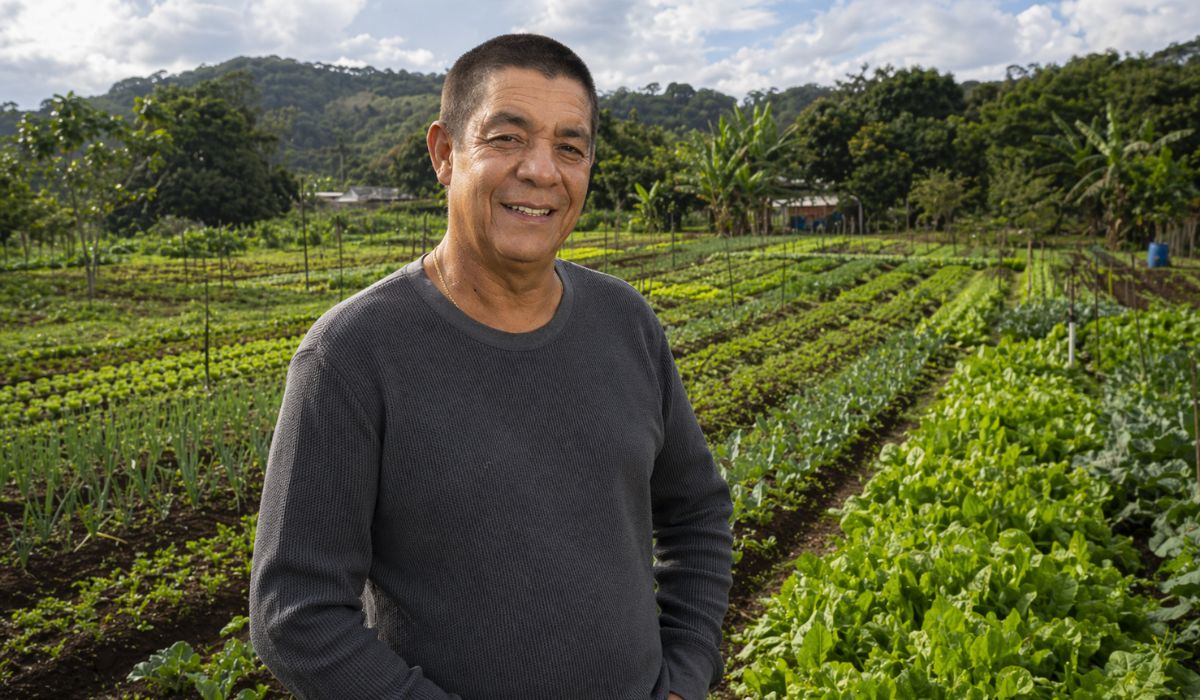
Project in Xerém transforms land donated by Zeca Pagodinho into an urban garden with technical support, community production, and potential for local supply linked to food security in Baixada Fluminense.
An 8,000-square-meter area in Xerém, a district of Duque de Caxias, in Baixada Fluminense, hosts the Xerém I Urban Garden, a project by the Zeca Pagodinho Institute aimed at food production, resident training, and the use of urban agriculture techniques.
According to information released by the Ministry of Agrarian Development and Family Agriculture, the initiative foresees the cultivation of vegetables, legumes, and fruits on land provided by the institute, with technical support from institutions such as Embrapa Agrobiologia and the Federal Rural University of Rio de Janeiro.
The estimated information about the project is that the garden can reach up to 40 tons of food per year when in full production.
-
Survivor of 1966 SS Daniel J. Morrell Shipwreck in Lake Huron Recounts 38-Hour Ordeal in Extreme Cold

-
The Greatest Hoax in World Cup History? The Film That Denied Brazil’s 1958 Victory and Exposed How Fake Evidence Can Seem Convincing on TV
-
Fake South Korean Online Stores Offer Shopping Thrill Without Spending Money or Receiving Products
-
The War of Jenkins’ Ear: How a Severed Ear Sparked One of the 18th Century’s Most Unusual Conflicts


Part of the harvest has a social purpose, with donations to registered families, community kitchens, and local institutions, while another portion can be directed to commercialization, including through public food purchase programs.
In its first months of operation, the garden had already distributed more than one ton of food, according to a survey cited by the Federal Rural University of Rio de Janeiro in a record about the project’s media coverage.
The university informed that the initiative involves training urban farmers, and producing and donating food in the region.
Urban garden in Xerém uses sustainable agriculture techniques
The garden functions as a reference unit in urban and peri-urban agriculture.
This type of production seeks to bring food cultivation closer to inhabited areas, especially in metropolitan regions, where there are available plots, backyards, community spaces, and institutional areas that can host productive systems.
In the case of Xerém, the project also received the name **Productive Backyard**.
According to the Ministry of Agrarian Development, the proposal includes sustainable fertilization and irrigation techniques for the cultivation of vegetables, legumes, and fruits, with production aimed at both donation and sale in local commerce.
The technical dimension appears in the combination of garden beds, seedlings, fruit trees, irrigation, and resident training.
Instead of functioning merely as a planting area, the garden serves to demonstrate practices that can be adapted to smaller urban spaces, such as backyards, schools, associations, and community areas.

Foods cultivated in Xerém I Urban Garden
The space gathers more than **11 thousand vegetable seedlings**, including pumpkin, chard, lettuce, beetroot, broccoli, escarole, okra, arugula, and parsley.
There are also more than **50 fruit trees**, with species such as acerola, jabuticaba, star fruit, orange, mango, and tangerine, according to information published about the project.
The diversity of crops allows for organizing harvests in different cycles.
Faster-growing vegetables can supply distribution at shorter intervals, while fruit trees require more development time and can expand the variety of foods offered when they come into production.
In urban agriculture, the choice of species also relates to the size of the area, water availability, soil type, and available labor.
Therefore, projects of this type usually combine technical guidance, training, and management monitoring to reduce losses and maintain regular production.


Embrapa and UFRRJ participate in the project in Xerém
The partnership with Embrapa Agrobiology and UFRRJ connects the project with research, rural extension, and community training.
According to Canal Rural, the unit works with different cultivation methods adapted to reduced spaces, such as vertical gardens, raised beds, efficient irrigation, rainwater harvesting, and organic composting.
These techniques have a practical function.
Rainwater harvesting can reduce dependence on external supply; composting transforms organic waste into fertilizer; and raised or vertical beds expand the use of small areas or those with soil limitations.
Researcher Mariella Uzêda, from Embrapa, told Canal Rural that the techniques were adapted to the reality of people with little space, but interested in planting and harvesting food.
The statement attributes to applied research a role in adapting the production model to the daily lives of urban residents.
Resident training and food production
The Ministry of Agrarian Development informed that the initiative relies on Embrapa Agrobiology, UFRRJ, and other institutions to promote food security and social inclusion.
The ministry also noted that the project is aligned with the National Urban and Peri-urban Agriculture Policy, established by Law No. 14,935 of 2024.
UFRRJ acts in the training and dissemination of knowledge through pedagogical and solidarity units, according to the ministry.
The proposal involves training residents in urban agriculture practices, which can allow for the reproduction of some of the techniques in other community spaces.
Louiz Carlos Piquet Chaves da Silva, president of the Zeca Pagodinho Institute and son of the singer, stated that food insecurity motivated the institute’s entry into this area.
“Food insecurity was what motivated us to dive headfirst into this area, considering everything that happened during the pandemic and post-pandemic,” he said, in a statement published by the MDA.
Zeca Pagodinho talks about the garden in Xerém
Zeca Pagodinho linked the project to the help the institute already provided in Xerém.
In a statement published by the Ministry of Agrarian Development, the singer said that the action expands the way families in the region are served.
“It’s really great to be able to contribute food to families. We’ve always helped the people of Xerém by distributing basic food baskets to those we know need them. This project is cool because, in addition to teaching how to plant, it will put food on many people’s tables,” said the artist.
In another statement reproduced in the coverage about the garden, Zeca summarized the proposal as a way of sharing what he received.
“Life has to be like this, no one can live alone. Everything has to be shared. That’s life, sharing what I’ve earned,” said the singer.

Food security in Rio de Janeiro and Brazil
The Xerém garden emerges in a scenario where food insecurity remains present in the country, although recent indicators show a decline.
According to the IBGE News Agency, the proportion of Brazilian households with some degree of food insecurity decreased from 27.6% in 2023 to 24.2% in 2024.
In the same period, moderate insecurity fell from 5.3% to 4.5%, and severe insecurity dropped from 4.1% to 3.2%.
In the state of Rio de Janeiro, the state government reported, based on IBGE data, that food insecurity fell from 2.7 million people in 2022 to 1.2 million in 2023.
The number still indicates the existence of a population in a situation of restriction or uncertainty in regular access to food.
In July 2025, the federal government informed that Brazil has once again exited the FAO Hunger Map.
The result considers the triennial average for 2022, 2023, and 2024 and places the country below the 2.5% threshold of the population at risk of undernutrition or lack of access to sufficient food, according to the Ministry of Development and Social Assistance.
Local production enters the supply debate
Urban agriculture projects do not replace public policies for income, supply, school meals, or social assistance.
Even so, initiatives of this type can function as a territorial complement, especially when they bring together local production, food distribution, training, and technical support.
In the case of the Xerém I Urban Garden, the design combines available land, research institutions, community participation, and social destination of production.
The model also provides for income generation for people involved in cultivation, when part of the food is sold through local channels or public programs.
The experience in Xerém shows a practical application of agricultural techniques in an urban area of Baixada Fluminense.
The continuity of the project will depend on factors such as management, technical assistance, resource availability, resident participation, and the ability to maintain distribution and commercialization over time.





Be the first to react!