Portuguese
  Spanish


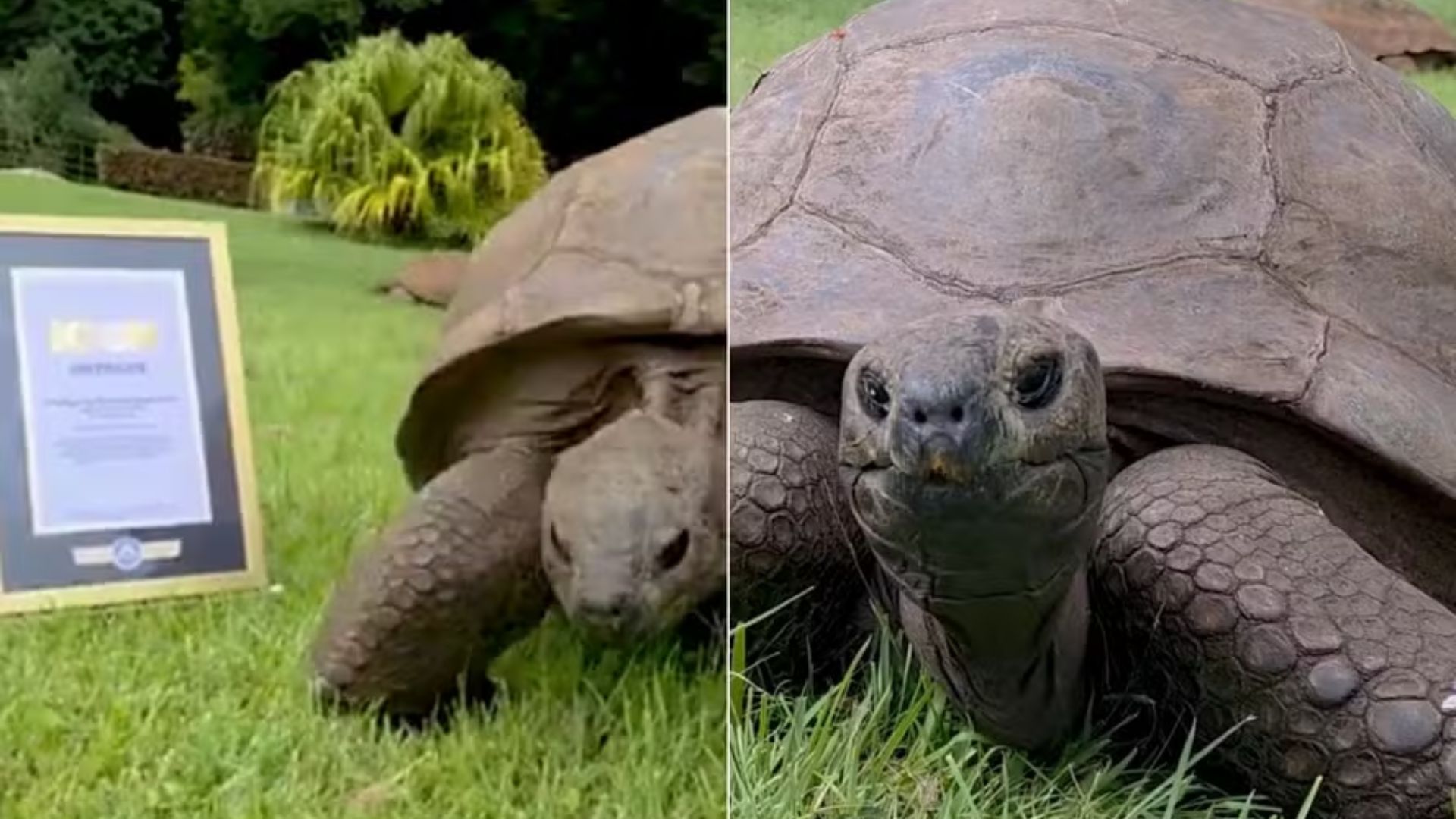

International recognition reinforces the trajectory of Jonathan, a tortoise living in Saint Helena, who holds historical longevity records. Born around 1832, the animal has witnessed centuries of transformations and continues to spark scientific, tourist, and cultural interest in different parts of the world.
Jonathan, a Seychelles giant tortoise estimated to be 194 years old, was recognized in 2026 as one of the Guinness World Records Icons, reinforcing his status as the oldest known living terrestrial animal in the world.
A resident of Saint Helena, a British territory in the South Atlantic, the reptile has become a local symbol over more than a century in the gardens of Plantation House, the official residence of the island’s governor.
Jonathan joins the list of Guinness Icons
According to the Guinness World Records, Jonathan was born around 1832 and also holds the record for the oldest tortoise ever recorded, a mark supported by historical evidence gathered over the years.
-
Brazilian School Network Turns 7 Tons of Recyclables into 43 Wheelchairs, Aiming to Break Record by 2026

-
Autonomous Toilet with UV Cleaning Available for Purchase at $13,000

-
Drone Reveals Abandoned 55-Story Luxury Residential Tower in Northeastern Brazil Since 2017

-
Farewell to Toilet Paper? New Technology Sparks Debate on Bathroom Habits




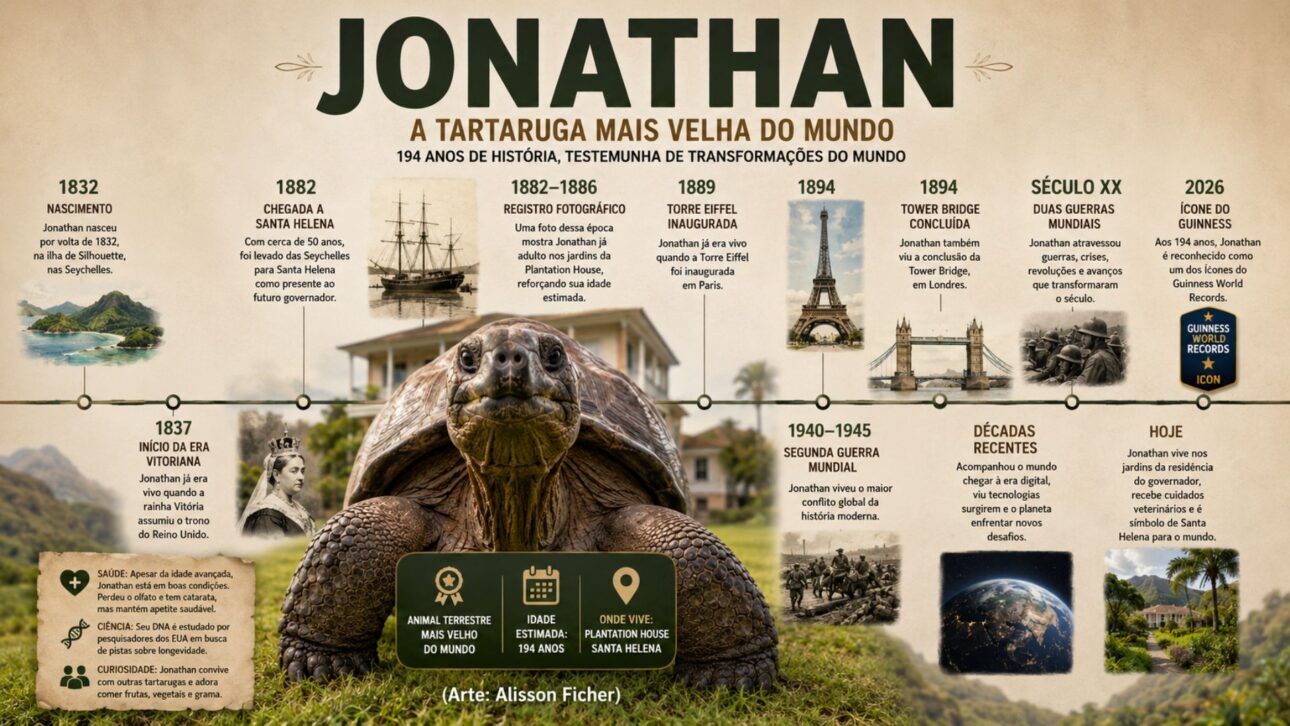
The estimate considers that he was already fully grown when he arrived in Saint Helena in 1882, at about 50 years old, the minimum age used as the basis for the current calculation.
Arrival in Saint Helena helps explain the estimated age
Brought from the Seychelles to Saint Helena in the 19th century, Jonathan began living in the gardens of Plantation House, where he became a familiar presence for residents, visitors, and local authorities.
Over time, the tortoise earned the affectionate nickname “Jono” and came to hold a special place in the island’s memory, which has followed his routine for several generations.
An old photograph, taken between 1882 and 1886, helped Guinness support the estimated age attributed to the animal, as Jonathan already appears as an adult in the garden of the official residence.
This visual record reinforces the conclusion that the turtle was born decades before arriving on the island, even though there is no known birth certificate or document.
Longevity crosses world historical milestones
Jonathan’s journey is noteworthy because it spans a significant part of modern history, from the period before the Victorian Era to the international recognition granted by Guinness in 2026.
Born around 1832, he would have come into the world before the start of Queen Victoria’s reign in 1837, and before the inauguration of monuments like the Eiffel Tower and the Tower Bridge.
Also according to Guinness, Jonathan was already alive when William IV occupied the British throne and when the future Queen Victoria was still a teenager, a comparison used to gauge his longevity.
Due to this set of references, the turtle has ceased to be just a biological curiosity and has come to represent a rare connection between animal life, history, and the identity of Saint Helena.
Jonathan’s health is monitored by veterinarians
Despite his advanced age, local veterinarians informed Guinness that Jonathan remains in good health, although he has expected limitations for an animal nearly two centuries old.
He has lost his sense of smell and his vision is impaired by cataracts, but his hearing remains intact, he responds well to the care received, and continues to show an appetite considered healthy.
In previous years, diet played an important role in the turtle’s recovery after veterinarian Joe Hollins noticed weight loss and fragility in the animal’s beak.
Following this monitoring, fruits and vegetables began to be offered weekly, a measure that helped Jonathan regain vitality and maintain a more stable routine at the official residence.
Record sparks scientific interest in longevity
Jonathan’s inclusion among the Icons of the Guinness World Records placed the turtle alongside names and characters recognized for exceptional achievements in different areas.
On the official tribute page, the entity presents Jonathan as the oldest known land animal and the oldest documented tortoise, two records associated with the same trajectory.
In addition to public recognition, the case also sparks scientific interest, as Guinness reports that the animal’s DNA has begun to be analyzed by researchers at the Vanderbilt Medical Research Center.
The aim of the study is to seek clues about the longevity of giant tortoises, a group known for living many years and presenting biological characteristics that still interest science.
Rumor about death was debunked in April 2026
In April 2026, Jonathan gained attention again after a false rumor about his death circulated on April Fool’s Day, information that was wrongly attributed to veterinarian Joe Hollins.
The Associated Press reported that the misleading publication also requested cryptocurrency donations before being debunked by official sources linked to Saint Helena and by Guinness itself.
At the time, the island’s government confirmed that Jonathan was alive, while Guinness published an update showing that the tortoise was doing well and remained under usual care.
The episode increased the public visibility of the animal and showed how its story transcended the boundaries of Saint Helena, reaching readers and admirers in different countries.
Living symbol of the history of Saint Helena
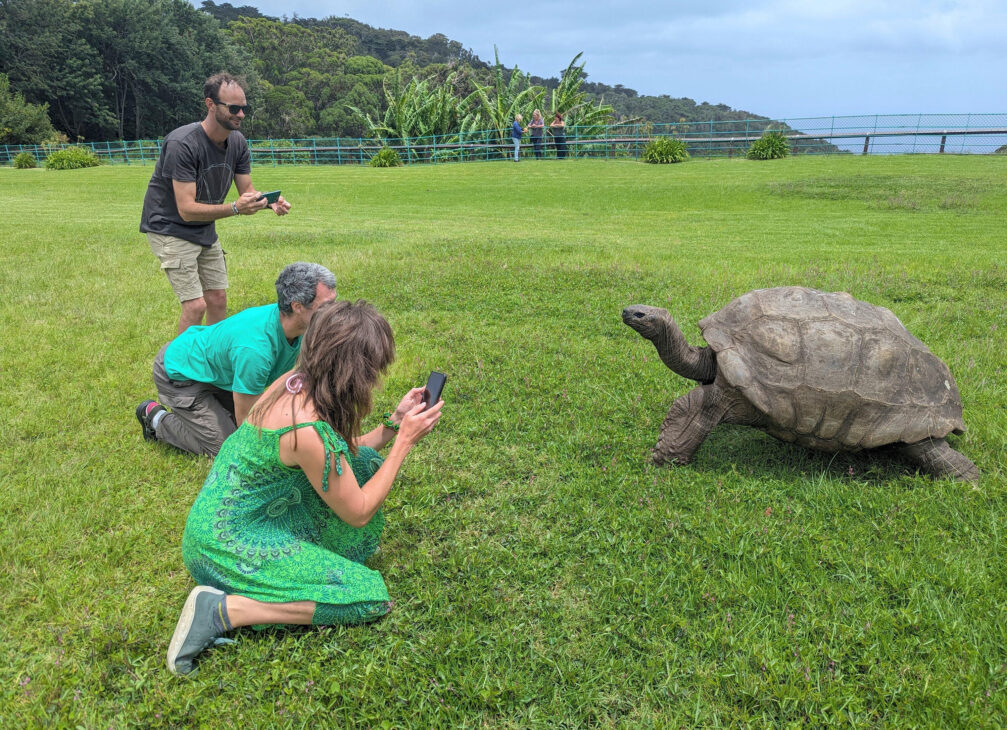
Currently, Jonathan spends his days in the gardens of the governor’s residence, living with other tortoises, feeding on grass, receiving regular care, and enjoying the island’s sun.
For Saint Helena, his presence combines historical value, local identity, and tourist interest, without relying on spectacles or artificial interventions to maintain public attention.
Although longevity is based on conservative estimates, Guinness considers the available evidence sufficient to recognize Jonathan as the oldest known living land animal in 2026.