






 Portuguese
  Spanish


In the municipal network of Praia Grande, on the coast of São Paulo, bottle caps become wheelchairs: the schools collected 7 tons of plastic caps which resulted in 43 wheelchairs for the community, and now the Green Competition wants to break the record in 2026 by including even cooking oil in the recyclable waste collection.
It seems small, but it is not. A single bottle cap is worth almost nothing, and most people throw it away without thinking. However, when thousands of students collect these caps over months, the pile becomes a ton, and the ton becomes mobility. In Praia Grande, on the São Paulo coast, this calculation had a concrete result: caps become wheelchairs for those who need it most.
The story was told by CBN Santos and shows the power of a simple idea taken seriously. In the 2025 edition of the Green Competition, municipal schools collected 7 tons of PET bottle caps, material that was transformed into 43 wheelchairs, nine of them in special models, donated to the Social Solidarity Fund. In 2026, the network wants to go further, expanding the collection of recyclable waste and including cooking oil in the competition. It’s recycling that goes from discourse to the lives of real people.
How caps become wheelchairs
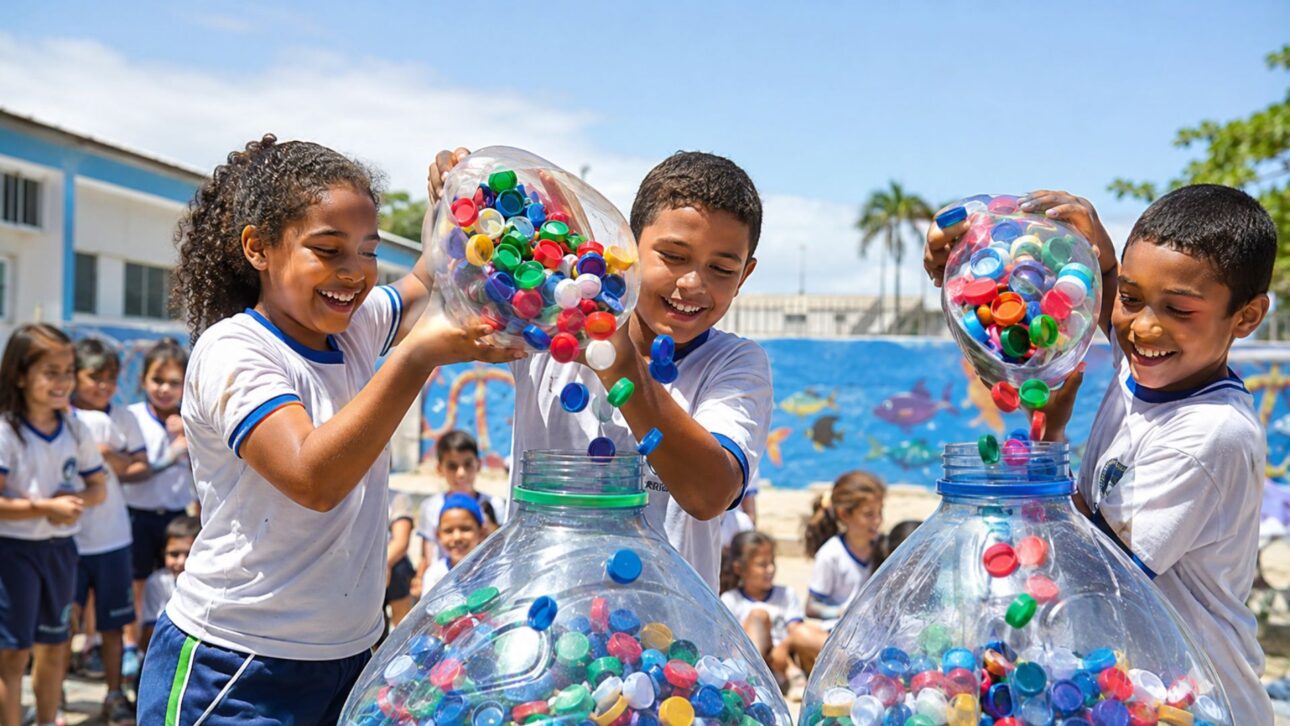
The cap does not physically become a chair. What happens is that all the recyclable waste collected is sold or sent for recycling, and the value generated is converted into the purchase of wheelchairs by the Social Solidarity Fund. In practice, caps become wheelchairs through this exchange, transforming the volume of plastic into mobility.
-
New Cyclone Expected to Hit Brazil, Changing Weather Within 72 Hours

-
194-Year-Old Giant Tortoise, World’s Oldest Living Land Animal, Honored by Guinness for Birth Predating Victorian Era, Eiffel Tower, and Tower Bridge
-
Autonomous Toilet with UV Cleaning Available for Purchase at $13,000

-
Drone Reveals Abandoned 55-Story Luxury Residential Tower in Northeastern Brazil Since 2017




The conversion numbers help to understand the effort. According to the Praia Grande City Hall, about 300 kilos of plastic are needed to fund a single wheelchair, and about 60 kilos of aluminum tabs for the same cost. In other words, each chair hides a mountain of caps that, alone, no one would value.
This is where scale works its magic. When an entire school network mobilizes, it gathers in months what one person would take years to accumulate. The logic of caps turning into wheelchairs only works because thousands of small hands work together. Each student who brings a bag of caps from home becomes part of a mechanism that ends with a chair delivered to a family.
7 tons and 43 chairs: the 2025 record
The year 2025 was a historic milestone. The Green Gymkhana, launched on June 5th of that year, on World Environment Day, collected 7 tons of caps over monthly weighing stages. It was over a ton in July, more than 2.5 tons in August, and more than 3.5 tons in September, a crescendo that ended in a record at the closing on October 1st.
The result of this collection was the 43 wheelchairs, including nine special models, handed over to the Social Fund for community lending. The campaign involved more than 56,000 students from the municipal network, a number that gives the real dimension of the reach. “Nothing better than the students to carry the message forward,” summarized the Secretary of Education, Patricia Almeida, highlighting the role of children as multipliers of the cause.
For Mayor Alberto Mourão, the project carries a meaning that goes beyond recycling. “Education is the only way to transform society,” he stated. The phrase aligns with the spirit of the initiative, where environmental learning and solidarity walk hand in hand. It’s not just about collecting recyclable waste, it’s about teaching an entire generation that small collective gestures change realities.
From school to the community: the mobility that changes lives
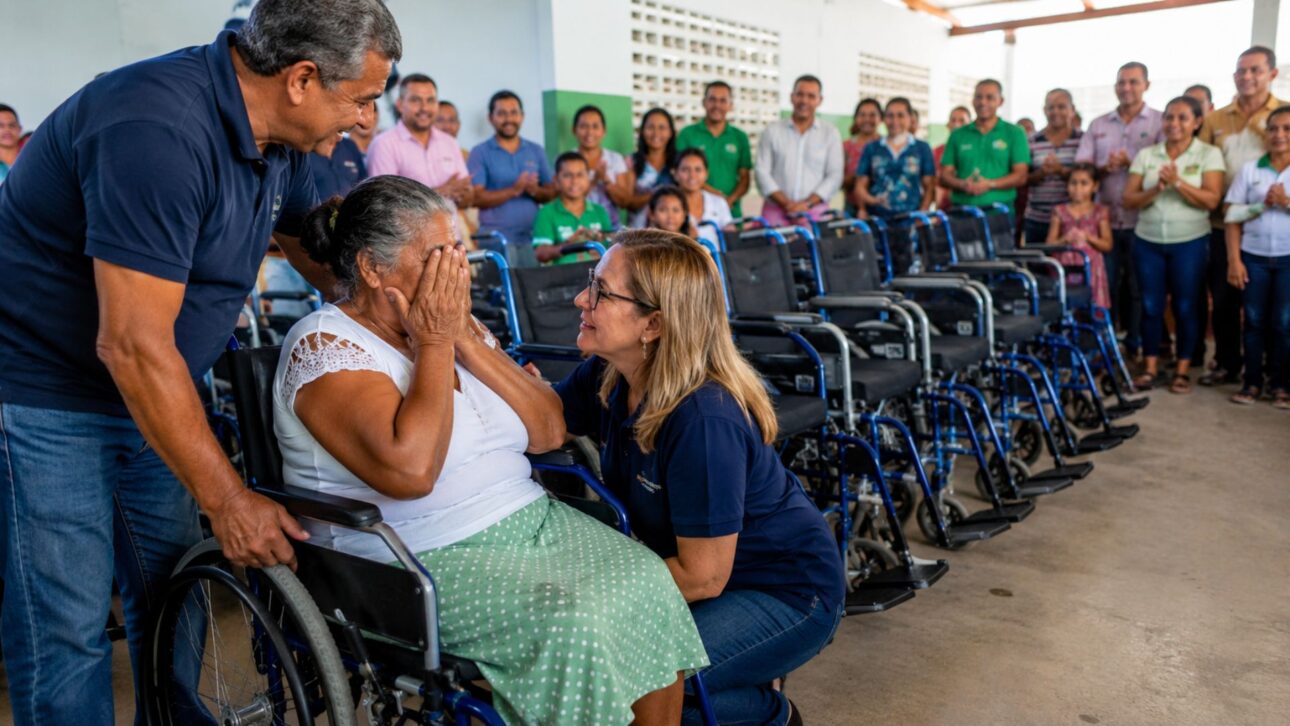
They went to the Social Solidarity Fund, which lends them to families who need mobility and often cannot afford to buy such equipment, which is expensive in the market.
For those who receive, the impact is direct and immediate. A wheelchair can mean going out again, visiting the doctor, attending school, or simply having autonomy for basic tasks. When it is said that bottle caps become wheelchairs, what is truly at stake is the dignity of someone who had no options. The recyclable waste of some becomes the freedom of others.
This link between school and community is the heart of the project. Students are not collecting bottle caps for an abstract prize, but for a neighbor, a relative, someone from the city. This proximity makes the cause tangible and explains why the network of schools embraced the Green Competition so strongly. The recyclable stops being waste and becomes a tool for social transformation in Praia Grande.
Cooking oil enters the competition in 2026
The 2026 edition, the sixth of the Green Competition, arrived with greater ambition. Launched in April, the competition now gathers 82 municipal schools and introduces an important novelty: besides bottle caps and seals, it now also collects used cooking oil, stored in bottles. It is another type of recyclable waste that, if improperly discarded, contaminates water and soil, and now enters the solidarity account.
The declared goal is clear: to surpass the 7 tons of the previous year. The first stage of 2026, in June, already totaled 1,745 kilos of bottle caps and seals, and there are still collection and weighing stages scheduled for August and September, with the announcement of the winners planned for October 27. The inclusion of cooking oil expands the potential for collection and, in turn, tackles a serious environmental problem.
The competition by categories makes the contest fairer. Schools were divided into groups such as Early Childhood Education, Elementary Education, Youth and Adult Education, and Special Education, so that units of different sizes compete on equal footing. Thus, the logic of bottle caps become wheelchairs gains even more momentum, with more materials and more schools committed to breaking the record.
Cargill, Social Fund, and the mechanism behind it
No campaign of this size sustains itself, and in Praia Grande, there is a structure behind it. The Green Competition is promoted by the Department of Education and the Department of Environmental Education, in partnership with the company Cargill and the Social Solidarity Fund. Each part plays a role in the mechanism that makes bottle caps become wheelchairs.
Cargill, through a recycling program, provided the logistics and equipment. The company supplied collectors in the shape of giant PET bottles and donated extra units to expand the collection points in schools, as well as supporting the collection of cooking oil. Meanwhile, the Social Fund coordinates the recycling of the material and the acquisition and distribution of wheelchairs to the community.
This division of tasks is what gives the project a boost year after year. The school mobilizes the students, the company provides the structure, and the city hall completes the cycle by converting recyclable waste into social benefit. Without this combination of efforts, the 7 tons and the 43 chairs would just be a good intention. With it, they became a concrete result in Praia Grande.
Why recycling with a cause engages so much
Stories like this go viral because they mix three powerful ingredients. There’s the humble material, the bottle cap that everyone has at home. There’s the measurable impact, the 43 wheelchairs and the 7 tons that leave no doubt about the result. And there’s the human face, the student who collects and the family who receives. Together, they make recycling something exciting.
The environmental aspect reinforces the appeal. The 7 tons of bottle caps from 2025 avoided the emission of about 10 tons of carbon dioxide into the atmosphere, according to the city hall. In other words, the project not only generates chairs but also eases the environment. It’s recyclable waste leaving the landfill and the ocean to become, at the same time, a social benefit and an ecological gain.
There is also an educational value that doesn’t appear on a spreadsheet. More than 56,000 children learned, in practice, that recycling has a real and positive consequence. This generation grows up understanding that bottle caps become wheelchairs when there is organization and purpose. It’s the kind of lesson that no school test teaches as well as the experience of seeing one’s own effort turn into a chair delivered to someone.
A model that other cities can copy
The case of Praia Grande works as a tested recipe for other cities. The structure is replicable: an engaged network of schools, a partner company for logistics, and a social fund to convert material into benefit. It doesn’t require cutting-edge technology, it requires organization, consistency, and political will to keep the program alive.
However, a dose of realism is needed. Success depends on well-organized logistics, stable partnership, and continuous student engagement, and none of this happens automatically. Collecting 7 tons of bottle caps requires months of mobilization, and the exchange for chairs only works because there is someone to coordinate the sale of recyclable waste and the purchase of equipment. It’s inspiring, but it takes work.
In the end, what Praia Grande shows is that sustainability and solidarity can go hand in hand, with numbers to prove it. The next batch of cooking oil and bottle caps will tell if the 2026 record will fall. If recent history is any indication, the bet that more bottle caps become wheelchairs in the city is likely to be confirmed.
And you, have you ever stopped to save bottle caps at home instead of throwing them away, knowing they can become someone’s wheelchair? Tell us in the comments if your city has a similar project, or if you would be willing to start one.


