Portuguese
  Spanish


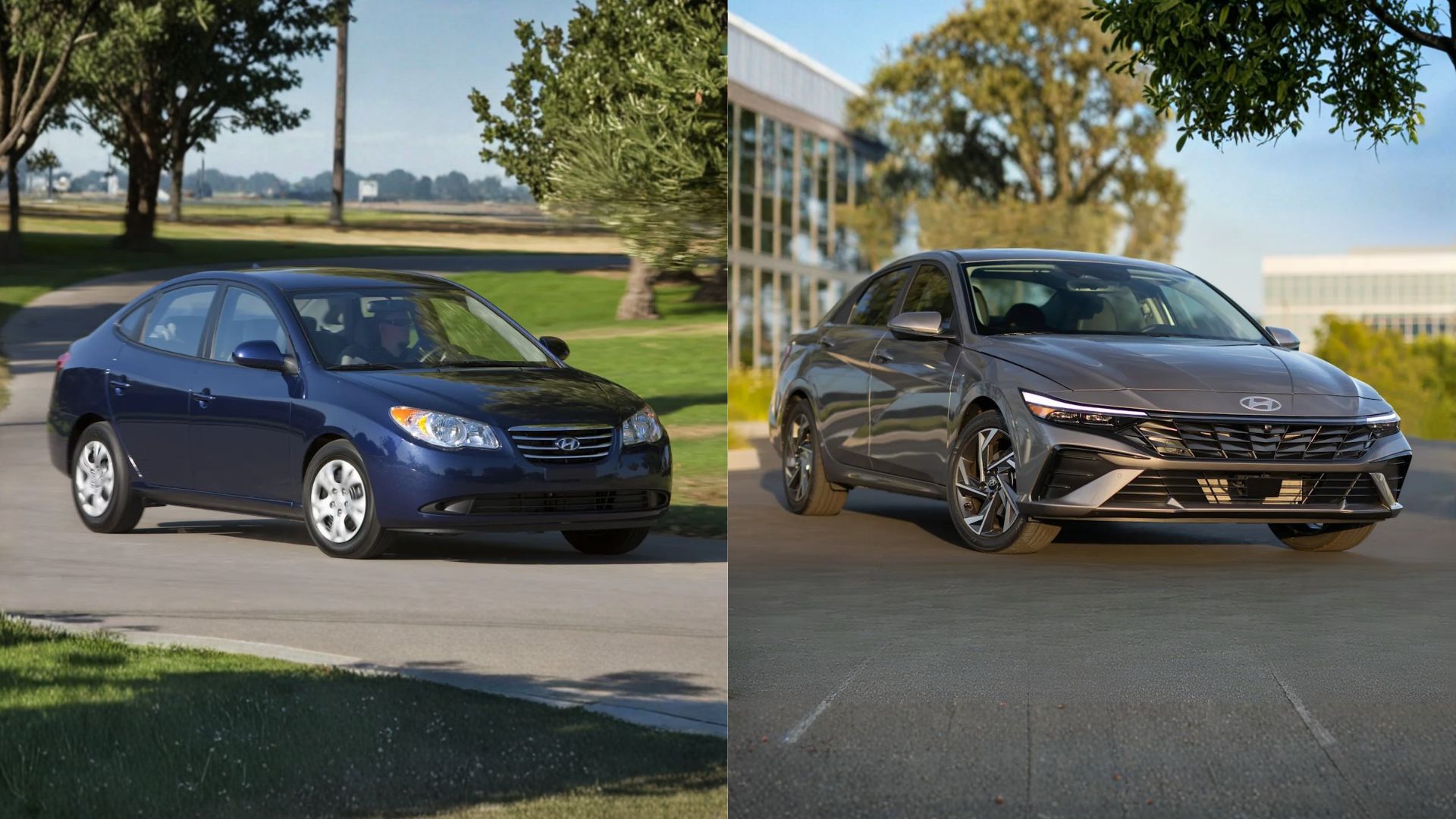


Two Models Previously Criticized for Their Looks Underwent Striking Design Overhauls and Are Now Aesthetic References in the Lines of Hyundai and Toyota.
Far beyond the idea of “turning water into wine”, two sedans that were once synonymous with bland design, or even the subject of jokes among enthusiasts, now rank among the most striking models in the industry.
Hyundai Elantra and Toyota Prius carry a history of controversial lines but have undergone profound style transformations, becoming showcases for their respective brands’ new design languages.
Over the past few decades, automotive design has evolved from being merely a complement to technical specifications to becoming one of the main reasons for purchase.
-
2027 Toyota Corolla Cross Unveiled: New Design, Enhanced Fuel Efficiency, Reduced Maintenance Costs, Advanced Technology, Connected Services, and Up to 10-Year Warranty

-
Fiat Cronos Precision 2018: Affordable Sedan with Spacious Trunk and Reliable Maintenance
-
Volkswagen to Cut Production by 1 Million Cars by 2030, Reducing Jobs and Platforms, Focusing on More Profitable Models

-
Toyota Launches First 100% Electric Car in Brazil: bZ4X with 343 HP, All-Wheel Drive, 361 km Range, Priced at $419,990 BRL, Limited to 99 Units



On this journey, some cars were born with the mission of being efficient or affordable, sacrificing more harmonious proportions.
This was the case for Elantra and Prius in their older generations, frequently listed and commented on as cars with uninspired looks, despite their good reputation for fuel efficiency and reliability.
Over time, however, manufacturers redesigned these models from the ground up.
Today, the medium-sized Korean sedan and the Japanese hybrid help to communicate innovation, technology, and modernity, not just rationality.
Common to both, they demonstrate how a design project with a history of mockery can become an aesthetic reference when it receives attention from a design studio, an updated platform, and a visual language consistent with the rest of the lineup.
Hyundai Elantra Gains Identity and Abandons Bland Styling
Launched in the early 1990s, the Hyundai Elantra started out as a global mid-size sedan with a simple proposal.
The idea was to deliver space and value for money in markets where Japanese and European rivals dominated the segment.
In the first two generations, the focus was essentially functional.
Straight lines and a simplistic body helped keep the price competitive, but the design did not evoke desire.
In the mid-2000s, the model underwent a major redesign.
The fourth generation, introduced in 2006, adopted more rounded shapes, large headlights, and volumes reminiscent of budget compact cars.

In several markets, this phase solidified the image of a reliable car, albeit without charm.
What was seen was an efficient sedan, but far from any pretense of beauty or sophistication.
The turning point came with the fifth generation, launched in 2010.
In it, Hyundai introduced the design philosophy Fluidic Sculpture, characterized by sculpted surfaces, distinct creases, and a much more dynamic profile.
The Elantra stopped looking merely functional and began exhibiting more fluid lines, sharp headlights, and a raised rear.
The impact of this redesign was not limited to public perception.
The generation with the sculptural language won several prestigious awards, including the title of North American Car of the Year in 2012, highlighting bold style as a key differentiator.
Even after this phase, Hyundai continued to evolve the model.
The current international lineage of the Elantra, now in its seventh generation, adopts the Parametric Dynamics language, featuring triangular creases, an aggressive front, and a wide grille integrated with the lighting assembly.
The profile resembles a four-door coupe, reinforcing the idea of a sporty sedan.
In Brazil, the Elantra was officially sold from 2011 to 2020.
Even with its departure from the national market, the aesthetic evolution of the sedan remains evident in models offered in other countries.
The difference from the functional past is now undeniable.
Toyota Prius Leaves Controversy Behind and Adopts Sporty Lines
If the Elantra was born as a conventional sedan, the Toyota Prius emerged with a different mission.
The model was created to symbolize the arrival of the hybrid era, focusing on energy efficiency, low emissions, and aerodynamics.
The first generations prioritized airflow and interior space, which is why they featured unusual proportions.
The second and third generations, produced between 2009 and 2015, consolidated the Prius as a reference in fuel economy.
At the same time, they reinforced its reputation as a controversially styled car.
The triangular shape, high rear, and small wheels ensured excellent aerodynamic coefficient, but led the hybrid to frequently appear in lists of cars with questionable appearances.
Even so, the model achieved significant sales and helped popularize hybrid technology around the world.
In Brazil, the Prius was sold from 2013 to 2021.

It served as a technological showcase but never achieved high sales volumes, being overshadowed by hybrids like Corolla and Corolla Cross.
The radical transformation came with the fifth generation, presented internationally starting in 2022.
Built on the TNGA-C platform, the new Prius abandoned the lab-on-wheels feel and adopted lower, wider proportions with a sporty appeal.
The body features a higher beltline, narrow headlights with a modern light signature, and larger wheels.
The combination gives the Toyota hybrid a completely new identity.
In addition to the style, the model gained more powerful mechanical setups, combining a 2.0-liter gasoline engine with a revised electric unit and more efficient batteries.
In some versions, the total power exceeds 190 hp, with an all-wheel-drive option in specific markets.
This combination of more vigorous performance and striking design elevated the Prius to a new level of perception.
The fifth generation has won international awards, including the World Car Design of the Year 2024, reinforcing the stylistic leap compared to previous generations.
Without official confirmation of a return to Brazil, the current Prius continues to serve as an internal design reference within Toyota.
The aesthetics adopted in the hybrid influence elements present in other brand models, such as clean lines, sporty proportions, and more sophisticated light signatures.
After so many changes, the trajectory of Elantra and Prius raises a natural curiosity among the public: among these two former ugly ducklings, which one underwent the most striking aesthetic transformation?