Portuguese
  Spanish


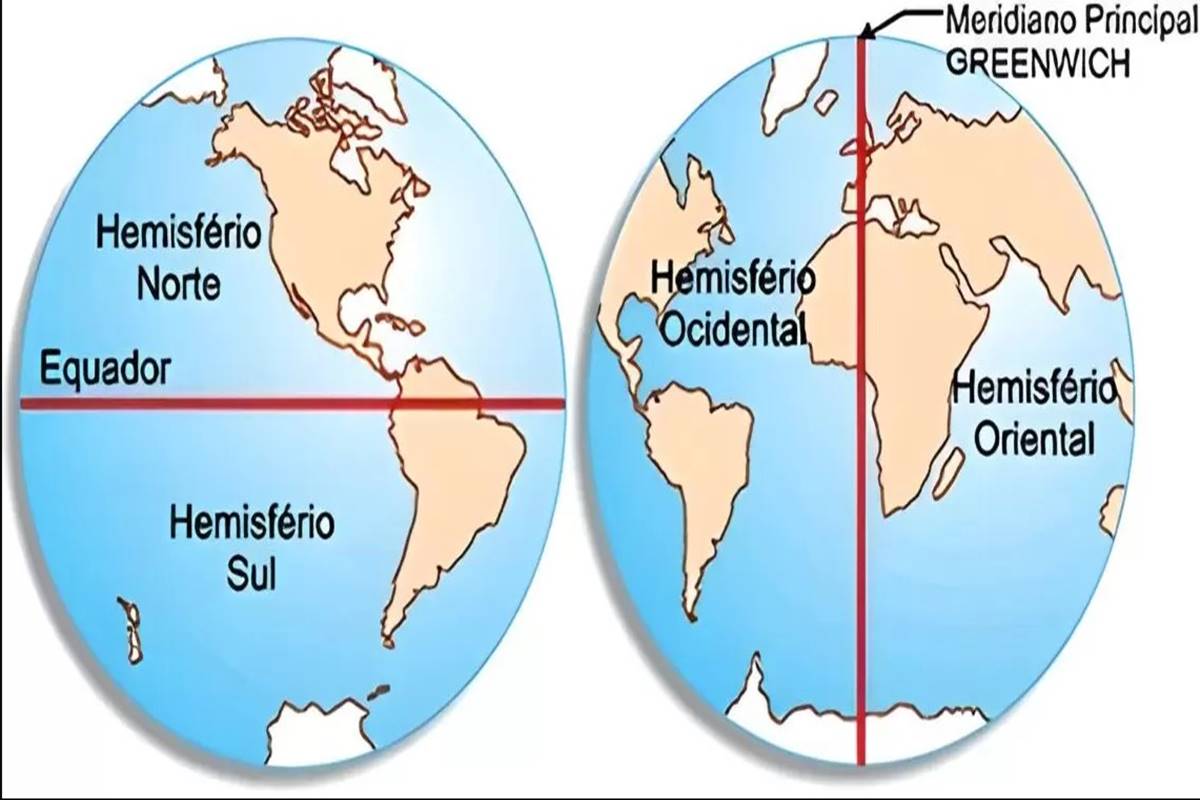


Region North of the Equator Houses 24 Brazilian Cities, All Located in an Area Representing Slightly More Than 7% of the Country.
A little-known geographical curiosity about Brazil is officially recognized. The Brazilian Institute of Geography and Statistics (IBGE) released a list of all Brazilian municipalities located in the Northern Hemisphere.
According to the survey, this region represents 7.13% of the national territory, with a total area of 606,544.575 km².
Municipalities Distributed in Four States
The area located above the Equator Line includes 44 municipalities, distributed among the states of Amazonas, Pará, Roraima, and Amapá.
-
Award-Winning Japanese Restaurant Reveals It Has Preserved Part of the Same Frying Oil for 66 Years

-
American Youth Transforms from Severe Obesity to U.S. Air Force Enlistment, Losing 90 Kilograms in Two Years
-
11-Year-Old Entrepreneur Sells 60 Homemade Sweets Daily, Mastering Cost Calculation, Social Media Promotion, and Client Negotiation Since Age 7

-
Peruvian Mountain’s 5,200 Aligned Holes May Unveil Ancient Indigenous Market for Corn and Cotton


Of these, 24 are entirely within the Northern Hemisphere, with 13 in Roraima and 11 in Amapá. Regarding municipal seats, 26 are in this part of the planet — all located in Roraima and Amapá.
The Equator Line divides the Earth into two hemispheres and is marked by latitude 0º. In Brazil’s case, this line crosses part of the territory, making the country one of the few cut by the Equator.
“Although a large part of the country is in the Southern Hemisphere, the Equator Line passes through Brazil. The launch of this new product aims to meet external users’ demands about which Brazilian municipalities are located above the Equator Line. The intention is to disseminate exactly the geographic information for knowledge, general education, and studies of public policies for that region of the country,” explains the coordinator of Territorial Structures at IBGE, Roberto Tavares.
Differences Between the Northern and Southern Hemispheres
The planet Earth is divided into two main hemispheres by the Equator Line: the Northern Hemisphere and the Southern Hemisphere. This division directly influences the climate, the seasons, and even the behavior of ocean currents.
In the Northern Hemisphere, where countries such as the United States, China, and much of Europe are located, summer occurs between June and September, while winter runs from December to March.
In the Southern Hemisphere, where Brazil, Argentina, Australia, and other countries are found, the seasons are inverted compared to the North. This means that summer occurs between December and March, and winter between June and September.
Furthermore, there are differences in the position of the sun in the sky, wind patterns, and the movement of ocean waters. These variations influence agriculture, cultural habits, and even event calendars in each part of the world.