






 Portuguese
  Spanish


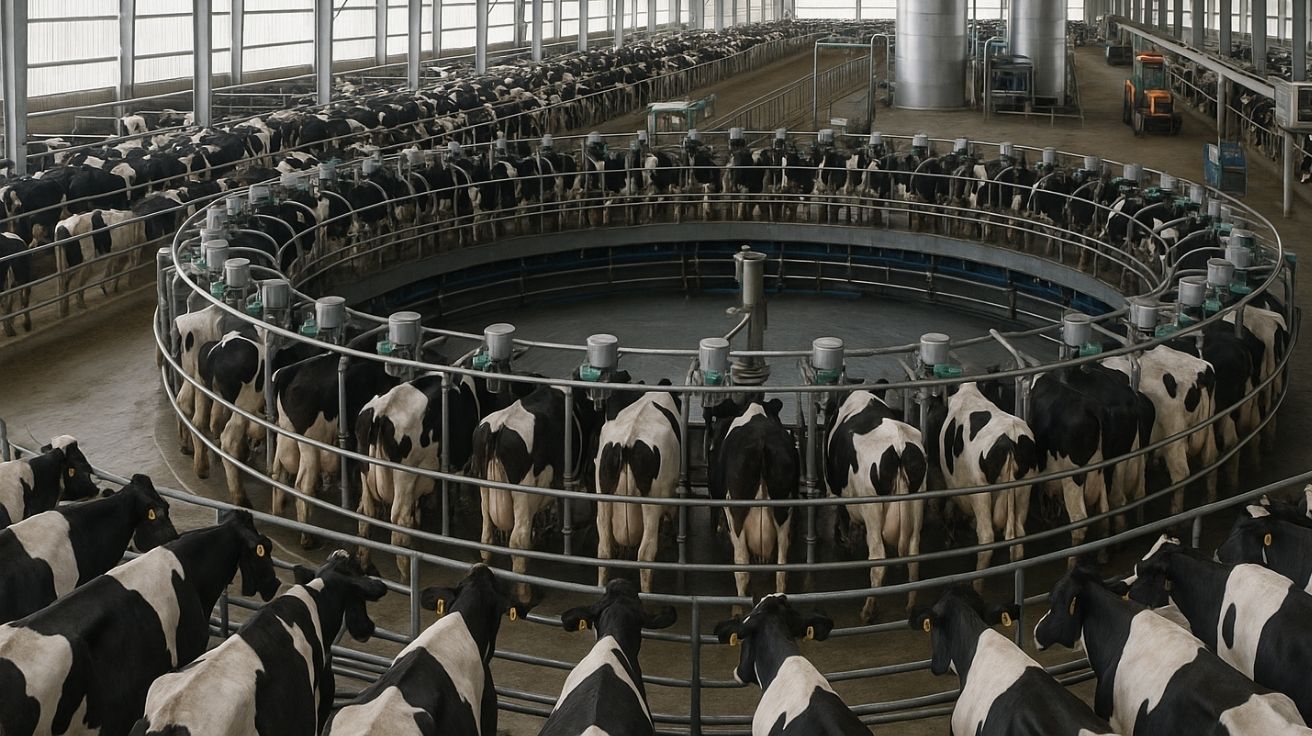


With 26 Barns, Robotic Milking, and Large-Scale Production, the Largest Dairy Farm in China Supplies the Country’s Growing Consumption, While in Brazil, Fazenda Colorado Leads with a Focus on Genetics, Technology, and Grade A Milk
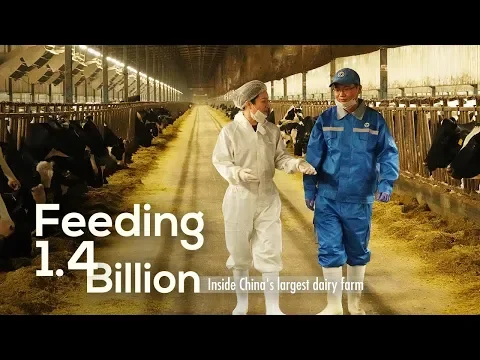
In the city of Bumbú, in the southeast of China, a colossal agricultural structure houses 38,000 lactating cows, producing 650 tons of raw milk per day. The farm, part of a national modernization project, aims to help feed the 1.4 billion Chinese who have been rapidly increasing their consumption of milk and dairy products.
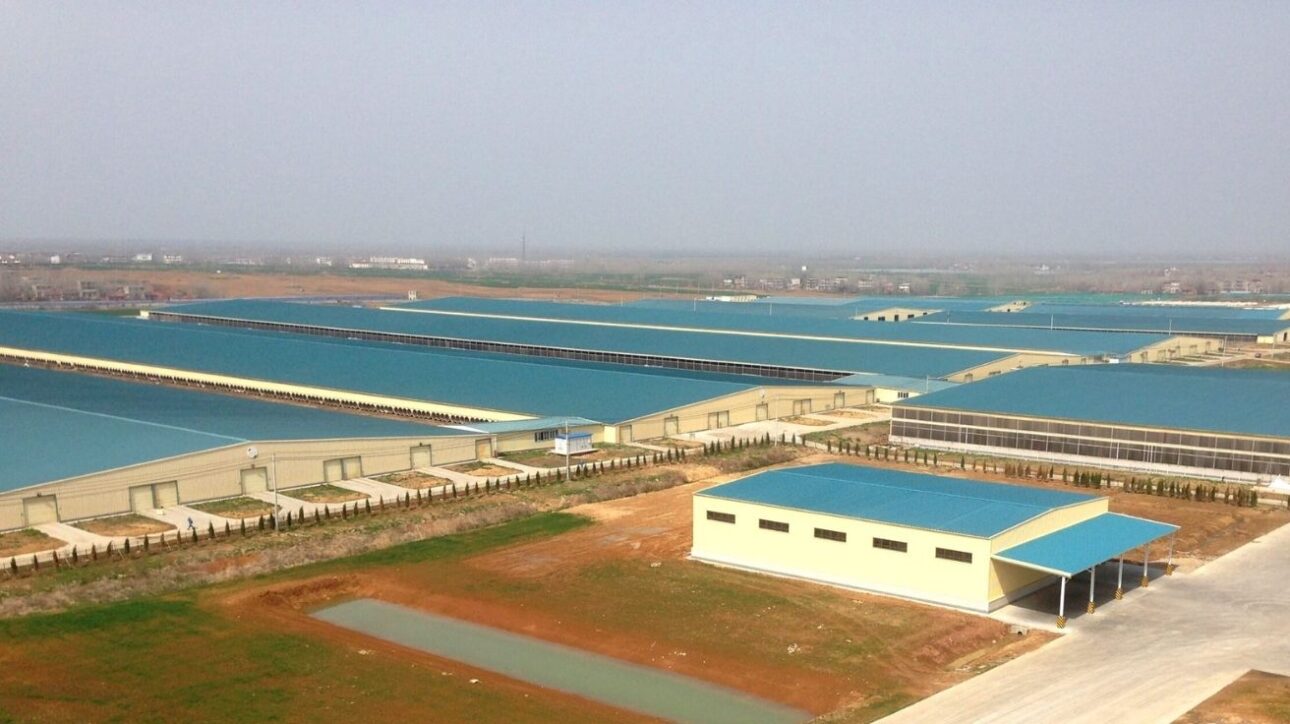
With 6,500 hectares of alfalfa cultivated in the surroundings for the herd’s feed, the farm integrates breeding, planting, and processing in the same complex. The operation is automated from milking to milk transportation, promoting sanitary efficiency and high nutritional value.
The cows, aged between 2 and 3 years, live in barns over 300 meters, arranged in double rows to facilitate mobility. The environment is designed to ensure thermal comfort and continuous feeding, optimizing production in a model that resembles an industrial assembly line.
-
Rare Tropical Fruit Canistel, with Egg Yolk Color and Caramel Flavor, Gains Interest from Researchers and Small Producers in Brazil

-
Brazilian Farmers Develop Wheeled Metal Lever to Ease Cassava Harvesting Without Heavy Machinery
-
Study of Brazil’s Tietê River Finds 25 Pesticides in Water, Including Cancer-Linked Substance Near Source
-
Young Entrepreneur Expands from 50 to 1,400 Chickens, Proving “Happy Hens” Can Be a Viable Business


Technology Reduces Contamination and Accelerates Production at Scale in This Chinese Farm
Milking is done by 8 automated rotary platforms, each with a capacity for 80 cows simultaneously, operating 24 hours a day. Over 20,000 cows are milked daily, with the milk being transported through sealed piping, which prevents contamination and preserves nutrients.
According to the China Dairy Association, between 1949 and 2018, the national milk production jumped from 200,000 tons to 31 million tons annually, an increase of 145 times. Changes in eating habits and rising urban incomes have driven this transformation.
The per capita consumption of dairy products in urban areas rose from 8.8 kg per year in 2005 to over 220 kg in 2017. To meet this new demand, automated farms like the one in Bumbú have emerged.

Brazil Focuses on Genetics and Quality in Dairy Production
In Brazil, Fazenda Colorado, located in Araras (SP), has led the national production ranking for over a decade with a focus on genetic quality and technological innovation. With 2,300 purebred Holstein cows, the farm achieves a daily average of 98,921 liters of milk, according to the Top 100 MilkPoint-Abraleite 2025 Survey.
The property operates with a carousel milking system, processing up to 450 cows per hour, and houses around 2,000 cows in a pavilion with 27,000 square meters, climate-controlled by cross ventilation that reduces internal temperatures by up to 12 °C.
The Xandô brand, born from the farm, is a reference in Grade A milk and follows the “From Farm to Table” process, where the milk is milked, pasteurized, and packaged without manual contact. The product reaches consumers in up to 24 hours, giving the brand 43% of the Grade A milk market share in São Paulo and the second position in refrigerated juices in São Paulo.
Distinct Models, but Focused on Productivity and Safety
While China prioritizes scale and automation, Brazil invests in animal welfare, enhanced genetics, and international certifications. Both nations adopt technological solutions to tackle the food challenges of their populations, with strategies tailored to their realities.
The Chinese farm presents a model of intensive agroindustry, where all elements, from feeding to processing, are centralized, ensuring traceability and absolute control. In Brazil, the milk quality, genetic improvement, and environmental sustainability are the main differentiators.
Fazenda Colorado was the first dairy farm to obtain Biosafety Certification and, in 2021, won the International Animal Welfare Certification from QIMA. The property also invests in A2A2 milk, has a Kosher seal, and adopts practices of regenerative agriculture and reverse logistics in its packaging.


