Portuguese
  Spanish


Greenland Shark with Estimated Age of 399 Years May Have Been Born in 1627 and Surprises Researchers
An impressive scientific discovery has once again drawn attention to the mysteries of the Arctic Ocean.
International researchers identified a Greenland shark with an estimated age of about 399 years, possibly born around 1627.
The animal, found in cold and deep waters, is considered one of the largest known examples of longevity among vertebrates.
-
Clarice Hashizume, 56, Sets Historic Guinness World Record by Completing 36 km Open Water Swim in Brazil in Over 12 Hours

-
Brazil, Venezuela, and Paraguay May Restrict Travel for Those Delaying Mandatory Passport Procedure

-
Australia Restores 4,450 Dead Trees to the Murray River, Demonstrating River Recovery by Reintroducing Natural Structures Removed by Past Engineering

-
Digestive Health Expert Silvia Gómez Explains How Cold Drinks and Ice Cream Can Slow Digestion and Cause Discomfort in Hot Weather




The discovery reinforces the importance of the Somniosus microcephalus, a species that lives slowly, grows for centuries, and still holds valuable secrets for science.
According to a study published in the journal Science, the analysis of this shark reignited global interest in biodiversity, genetics, and marine conservation.
Eye Analysis Revealed Surprising Age
The age of the shark was estimated using an advanced technique of radiocarbon dating.
Scientists analyzed the lens of the eyes of the animal, a structure that does not regenerate after birth.
In this way, it was possible to measure the levels of carbon present in the eye tissue and estimate how long the shark had been alive.
The research evaluated 28 Greenland sharks incidentally captured by fishermen.
The largest specimen was a female over five meters long.
According to the researchers, this animal had an approximate age of 399 years, with a margin of error placing its birth around 1627.
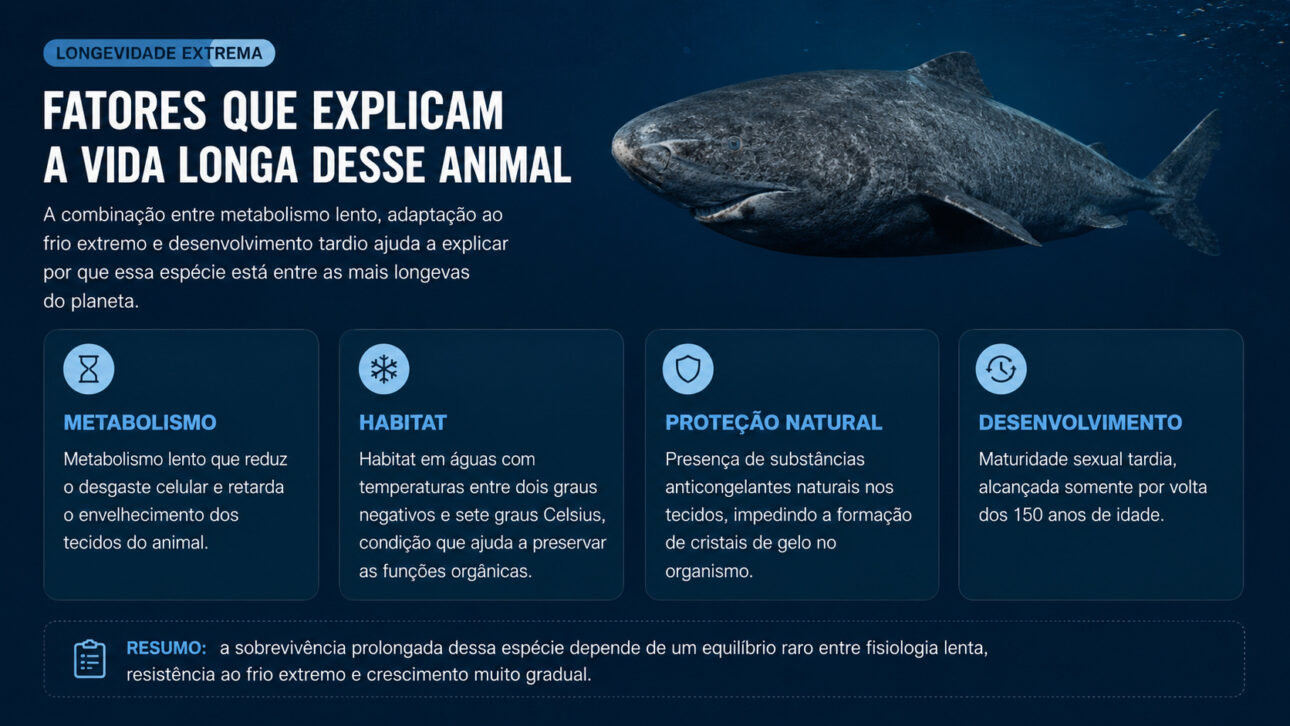
Slow Metabolism Helps Explain Centuries-Long Life
The extraordinary longevity of the Greenland shark is primarily linked to its very slow metabolism.
Moreover, the animal lives in deep and cold waters, where biological processes occur at a reduced pace.
This combination causes the shark to expend little energy and age much more slowly.
Among the main characteristics of the species are:
- life in cold and deep waters;
- extremely slow swimming;
- gradual growth over centuries;
- reduced metabolism;
- late maturity.
The scientific name Somniosus microcephalus means “sleepy small-headed,” a reference to the slow behavior of this marine predator.
Species lives in remote regions of the planet
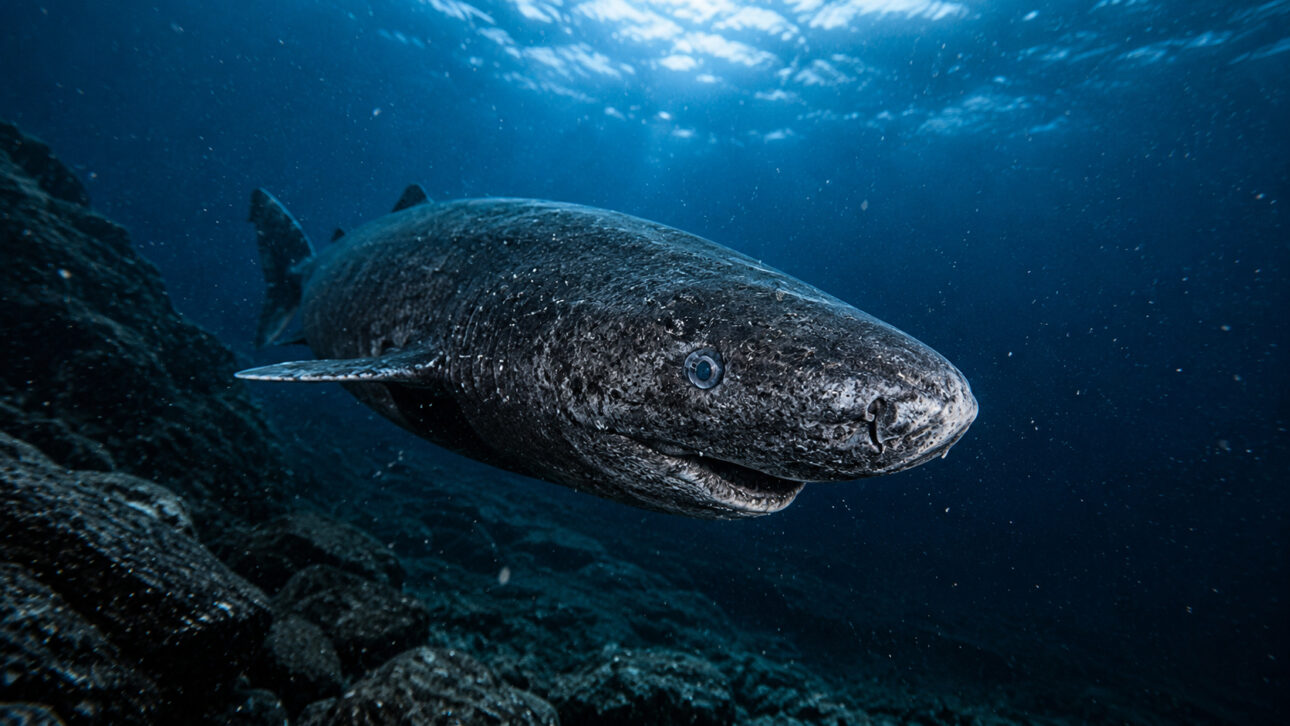
The Greenland shark primarily inhabits the North Atlantic and the high Arctic.
It can also be found in deep areas, reaching about 2,200 meters below the surface.
Due to this extreme environment, the species remained surrounded by mysteries for a long time.
The first known footage of this shark in its natural habitat occurred only in 1995.
More recently, researchers have also recorded specimens in regions such as the Caribbean and the vicinity of the South Shetland Islands in Antarctica.
These records suggest that deep-sea animals may roam wider areas than previously thought.

Genome may reveal clues about aging
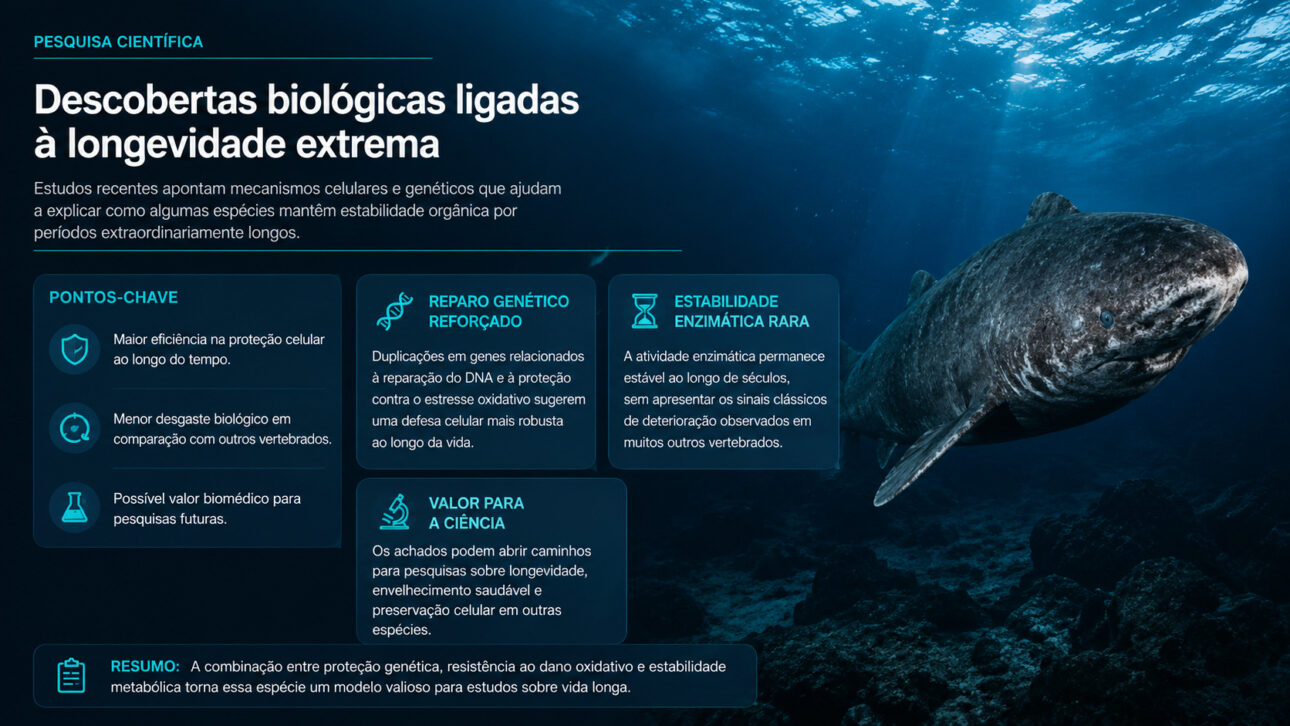
Recent genetic studies have shown another impressive point about the Greenland shark.
More than 70% of the genome of the species is made up of transposable elements, known as “jumping genes”.
In many vertebrates, these elements can cause harmful mutations.
In this shark, they seem to be linked to the strengthening of DNA repair mechanisms.
For this reason, the species has also been observed by researchers interested in animal aging and longevity.
Species conservation concerns researchers
Despite its impressive resilience, the Greenland shark faces significant threats.
The species is classified as vulnerable by the International Union for Conservation of Nature, the IUCN.
Bycatch, pollution, and climate change pressure the population of these animals.
Moreover, slow reproduction makes population recovery very difficult.
Since sexual maturity can take more than a century, each loss represents a significant impact on the species.
Discovery reinforces the importance of deep oceans
The identification of a shark that may have lived nearly four centuries shows how the oceans still hold extraordinary creatures.
This animal has traversed entire periods of human history while continuing to live in the cold waters of the Arctic.
At the same time, its existence reinforces the need to protect deep and little-studied habitats.
According to researchers, preserving the Greenland shark is essential to maintaining the balance of marine ecosystems.
After all, such ancient species help reveal how wildlife resists, adapts, and survives in extreme conditions.
What do you find more impressive: a shark living almost 400 years or science being able to discover its age by analyzing the animal’s eyes? Share your opinion!